

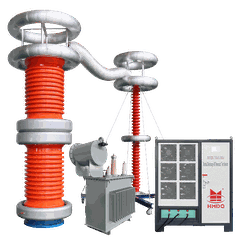

Can a primary current injection test set be used for power transformer testing?
As a supplier of primary current injection test sets, I often encounter questions from customers regarding the applicability of our products in power transformer testing. In this blog post, I will delve into the details of whether a primary current injection test set can be effectively used for power transformer testing, exploring its functions, advantages, limitations, and real - world applications.
Understanding Primary Current Injection Test Sets
A primary current injection test set is a specialized piece of equipment designed to inject a known current into the primary circuit of an electrical device. These test sets are capable of generating high - magnitude currents, which are essential for testing the performance and integrity of various electrical components. Our company offers a range of primary current injection test sets, including the 7000A Primary Current Injection Test Set, 5000A Primary Current Injection Test Set, and AC/DC Primary Current Injection Test Set.
These test sets are equipped with advanced features such as precise current control, adjustable output, and safety mechanisms to ensure accurate and secure testing procedures. They are commonly used in the electrical industry for testing circuit breakers, relays, and other protective devices. But can they be used for power transformer testing? Let's find out.
The Feasibility of Using Primary Current Injection Test Sets for Power Transformer Testing
Power transformers are critical components in the electrical power system, responsible for stepping up or stepping down the voltage levels. They need to be regularly tested to ensure their safe and efficient operation. Primary current injection test sets can indeed play a significant role in power transformer testing.
Winding Resistance Measurement
One of the key tests for power transformers is the measurement of winding resistance. By injecting a known current into the transformer windings using a primary current injection test set, we can measure the voltage drop across the windings. According to Ohm's law (V = IR), where V is the voltage drop, I is the injected current, and R is the resistance, we can calculate the winding resistance. This measurement helps in detecting any short - circuits, open - circuits, or loose connections in the windings.
Overcurrent Protection Testing
Power transformers are equipped with overcurrent protection devices to safeguard them from excessive current flow. A primary current injection test set can be used to simulate overcurrent conditions and test the response of these protection devices. By gradually increasing the injected current to a level that exceeds the rated current of the transformer, we can verify whether the overcurrent protection devices trip at the correct current levels. This ensures that the protection devices will function properly in real - world situations, preventing damage to the transformer.
Temperature Rise Testing
Another important aspect of power transformer testing is temperature rise testing. When a current is injected into the transformer windings using a primary current injection test set, the windings will heat up due to the resistive losses. By monitoring the temperature rise over a period of time, we can assess the thermal performance of the transformer. This information is crucial for determining the transformer's ability to handle continuous loads and for ensuring its long - term reliability.
Advantages of Using Primary Current Injection Test Sets for Power Transformer Testing
Accuracy
Primary current injection test sets offer high - accuracy current injection, which is essential for precise testing of power transformers. The ability to control the injected current precisely allows for accurate measurement of winding resistance, overcurrent protection settings, and temperature rise. This accuracy helps in detecting even minor faults in the transformer, enabling timely maintenance and preventing potential failures.
Flexibility
Our primary current injection test sets are highly flexible, with adjustable output currents and frequencies. This flexibility allows us to adapt the testing procedures to different types and ratings of power transformers. Whether it is a small distribution transformer or a large power transformer, our test sets can be configured to meet the specific testing requirements.
Safety
Safety is of utmost importance in electrical testing. Our primary current injection test sets are designed with multiple safety features, such as over - current protection, short - circuit protection, and insulation monitoring. These features ensure the safety of the testing personnel and the equipment during the testing process.
Limitations of Using Primary Current Injection Test Sets for Power Transformer Testing
Limited to Low - Voltage Testing
One of the main limitations of using primary current injection test sets for power transformer testing is that they are generally limited to low - voltage testing. Power transformers are often designed to operate at high voltages, and injecting a high - magnitude current at high voltages can be extremely dangerous and may require specialized high - voltage testing equipment. Therefore, primary current injection test sets are typically used for testing the low - voltage windings of power transformers or for conducting tests at reduced voltage levels.
Inability to Test Insulation Integrity
While primary current injection test sets can be used for some aspects of power transformer testing, they are not suitable for testing the insulation integrity of the transformer. Insulation testing requires the application of high - voltage direct current or alternating current to the transformer windings to detect any insulation breakdowns or leakage currents. Specialized insulation testing equipment, such as a megger or a high - voltage insulation tester, is required for this purpose.
Real - World Applications
In the real world, primary current injection test sets are widely used in power transformer testing by electrical utilities, maintenance companies, and manufacturing plants. For example, electrical utilities use these test sets during the commissioning of new power transformers to ensure that they meet the design specifications. Maintenance companies use them for routine maintenance and diagnostic testing of existing transformers to detect any potential faults. Manufacturing plants use them for quality control during the production process to ensure the reliability of the transformers before they are shipped to customers.
Conclusion
In conclusion, a primary current injection test set can be effectively used for power transformer testing, especially for winding resistance measurement, overcurrent protection testing, and temperature rise testing. The accuracy, flexibility, and safety features of these test sets make them a valuable tool in the electrical testing industry. However, it is important to note their limitations, such as the inability to test high - voltage components and insulation integrity.
If you are involved in power transformer testing and are looking for a reliable primary current injection test set, we are here to help. Our range of test sets, including the 7000A Primary Current Injection Test Set, 5000A Primary Current Injection Test Set, and AC/DC Primary Current Injection Test Set, can meet your specific testing requirements. Contact us today to discuss your needs and explore how our products can enhance your power transformer testing procedures.


References
- Electrical Power Systems: Design and Analysis by Turan Gonen
- Transformer Testing Guide by IEEE Standards Association
- High - Voltage Engineering: Fundamentals by E. Kuffel, W. S. Zaengl, and J. Kuffel