



Hey there! As a supplier of breakdown voltage test equipment, I often get asked if our gear can be used for testing capacitors. Well, let's dive right into this topic and figure it out.
First off, let's understand what breakdown voltage test equipment is all about. It's designed to apply a high voltage to an electrical component until it breaks down, i.e., loses its insulating properties. This helps us determine the maximum voltage a component can withstand before it fails. Now, capacitors are essential components in electrical circuits. They store and release electrical energy, and their performance depends on their ability to handle voltage.
So, can breakdown voltage test equipment be used for testing capacitors? The short answer is yes, but there are some things to keep in mind.
Capacitors come in different types, such as ceramic, electrolytic, and film capacitors. Each type has its own unique characteristics and voltage ratings. When using breakdown voltage test equipment to test capacitors, we need to make sure the test voltage doesn't exceed the capacitor's rated voltage. Otherwise, we could damage the capacitor permanently.
Let's talk about the benefits of using breakdown voltage test equipment for capacitor testing. One of the main advantages is that it allows us to identify weak or faulty capacitors early on. By subjecting the capacitors to a high voltage, we can detect any potential breakdowns or leaks. This helps prevent failures in electrical systems, which can save time and money in the long run.
Another benefit is that it provides accurate and reliable test results. Our breakdown voltage test equipment is designed to measure the breakdown voltage of capacitors with high precision. This means we can trust the results and make informed decisions about the quality of the capacitors.
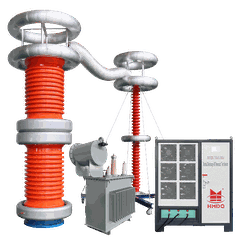
Now, let's take a look at some of our products that can be used for capacitor testing. We have the Generator Power Frequency Tester. This tester is capable of generating a high voltage at a power frequency, which is ideal for testing capacitors. It has a user-friendly interface and can be easily operated by technicians.
We also offer the Multi-Frequency Voltage Test Set. This test set allows us to apply different frequencies of voltage to the capacitors, which can help us simulate real-world conditions. It's a versatile tool that can be used for a wide range of capacitor testing applications.
And then there's the 60kV/2mA DC Hipot Tester. This tester is specifically designed for testing high-voltage capacitors. It can provide a stable DC voltage up to 60kV, which is suitable for most capacitor testing requirements.
When using breakdown voltage test equipment for capacitor testing, we need to follow some safety precautions. First of all, make sure the test equipment is properly grounded to prevent electrical shocks. Also, wear appropriate personal protective equipment, such as gloves and safety glasses. And always follow the manufacturer's instructions when operating the test equipment.
In addition to safety, we also need to consider the test environment. Capacitors can be sensitive to temperature, humidity, and other environmental factors. Therefore, it's important to conduct the tests in a controlled environment to ensure accurate results.
Another thing to keep in mind is that capacitor testing is not a one-time thing. Capacitors can degrade over time due to factors such as temperature, voltage stress, and aging. Therefore, it's recommended to perform regular capacitor testing to monitor their performance and detect any potential issues early on.


Now, let's talk about the limitations of using breakdown voltage test equipment for capacitor testing. One limitation is that it only tests the breakdown voltage of the capacitor. It doesn't provide information about other important parameters, such as capacitance, equivalent series resistance (ESR), and leakage current. To get a more comprehensive understanding of the capacitor's performance, we may need to use other testing methods in addition to breakdown voltage testing.
Another limitation is that breakdown voltage testing can be destructive. Once a capacitor breaks down during the test, it's usually damaged and cannot be used again. Therefore, we need to be careful when selecting the test voltage and make sure it's within the capacitor's rated voltage.
In conclusion, breakdown voltage test equipment can be used for testing capacitors, but it has its pros and cons. It's a useful tool for identifying weak or faulty capacitors and ensuring the quality of electrical systems. However, we need to use it carefully and follow the proper safety precautions. And if we want to get a more comprehensive understanding of the capacitor's performance, we may need to use other testing methods as well.
If you're interested in purchasing breakdown voltage test equipment for capacitor testing or have any questions about our products, feel free to reach out to us. We're here to help you find the right solution for your testing needs.
References
- Electrical Engineering Handbook, CRC Press
- Capacitor Technology and Applications, McGraw-Hill


