

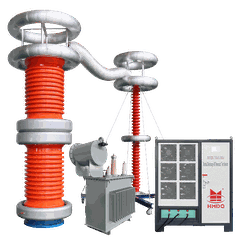


As a supplier of Vehicle-Mounted AC Resonant Testers, I often encounter questions from customers about the applicability of our testers in various scenarios. One frequently asked question is whether a Vehicle-Mounted AC Resonant Tester can be used for testing vehicle charging systems. In this blog, I will delve into this topic, exploring the technical aspects, advantages, and limitations of using our testers for vehicle charging system testing.
Technical Principles of Vehicle-Mounted AC Resonant Testers
Vehicle-Mounted AC Resonant Testers are designed to generate high-voltage alternating current (AC) at a specific resonant frequency. The basic principle behind these testers is the resonance phenomenon, where the inductive reactance and capacitive reactance in the test circuit cancel each other out, resulting in a high current flow at the resonant frequency. This allows for efficient testing of high-voltage equipment with relatively low power input.
The main components of a Vehicle-Mounted AC Resonant Tester include a power source, an inductor, a capacitor, and a control system. The power source provides the initial energy for the test, while the inductor and capacitor form the resonant circuit. The control system is responsible for adjusting the frequency and voltage of the AC output to achieve resonance.
Testing Vehicle Charging Systems
Vehicle charging systems, especially those used in electric vehicles (EVs), operate at high voltages and require thorough testing to ensure safety and reliability. The testing of vehicle charging systems typically involves checking the insulation resistance, dielectric strength, and electrical performance of various components such as charging cables, connectors, and onboard chargers.
Insulation Resistance Testing
Insulation resistance testing is crucial for detecting any insulation breakdown or leakage in the charging system. A Vehicle-Mounted AC Resonant Tester can be used to apply a high-voltage AC signal to the charging system and measure the resulting current. By analyzing the current flow, the insulation resistance can be calculated. If the insulation resistance is below a certain threshold, it indicates a potential safety hazard and further investigation is required.
Dielectric Strength Testing
Dielectric strength testing is used to determine the ability of the insulation material in the charging system to withstand high voltages without breaking down. The Vehicle-Mounted AC Resonant Tester can generate a high-voltage AC signal that is gradually increased until the insulation material breaks down or reaches a pre-determined voltage level. This test helps to ensure that the charging system can operate safely under normal and abnormal conditions.
Electrical Performance Testing
In addition to insulation resistance and dielectric strength testing, the Vehicle-Mounted AC Resonant Tester can also be used to test the electrical performance of the charging system. This includes measuring parameters such as voltage regulation, current output, and power factor. By analyzing these parameters, it is possible to determine whether the charging system is operating efficiently and within the specified limits.
Advantages of Using a Vehicle-Mounted AC Resonant Tester for Vehicle Charging System Testing
There are several advantages to using a Vehicle-Mounted AC Resonant Tester for vehicle charging system testing:
Portability
As the name suggests, Vehicle-Mounted AC Resonant Testers are designed to be mounted on a vehicle, making them highly portable. This allows for on-site testing of vehicle charging systems, which is particularly useful for maintenance and troubleshooting purposes.
High Efficiency
The resonant nature of the test circuit allows for efficient testing of high-voltage equipment with relatively low power input. This not only reduces the energy consumption during testing but also minimizes the risk of damage to the charging system.
Accurate Results
Vehicle-Mounted AC Resonant Testers are equipped with advanced control systems and measurement instruments, which ensure accurate and reliable test results. This is essential for ensuring the safety and performance of vehicle charging systems.
Limitations and Considerations
While Vehicle-Mounted AC Resonant Testers offer many advantages for vehicle charging system testing, there are also some limitations and considerations that need to be taken into account:
Frequency Range
The resonant frequency of the test circuit is determined by the inductance and capacitance values of the inductor and capacitor. Therefore, the frequency range of the Vehicle-Mounted AC Resonant Tester may be limited, which may affect its applicability for testing charging systems with different operating frequencies.


Test Setup
The test setup for using a Vehicle-Mounted AC Resonant Tester can be complex and requires careful planning and preparation. This includes proper connection of the test equipment, grounding, and calibration. Any errors in the test setup can lead to inaccurate test results.
Safety Precautions
Testing high-voltage equipment always involves a certain degree of risk. Therefore, it is essential to follow strict safety precautions when using a Vehicle-Mounted AC Resonant Tester. This includes wearing appropriate personal protective equipment (PPE), ensuring proper grounding, and following the manufacturer's instructions.
Conclusion
In conclusion, a Vehicle-Mounted AC Resonant Tester can be a valuable tool for testing vehicle charging systems. It offers several advantages such as portability, high efficiency, and accurate results. However, it is important to consider the limitations and take appropriate precautions when using this type of tester.
If you are interested in learning more about our Vehicle-Mounted AC Resonant Testers or have any questions about testing vehicle charging systems, please feel free to contact us. We are a leading supplier of high-quality testing equipment and can provide you with the best solutions for your testing needs.
Links
- Capacitor Divider Of Resonant Test Set
- Inductance Adjustable AC Resonant Test System
- AC Resonant Test Set
References
- IEEE Standard for High-Voltage Testing Techniques, Part 1: General Definitions and Test Requirements (IEEE Std 4-2013)
- IEC 61851-1: Electric vehicle conductive charging system - Part 1: General requirements
- UL 2231-1: Personnel Protection Systems for Electric Vehicle Supply Equipment - Part 1: General Requirements


