

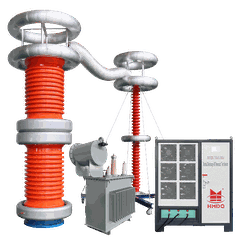

Humidity is a crucial environmental factor that can significantly impact the performance and operational safety of various electrical equipment, including AC Test Transformers - Dry Type. As a leading supplier of these transformers, I've witnessed firsthand how humidity can pose challenges and opportunities for users. In this blog, I'll delve into the effects of humidity on AC Test Transformers - Dry Type and offer insights on how to mitigate potential issues.
Understanding AC Test Transformers - Dry Type
Before we explore the impact of humidity, let's briefly understand what AC Test Transformers - Dry Type are. These transformers are designed to generate high - voltage alternating current for testing electrical insulation in various applications, such as power cables, electrical machines, and switchgear. Unlike oil - filled transformers, dry - type transformers use solid insulation materials, which offer advantages such as reduced fire risk, lower maintenance requirements, and environmental friendliness.
How Humidity Affects AC Test Transformers - Dry Type
Insulation Resistance
One of the most critical aspects affected by humidity is the insulation resistance of the transformer. Insulation materials in dry - type transformers are designed to prevent the flow of electric current between conductors. However, high humidity can cause moisture to be absorbed by the insulation materials. When moisture penetrates the insulation, it creates conductive paths, reducing the insulation resistance.
A decrease in insulation resistance can lead to leakage currents, which not only waste energy but also pose a safety hazard. If the leakage current becomes too large, it can cause overheating in the transformer, potentially leading to insulation breakdown and equipment failure. For example, in a high - humidity environment with relative humidity above 80%, the insulation resistance of a dry - type transformer can drop significantly, increasing the risk of electrical faults.
Surface Discharge
Humidity can also promote surface discharge on the transformer. When moisture condenses on the surface of the insulation, it can form a thin layer of water. This water layer can lower the surface flashover voltage, making it easier for electrical discharges to occur along the surface of the insulation. Surface discharges can erode the insulation material over time, reducing its effectiveness and lifespan.
In extreme cases, surface discharges can lead to partial discharges, which are small electrical discharges that occur within the insulation. Partial discharges can generate heat and chemical reactions that damage the insulation, ultimately leading to insulation failure. For instance, in a coastal area where the humidity is often high and there are salt particles in the air, the combination of moisture and salt can accelerate the surface discharge process, causing more severe damage to the transformer.
Corrosion
Another effect of humidity on dry - type transformers is corrosion. The metal components of the transformer, such as the core, windings, and enclosure, are susceptible to corrosion in a humid environment. Moisture in the air can react with the metal surfaces, forming metal oxides. Corrosion can weaken the structural integrity of the transformer, leading to mechanical failures.
Moreover, corrosion products can also affect the electrical performance of the transformer. For example, if the corrosion occurs on the winding connections, it can increase the contact resistance, causing overheating and potential short - circuits. In industrial areas with high humidity and pollutants in the air, the corrosion rate of the transformer components can be even higher, requiring more frequent inspections and maintenance.
Mitigating the Effects of Humidity
Environmental Control
One of the most effective ways to mitigate the effects of humidity is to control the environment in which the transformer operates. This can be achieved by installing the transformer in a climate - controlled room or enclosure. Air - conditioning systems can be used to maintain a stable temperature and humidity level. For example, keeping the relative humidity between 40% and 60% can significantly reduce the risk of moisture absorption and surface discharge.
In addition, proper ventilation is also essential. Ventilation can help remove moisture from the air around the transformer and prevent the accumulation of heat. However, it's important to ensure that the ventilation system is designed to prevent the entry of dust and pollutants, which can also damage the transformer.
Insulation Coating
Applying an insulation coating to the transformer can also help protect it from humidity. Insulation coatings can provide an additional barrier against moisture and prevent it from reaching the insulation materials. There are various types of insulation coatings available, such as epoxy - based coatings and silicone - based coatings. These coatings can improve the surface hydrophobicity, reducing the likelihood of moisture condensation and surface discharge.
Regular Inspections and Maintenance
Regular inspections and maintenance are crucial for detecting and addressing humidity - related issues in a timely manner. Inspections should include checking the insulation resistance, surface condition of the insulation, and the presence of corrosion on the metal components. If any signs of moisture absorption, surface discharge, or corrosion are detected, appropriate measures should be taken immediately.
For example, if the insulation resistance is found to be below the acceptable level, the transformer may need to be dried using a heating process. If there is corrosion on the metal components, they may need to be cleaned and coated with anti - corrosion paint.
Related Products and Their Advantages
As a supplier of AC Test Transformers - Dry Type, we also offer a range of related products that can be used in conjunction with our transformers to enhance testing capabilities and ensure reliable operation.
- AC Test Transformer - SF6 Gas Type: SF6 gas - filled transformers offer excellent insulation properties and are less affected by humidity compared to dry - type transformers. They are suitable for applications where high - voltage testing is required in harsh environments.
- Water - cooled Generator Insulation Resistance Tester: This tester can be used to accurately measure the insulation resistance of generators, which is also affected by humidity. It provides reliable results even in high - humidity conditions.
- 200kV/2mA DC Hipot Tester: A DC hipot tester is useful for testing the insulation integrity of electrical equipment. Our 200kV/2mA DC Hipot Tester is designed to work effectively in various humidity levels, ensuring accurate and safe testing.
Conclusion
Humidity can have a significant impact on the performance and lifespan of AC Test Transformers - Dry Type. From reducing insulation resistance to promoting surface discharge and corrosion, the effects of humidity can lead to various electrical and mechanical problems. However, by understanding these effects and implementing appropriate mitigation measures, such as environmental control, insulation coating, and regular maintenance, the risks associated with humidity can be minimized.


If you are in the market for high - quality AC Test Transformers - Dry Type or related testing equipment, we are here to help. Our products are designed to meet the highest standards of quality and performance, even in challenging environments. Contact us to discuss your specific requirements and let's start a fruitful procurement negotiation.
References
- Electrical Insulation Handbook, McGraw - Hill
- IEEE Standards for Dry - Type Transformers
- Research papers on the impact of humidity on electrical equipment insulation