

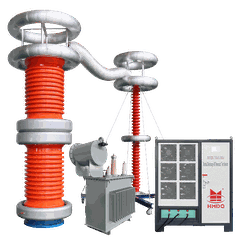

As a supplier of Multi-Frequency Voltage Test Sets, I often encounter questions from customers regarding various technical aspects of our products. One of the frequently asked questions is about the ripple factor of the output voltage of a Multi-Frequency Voltage Test Set. In this blog post, I will delve into the concept of ripple factor, its significance in the context of Multi-Frequency Voltage Test Sets, and how it impacts the performance and accuracy of these test sets.
Understanding Ripple Factor
Ripple factor is a crucial parameter that quantifies the amount of AC component present in a DC output voltage. In an ideal DC power supply, the output voltage would be completely constant, with no fluctuations. However, in real-world scenarios, due to the limitations of power conversion circuits and other factors, there is always a small amount of AC ripple superimposed on the DC output.
The ripple factor is defined as the ratio of the root mean square (RMS) value of the AC component of the output voltage to the DC component of the output voltage. Mathematically, it can be expressed as:
[ RF=\frac{V_{rms(AC)}}{V_{DC}}\times100% ]
where ( RF ) is the ripple factor, ( V_{rms(AC)} ) is the RMS value of the AC component of the output voltage, and ( V_{DC} ) is the DC component of the output voltage.
A lower ripple factor indicates a more stable DC output, with less AC interference. This is particularly important in applications where a stable DC voltage is required, such as in electronic circuits, battery charging systems, and voltage testing equipment.
Significance of Ripple Factor in Multi-Frequency Voltage Test Sets
In the context of Multi-Frequency Voltage Test Sets, the ripple factor of the output voltage plays a critical role in ensuring accurate and reliable test results. These test sets are used to generate voltages at multiple frequencies for testing the insulation properties of electrical equipment, such as cables, transformers, and generators.
A high ripple factor in the output voltage of a Multi-Frequency Voltage Test Set can introduce errors in the test results, leading to inaccurate assessments of the insulation condition of the equipment under test. For example, the AC ripple can cause additional stress on the insulation, which may result in premature breakdown or false indications of insulation degradation.
Moreover, in some applications, such as partial discharge testing, the presence of excessive ripple can mask the weak partial discharge signals, making it difficult to detect and analyze these signals accurately. This can have serious consequences, as partial discharge is often an early indicator of insulation failure, and timely detection is crucial for preventing equipment breakdowns and ensuring the safety and reliability of the electrical system.
Therefore, it is essential to minimize the ripple factor of the output voltage of a Multi-Frequency Voltage Test Set to ensure the accuracy and reliability of the test results.
Factors Affecting the Ripple Factor
Several factors can affect the ripple factor of the output voltage of a Multi-Frequency Voltage Test Set. These include:
Power Supply Design
The design of the power supply circuit is one of the primary factors that influence the ripple factor. A well-designed power supply with proper filtering and regulation can significantly reduce the AC ripple in the output voltage. For example, using high-quality capacitors and inductors in the power supply circuit can help to smooth out the voltage fluctuations and reduce the ripple factor.
Load Conditions
The load connected to the output of the Multi-Frequency Voltage Test Set can also affect the ripple factor. A heavy load can cause the output voltage to drop, which may increase the relative magnitude of the AC ripple. Additionally, the load impedance can interact with the power supply circuit, leading to resonance effects that can further increase the ripple factor.
Frequency of Operation
The frequency of the output voltage can also have an impact on the ripple factor. At higher frequencies, the ripple factor may increase due to the limitations of the power supply components and the increased difficulty of filtering the high-frequency components.
Measuring the Ripple Factor
To ensure that the ripple factor of the output voltage of a Multi-Frequency Voltage Test Set meets the required specifications, it is necessary to measure the ripple factor accurately. This can be done using a digital multimeter or an oscilloscope.
When using a digital multimeter, the DC component of the output voltage can be measured first, followed by the RMS value of the AC component. The ripple factor can then be calculated using the formula mentioned earlier.
An oscilloscope provides a more detailed view of the output voltage waveform, allowing for a visual inspection of the ripple. By measuring the peak-to-peak value of the ripple and converting it to the RMS value, the ripple factor can be calculated.
Minimizing the Ripple Factor
As a supplier of Multi-Frequency Voltage Test Sets, we take several measures to minimize the ripple factor of the output voltage of our products. These include:
Advanced Power Supply Design
We use advanced power supply designs that incorporate high-quality filtering components and voltage regulation circuits to reduce the AC ripple in the output voltage. Our power supplies are designed to provide a stable DC output with a low ripple factor, even under varying load conditions.
Load Management
We provide guidelines on the appropriate load conditions for our Multi-Frequency Voltage Test Sets to ensure that the ripple factor remains within the specified limits. By selecting the right load impedance and avoiding overloading the test set, the ripple factor can be minimized.
Frequency Optimization
We optimize the frequency response of our Multi-Frequency Voltage Test Sets to ensure that the ripple factor remains low across the entire frequency range. This is achieved through careful selection of the power supply components and the use of advanced control algorithms.


Related Products
In addition to our Multi-Frequency Voltage Test Sets, we also offer a range of related products that can be used in conjunction with these test sets to enhance the testing capabilities and accuracy. These include:
- AC/DC High Votlage Divider: This device is used to measure high voltages accurately by dividing the voltage by a known ratio. It can be used in conjunction with our Multi-Frequency Voltage Test Sets to measure the output voltage and verify the ripple factor.
- Generator Power Frequency Tester: This tester is specifically designed to test the power frequency characteristics of generators. It can be used to ensure that the generator is operating within the specified frequency range and to detect any frequency-related issues.
- Water-cooled Generator Insulation Resistance Tester: This tester is used to measure the insulation resistance of water-cooled generators. It can help to detect any insulation problems early on, preventing costly breakdowns and ensuring the reliable operation of the generator.
Conclusion
The ripple factor of the output voltage of a Multi-Frequency Voltage Test Set is a critical parameter that can significantly impact the accuracy and reliability of the test results. By understanding the concept of ripple factor, its significance, and the factors that affect it, users can take appropriate measures to ensure that the ripple factor remains within the acceptable limits.
As a supplier of Multi-Frequency Voltage Test Sets, we are committed to providing high-quality products with low ripple factors to meet the needs of our customers. If you are interested in learning more about our products or have any questions regarding the ripple factor or other technical aspects, please feel free to contact us for further discussion and potential procurement.
References
- Electric Power Systems Testing Handbook, Second Edition, by A. J. Hanson
- High Voltage Engineering: Theory and Practice, by E. Kuffel, W. S. Zaengl, and J. Kuffel