

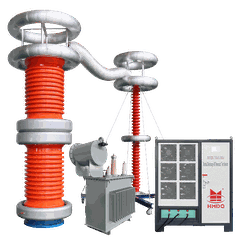

Hey there! As a supplier of VLF hipot testers, I often get asked about how to interpret the test results of these nifty devices. So, I thought I'd put together this blog post to break it down for you in a way that's easy to understand.
First off, let's quickly go over what a VLF hipot tester is. A VLF (Very Low Frequency) hipot tester is used to perform dielectric withstand and insulation resistance tests on electrical cables, motors, and other high - voltage equipment. It's a crucial tool for ensuring the safety and reliability of these electrical components.
Understanding the Basics of Test Results
When you run a test using a VLF hipot tester, you're mainly looking at two key parameters: the leakage current and the dielectric loss factor (tan delta).
Leakage Current
The leakage current is the amount of current that flows through the insulation of the device under test. A small amount of leakage current is normal, but if it's too high, it could indicate a problem with the insulation.
If the leakage current is within the acceptable range specified by the manufacturer of the equipment being tested, then the insulation is likely in good condition. However, if the leakage current exceeds the limit, it might mean that there are insulation defects such as cracks, moisture ingress, or aging.
For example, let's say you're testing a cable with a VLF hipot tester. The manufacturer's specification says that the maximum allowable leakage current for this cable is 100 microamps. If your VLF hipot tester shows a leakage current of 80 microamps, that's a good sign. But if it shows 150 microamps, you've got a red flag. You might want to take a closer look at the cable, check for any visible damage, or perform further tests.
Dielectric Loss Factor (Tan Delta)
The dielectric loss factor, also known as tan delta, is a measure of the energy dissipated in the insulation as heat. A higher tan delta value indicates that more energy is being lost in the insulation, which could be due to insulation degradation.
A healthy insulation typically has a low tan delta value. As the insulation ages or gets damaged, the tan delta value increases. For instance, a new cable might have a tan delta value of around 0.005, while a cable that's been in service for a long time and has some insulation issues could have a tan delta value of 0.02 or higher.
Our VLF Hipot Tester with Tan Delta Measurement is a great tool for accurately measuring the tan delta. It provides reliable data that can help you assess the condition of the insulation.
Interpreting Different Test Scenarios
Passing Test Results
If both the leakage current and the tan delta are within the acceptable limits, then the test is considered a pass. This means that the insulation of the equipment under test is in good condition and can be expected to perform reliably.
For example, when testing a motor with our 50kV VLF Hipot Tester, if the leakage current is well below the maximum limit and the tan delta is low, you can be confident that the motor's insulation is in good shape. You can then put the motor back into service without major concerns.
Failing Test Results
On the other hand, if either the leakage current or the tan delta exceeds the acceptable limits, the test fails. A failing test result doesn't necessarily mean that the equipment is completely useless. It just means that there's a problem that needs to be addressed.
Let's say you're using an 80kV VLF Hipot Tester to test a high - voltage cable, and the leakage current is way above the limit. This could be due to a physical break in the cable insulation or severe moisture damage. You might need to repair or replace the cable section that's causing the problem.
If the tan delta is high, it could be a sign of long - term insulation aging. In this case, you might want to monitor the cable more closely over time or consider replacing it before it fails completely.


Factors Affecting Test Results
There are several factors that can affect the test results of a VLF hipot tester.
Temperature
Temperature can have a significant impact on the insulation resistance and the tan delta. Generally, as the temperature increases, the insulation resistance decreases, and the tan delta increases. So, it's important to take temperature readings during the test and make appropriate corrections to the test results.
Humidity
High humidity can also cause an increase in the leakage current. Moisture can seep into the insulation, reducing its resistance and increasing the current flow. If you're testing in a humid environment, you might get false - positive results. It's a good idea to wait for a dry day or use dehumidifiers to control the humidity in the testing area.
Frequency
The frequency of the test voltage can affect the test results. VLF hipot testers typically operate at frequencies between 0.1 Hz and 0.01 Hz. Different frequencies can interact with the insulation in different ways, so it's important to use the frequency recommended by the equipment manufacturer.
Tips for Accurate Interpretation
- Keep Good Records: Maintain detailed records of all your VLF hipot tests, including the test results, the date of the test, the temperature, and the humidity. This will help you track the condition of the equipment over time and identify any trends.
- Compare with Baseline Data: If you have baseline test results from when the equipment was new or in good condition, compare the current results with the baseline. Any significant changes can indicate a problem.
- Consult the Manufacturer: If you're unsure about how to interpret the test results, don't hesitate to contact the manufacturer of the equipment being tested or the VLF hipot tester. They can provide valuable insights and guidance.
Conclusion
Interpreting the test results of a VLF hipot tester is an important skill for anyone involved in electrical equipment maintenance and testing. By understanding the key parameters like leakage current and tan delta, and taking into account the factors that can affect the results, you can accurately assess the condition of the insulation.
If you're in the market for a high - quality VLF hipot tester or need more information on how to use them effectively, we're here to help. Whether you're looking for a VLF Hipot Tester with Tan Delta Measurement, an 80kV VLF Hipot Tester, or a 50kV VLF Hipot Tester, we've got you covered. Reach out to us to start a conversation about your testing needs and let's find the perfect solution for you.
References
- Electrical Insulation Testing Handbook
- Manufacturer's manuals for VLF hipot testers and electrical equipment under test