

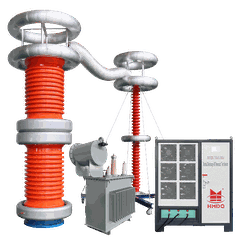

As a supplier of the Inductive Resonant Test System, I am well - versed in its operation and am excited to share this knowledge with you. An Inductive Resonant Test System is a crucial piece of equipment in the high - voltage testing field. It is used to conduct various tests on electrical equipment, ensuring their safety and reliability before they are put into actual use.
Understanding the Inductive Resonant Test System
Before delving into the operation, it's essential to understand what an Inductive Resonant Test System is. This system operates on the principle of resonance, where the inductive reactance and capacitive reactance in the circuit balance each other out, resulting in a high - quality factor and efficient energy transfer. It is mainly composed of a variable - frequency power supply, an inductor, a capacitor, and a control unit.
The variable - frequency power supply is responsible for providing the adjustable frequency and voltage required for the test. The inductor and capacitor form the resonant circuit, and the control unit monitors and controls the entire testing process.
Pre - operation Preparations
Site Inspection
The first step in operating an Inductive Resonant Test System is to conduct a thorough site inspection. The test site should be clean, dry, and free from any flammable or explosive substances. Ensure that there is enough space around the test equipment for easy operation and ventilation. The ground should be flat and stable to prevent any movement of the equipment during the test.


Equipment Check
Check all the components of the Inductive Resonant Test System. Inspect the variable - frequency power supply for any visible damage, loose connections, or abnormal noises. Examine the inductor and capacitor for signs of overheating, cracks, or leakage. Make sure that all the cables are in good condition, without any cuts or abrasions.
Test Object Preparation
The test object, such as a cable or a transformer, should be properly prepared. It should be disconnected from the power grid and any other electrical equipment. Clean the surface of the test object to remove any dirt or contaminants that may affect the test results. Measure the capacitance and insulation resistance of the test object before the test to have a baseline for comparison.
System Setup
Connection of Components
Connect the variable - frequency power supply, inductor, capacitor, and test object according to the system's wiring diagram. Use high - quality cables with appropriate cross - sectional areas to ensure good electrical conductivity. Make sure all the connections are tight to prevent any loose contacts, which can cause arcing and affect the test results.
Parameter Setting
Set the initial parameters on the control unit. The most important parameters include the test voltage, test frequency, and test time. The test voltage should be determined based on the rated voltage of the test object and relevant standards. The test frequency is usually adjusted to achieve resonance in the circuit. The test time depends on the type of test and the requirements of the test object.
Test Execution
Initialization
After setting up the system and parameters, initialize the Inductive Resonant Test System. The control unit will perform a self - check to ensure that all the components are functioning properly. It will also detect the initial capacitance and inductance of the circuit to calculate the resonant frequency.
Frequency Sweep
Start the frequency sweep process. The variable - frequency power supply will gradually change the frequency within a certain range. During the frequency sweep, the control unit will monitor the current and voltage in the circuit. When the circuit reaches resonance, the current will reach a maximum value, and the voltage across the test object will be at the set test voltage.
Test Monitoring
Once the resonance is achieved, start the actual test. Continuously monitor the test parameters, such as voltage, current, and temperature. Any abnormal changes in these parameters may indicate a problem with the test object or the test system. For example, a sudden drop in voltage or an increase in current may suggest a breakdown in the insulation of the test object.
Test Completion
After the specified test time has elapsed, stop the test. Gradually reduce the test voltage to zero and turn off the variable - frequency power supply. Disconnect the test object from the system and measure its capacitance and insulation resistance again to check for any changes.
Troubleshooting
Resonance Not Achieved
If the system fails to achieve resonance, there could be several reasons. Check the connections of the components to ensure they are correct. The capacitance or inductance of the test object may be different from the expected value, so re - measure these parameters. The variable - frequency power supply may not be providing the correct frequency range, so adjust the frequency settings accordingly.
Abnormal Current or Voltage
Abnormal current or voltage readings during the test may be due to a short - circuit or a breakdown in the test object. Immediately stop the test and inspect the test object for any visible damage. Check the insulation of the cables and components to ensure there are no leaks.
Overheating
If any component of the Inductive Resonant Test System overheats, stop the test immediately. Overheating may be caused by excessive current, poor ventilation, or a malfunctioning component. Check the cooling system and ensure that the ventilation holes are not blocked. If the problem persists, contact the manufacturer for further assistance.
Other Related Test Systems
In addition to the Inductive Resonant Test System, there are other related test systems, such as the Variable Frequency AC Resonant Test System and the AC Resonant Test System for CVT. The Variable Frequency AC Resonant Test System offers more flexibility in adjusting the frequency, which is suitable for testing a wide range of electrical equipment. The AC Resonant Test System for CVT is specifically designed for testing Capacitor Voltage Transformers (CVTs), ensuring their accurate performance.
Conclusion
Operating an Inductive Resonant Test System requires careful preparation, proper setup, and vigilant monitoring. By following the steps outlined in this blog, you can ensure the safe and efficient operation of the system and obtain accurate test results. Whether you are testing cables, transformers, or other electrical equipment, a well - operated Inductive Resonant Test System is essential for maintaining the quality and reliability of your electrical infrastructure.
If you are interested in purchasing an Inductive Resonant Test System or have any questions about its operation, please feel free to contact us for further discussion. We are committed to providing you with high - quality products and professional technical support.
References
- Electrical Testing Handbook, Third Edition
- Standards for High - Voltage Testing Equipment