

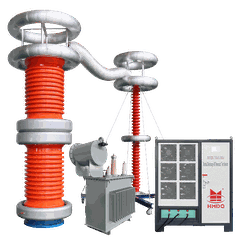

Hey there! As a supplier of AC Resonant Test System With PD, I often get asked about the difference between portable and stationary AC Resonant Test Systems With PD. So, I thought I'd take a moment to break it down for you.
What's an AC Resonant Test System With PD?
First off, let's quickly go over what an AC Resonant Test System with PD is. It's a crucial piece of equipment used in the electrical industry for testing high-voltage equipment. The "AC" stands for alternating current, which is the type of current used in most electrical systems. The "resonant" part refers to the system's ability to create a resonant circuit, which helps in generating high voltages efficiently. And "PD" stands for partial discharge, which is a key parameter to measure in high-voltage equipment as it can indicate potential insulation problems.
Portable AC Resonant Test System With PD
Portability is the name of the game here. Portable AC Resonant Test Systems With PD are designed to be easily moved from one location to another. They're great for on-site testing, especially when you need to test equipment in different places or in remote areas.


Advantages
- Mobility: The biggest advantage is, of course, the ability to move it around. You can take it to different job sites, whether it's a power plant, a substation, or even a construction site. This flexibility means you can test equipment right where it's installed, saving time and money on transporting the equipment to a testing facility.
- Quick Setup: Portable systems are usually designed for quick and easy setup. They often come with pre-configured settings and user-friendly interfaces, so you can get the testing up and running in no time. This is especially useful when you have a tight schedule or need to perform multiple tests in a short period.
- Cost-Effective for Smaller Projects: If you're working on smaller projects or don't need to test large amounts of equipment regularly, a portable system can be a more cost-effective option. You don't have to invest in a large, stationary system that may be overkill for your needs.
Disadvantages
- Limited Power and Capacity: Portable systems typically have a lower power output and capacity compared to stationary ones. This means they may not be suitable for testing very large or high-voltage equipment. If you need to test equipment with high voltage ratings or large capacitances, you may run into limitations.
- Less Durable: Due to their portability, they may not be as rugged or durable as stationary systems. They're more likely to be exposed to rough handling during transportation, which could potentially lead to damage over time.
Stationary AC Resonant Test System With PD
On the other hand, stationary AC Resonant Test Systems With PD are designed to stay in one place, usually in a dedicated testing facility.
Advantages
- High Power and Capacity: Stationary systems can handle much higher power outputs and larger capacitances. This makes them ideal for testing large high-voltage equipment, such as transformers, generators, and long cables. They can provide the high voltages and currents needed for accurate testing of these types of equipment.
- Precision and Stability: Since they're installed in a fixed location, stationary systems can offer better precision and stability. They're less likely to be affected by external factors such as vibrations or temperature changes, which can improve the accuracy of the test results.
- Customization: Stationary systems can be more easily customized to meet specific testing requirements. You can add additional components or features to the system to perform a wider range of tests or to test different types of equipment.
Disadvantages
- Lack of Mobility: The obvious drawback is that they're not portable. Once installed, it's difficult and expensive to move them to a different location. This means you'll need to transport the equipment to the testing facility, which can be time-consuming and costly, especially for large or heavy equipment.
- Higher Initial Investment: Stationary systems generally require a higher initial investment. They're larger, more complex, and often come with more advanced features, which all contribute to a higher cost. Additionally, you'll need to set up a dedicated testing facility, which adds to the overall cost.
Specific Applications
Let's take a look at some specific applications where each type of system shines.
Portable Systems
- Field Testing of Distribution Cables: Portable systems are perfect for testing distribution cables in the field. You can easily take the system to the location where the cables are installed and perform on-site tests to check for any insulation problems or partial discharge issues.
- Testing of Small Transformers: For smaller transformers used in industrial or commercial settings, a portable system can provide an efficient and cost-effective way to test them. You can move the system to the transformer location and quickly perform the necessary tests.
- Temporary Testing at Construction Sites: During construction projects, there may be a need to test electrical equipment before it's fully integrated into the system. A portable system can be easily brought to the construction site to perform these temporary tests.
Stationary Systems
- Testing of Large Power Transformers: Large power transformers used in power plants and substations require high voltages and currents for accurate testing. Stationary systems are the best choice for this type of application as they can provide the necessary power and capacity.
- Quality Control in Manufacturing: In a manufacturing environment, stationary systems can be used for quality control purposes. They can be set up in a dedicated testing area to test every piece of equipment before it leaves the factory, ensuring that it meets the required standards.
- Research and Development: For research and development purposes, stationary systems offer the precision and stability needed to conduct in-depth studies on high-voltage equipment. You can customize the system to perform a variety of tests and collect accurate data for analysis.
Our Product Offerings
As a supplier, we offer both Container AC Resonant Test System and Vehicle-Mounted AC Resonant Tester which are great examples of portable solutions. These are designed to provide high-quality testing while maintaining the flexibility and mobility required for on-site testing.
Our stationary AC Resonant Test Systems With PD are built to deliver high power and precision for large-scale testing applications. They're customizable to meet your specific needs and are backed by our technical support team to ensure smooth operation.
Conclusion
In conclusion, the choice between a portable and a stationary AC Resonant Test System With PD depends on your specific testing requirements. If you need mobility, quick setup, and cost-effectiveness for smaller projects, a portable system is the way to go. On the other hand, if you need high power, precision, and customization for large-scale testing, a stationary system is the better option.
If you're in the market for an AC Resonant Test System With PD, I'd love to have a chat with you to understand your needs and help you choose the right system. Whether it's a portable or stationary system, we have the expertise and the products to meet your requirements. So, don't hesitate to reach out and start the conversation about your testing needs.
References
- Electrical Power Systems Testing Handbook
- High Voltage Engineering: Theory and Practice by M. S. Naidu and V. Kamaraju