


What is the power consumption of a lightning impulse voltage generator?
As a supplier of lightning impulse voltage generators, I often encounter inquiries from customers about the power consumption of these devices. Understanding the power consumption is crucial for both operational efficiency and cost - effectiveness. In this blog, I will delve into the factors that influence the power consumption of a lightning impulse voltage generator and provide some insights based on our extensive experience in the industry.
1. Basic Working Principle of Lightning Impulse Voltage Generators
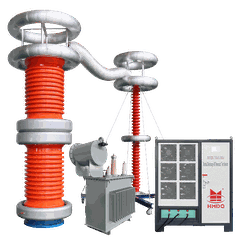
Before discussing power consumption, it's essential to understand how a lightning impulse voltage generator works. A lightning impulse voltage generator is designed to simulate the high - voltage impulses similar to those produced by natural lightning. It typically consists of a charging circuit, a set of capacitors, a triggering system, and a discharge circuit.


The charging circuit is responsible for charging the capacitors to a high voltage. Once the capacitors are fully charged, the triggering system initiates the discharge process. During discharge, the stored energy in the capacitors is released through the discharge circuit, generating a high - voltage impulse. This impulse is then applied to the test object, such as electrical insulation materials or power system components, to evaluate their ability to withstand lightning - like surges.
2. Factors Affecting Power Consumption
2.1 Charging Process
The charging process is one of the main sources of power consumption in a lightning impulse voltage generator. The power required for charging the capacitors depends on several factors:
- Capacitance and Voltage Rating: The energy stored in a capacitor is given by the formula (E=\frac{1}{2}CV^{2}), where (C) is the capacitance and (V) is the voltage. A higher capacitance or voltage rating means more energy needs to be stored in the capacitor, which in turn requires more power during the charging process. For example, our 1800kV/180kJ Lightning Impulse Voltage Generator has a relatively large energy storage capacity, and thus the charging power consumption is significant compared to smaller - rated generators.
- Charging Time: The time taken to charge the capacitors also affects power consumption. A shorter charging time requires a higher charging current, which means more power is drawn from the power supply. Some applications may require quick charging to increase the test efficiency, but this comes at the cost of higher instantaneous power consumption.
2.2 Discharge Process
Although the discharge process is a rapid release of stored energy, it also has an impact on power consumption in an indirect way. During discharge, there are losses in the discharge circuit due to resistance. These losses result in the conversion of some of the stored energy into heat, which means that more energy needs to be stored in the capacitors initially to compensate for these losses. The magnitude of these losses depends on the resistance of the discharge circuit components, such as the discharge switch and the connecting cables.
2.3 Auxiliary Systems
In addition to the main charging and discharging circuits, lightning impulse voltage generators also have auxiliary systems, such as control systems, cooling systems, and monitoring devices. These auxiliary systems consume power continuously during the operation of the generator. For example, the cooling system is necessary to dissipate the heat generated during the charging and discharging processes. The power consumption of the cooling system depends on its type and capacity, as well as the ambient temperature.
3. Measuring and Calculating Power Consumption
Measuring the power consumption of a lightning impulse voltage generator can be a complex task due to the intermittent nature of its operation. The power consumption during the charging process is relatively easy to measure using a power meter connected to the charging circuit. However, the overall power consumption over a test cycle also needs to take into account the power consumption of the auxiliary systems and the losses during the discharge process.
To calculate the power consumption, we can use the following steps:
- Determine the energy stored in the capacitors for each impulse. This can be calculated using the formula (E=\frac{1}{2}CV^{2}) based on the capacitance and voltage rating of the capacitors.
- Measure the charging time (t_{charge}) and calculate the average charging power (P_{charge}=\frac{E}{t_{charge}}).
- Estimate the power consumption of the auxiliary systems (P_{aux}) based on the specifications of the control, cooling, and monitoring devices.
- Consider the losses during the discharge process. These losses can be estimated through experimental measurements or theoretical calculations based on the resistance of the discharge circuit components.
- The total power consumption per test cycle (P_{total}) is the sum of the charging power, the power consumption of the auxiliary systems, and the power equivalent of the discharge losses.
4. Strategies to Reduce Power Consumption
As a supplier, we understand the importance of reducing power consumption for our customers. Here are some strategies that can be employed:
- Optimize the Charging Circuit: By using high - efficiency charging components, such as low - loss transformers and rectifiers, the power losses during the charging process can be reduced. Additionally, adjusting the charging time and current can also help to optimize the power consumption.
- Improve the Discharge Circuit: Minimizing the resistance of the discharge circuit components can reduce the losses during the discharge process. This can be achieved by using high - conductivity materials for the cables and switches.
- Energy - Efficient Auxiliary Systems: Selecting energy - efficient control, cooling, and monitoring devices can significantly reduce the power consumption of the auxiliary systems. For example, using variable - speed fans in the cooling system can adjust the cooling capacity according to the actual heat generation, thus saving energy.
5. Our Product Range and Power Consumption Considerations
We offer a wide range of lightning impulse voltage generators, including 100kA Impulse Current Generator and 200kA Impulse Current Generator. Each of our products is designed with power consumption in mind.
For smaller - scale applications, our lower - rated generators have relatively lower power consumption, making them suitable for laboratories with limited power supply capacity. On the other hand, our high - voltage and high - energy generators are designed to meet the requirements of large - scale power system testing. Although they have higher power consumption, we have implemented various energy - saving measures to ensure that the power consumption is as efficient as possible.
6. Contact Us for Procurement and Consultation
If you are interested in our lightning impulse voltage generators and want to know more about their power consumption and other technical specifications, please feel free to contact us. Our team of experts is ready to provide you with detailed information and help you select the most suitable product for your needs. Whether you are conducting research in a laboratory or performing quality control in a manufacturing plant, our generators can meet your requirements with high performance and energy efficiency.
References
- Grover, F. W. (1946). Inductance Calculations: Working Formulas and Tables. Dover Publications.
- Kuffel, E., & Zaengl, W. S. (1984). High Voltage Engineering: Fundamentals. Pergamon Press.
- IEEE Standard for Tests with Standard Wave Shapes for Power Apparatus (IEEE Std C62.41.1 - 2002).