

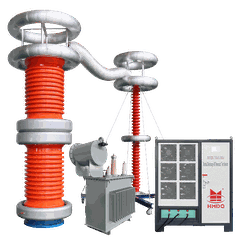

In the realm of high - voltage testing, lightning impulse voltage generators play a pivotal role. These generators are essential for simulating lightning strikes and other transient over - voltages, enabling manufacturers to test the insulation performance and reliability of electrical equipment. A question that often arises is whether a lightning impulse voltage generator can be customized according to specific requirements. As a supplier of lightning impulse voltage generators, I am here to delve into this topic and shed light on the possibilities and considerations.
The Nature of Customization Needs
The demand for customized lightning impulse voltage generators stems from the diverse requirements of different industries and applications. Electrical power systems, for example, may need generators to test high - voltage transmission lines, transformers, and switchgear. Each of these components has unique voltage levels, energy requirements, and impulse waveforms that need to be accurately simulated.


In the research and development field, scientists and engineers may need generators with very specific parameters to conduct experiments on new materials or innovative electrical devices. They might require a generator that can produce a particular impulse shape, such as a double - exponential waveform with precise front - time and tail - time characteristics.
Technical Feasibility of Customization
From a technical perspective, customizing a lightning impulse voltage generator is indeed feasible. These generators are typically composed of several key components, including capacitors, resistors, switches, and control systems. By carefully selecting and configuring these components, it is possible to achieve a wide range of output parameters.
Capacitors are used to store electrical energy, and the capacitance value can be adjusted to control the energy output of the generator. Resistors are employed to shape the impulse waveform, and by changing the resistance values, we can modify the front - time and tail - time of the impulse. Switches, such as spark gaps or thyristors, are responsible for discharging the stored energy, and different types of switches can be chosen based on the required switching speed and reliability.
The control system of the generator is also crucial for customization. Advanced control algorithms can be implemented to ensure accurate and repeatable output waveforms. For example, digital control systems can be used to precisely control the charging and discharging processes, allowing for fine - tuning of the impulse parameters.
Examples of Customized Generators
We have a wide range of products that showcase the possibility of customization. For instance, our 300kV/20kJ Lightning Impulse Voltage Generator is designed for medium - voltage applications. It can be customized in terms of its output voltage and energy to meet the specific needs of different customers. The generator's control system can be adjusted to produce various impulse waveforms, making it suitable for a variety of testing scenarios.
On the other hand, our 5600kV Lightning Impulse Voltage Generator is a high - end product that can be customized for ultra - high - voltage testing. This generator is equipped with state - of - the - art components and advanced control technology, allowing for precise customization of the output parameters. It can be used to test large - scale power equipment, such as extra - high - voltage transformers and gas - insulated switchgear.
In addition to voltage generators, we also offer customized impulse current generators. Our 200kA Impulse Current Generator can be tailored to produce different current amplitudes and waveforms. This type of generator is often used to test the lightning protection performance of electrical equipment, such as surge arresters and grounding systems.
Considerations in Customization
While customization is possible, there are several considerations that need to be taken into account. Firstly, cost is an important factor. Customizing a generator usually requires additional engineering work, special components, and more rigorous testing. As a result, the cost of a customized generator may be higher than that of a standard model. However, in many cases, the benefits of having a generator that precisely meets the specific requirements outweigh the additional cost.
Secondly, lead time is another consideration. Customizing a generator takes time, as it involves design, manufacturing, and testing processes. Customers need to plan ahead and allow sufficient time for the customization to be completed.
Thirdly, safety is of utmost importance. Lightning impulse voltage generators produce extremely high voltages and currents, which can be dangerous if not properly designed and operated. When customizing a generator, strict safety standards must be followed to ensure the safety of operators and the surrounding environment.
The Process of Customization
The customization process typically starts with a detailed consultation with the customer. We work closely with the customer to understand their specific requirements, including the desired output voltage, current, energy, impulse waveform, and any other special features. Based on this information, our engineering team will design a customized solution.
Once the design is finalized, we will start the manufacturing process. Our production facilities are equipped with advanced manufacturing equipment and quality control systems to ensure the high quality of the customized generator. During the manufacturing process, we will keep the customer informed of the progress and make any necessary adjustments based on their feedback.
After the generator is manufactured, it will undergo a series of rigorous tests to ensure that it meets the specified parameters and safety standards. These tests include waveform measurement, voltage and current calibration, and insulation resistance testing. Only after passing all the tests will the generator be delivered to the customer.
Conclusion
In conclusion, a lightning impulse voltage generator can be customized according to specific requirements. With the advancement of technology, we have the technical capabilities to design and manufacture generators with a wide range of output parameters. Whether it is for power system testing, research and development, or other applications, we can provide customized solutions to meet the diverse needs of our customers.
If you have specific requirements for a lightning impulse voltage generator or an impulse current generator, we invite you to contact us for a detailed discussion. Our experienced team will be happy to assist you in finding the best customized solution for your needs.
References
- High - Voltage Engineering: Theory and Practice, by M. S. Naidu and V. Kamaraju
- Electrical Insulation for Rotating Machines: Design, Evaluation, Aging, Testing, and Repair, by G. C. Stone, E. A. Boulter, I. Culbert, and L. S. S. Sabau