

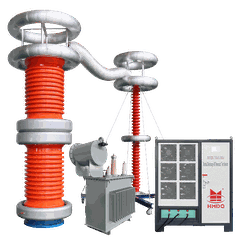

Hey there! As a supplier of lightning impulse voltage generators, I often get asked about the impulse voltage wave shape of these nifty devices. So, I thought I'd take a moment to break it down for you in a way that's easy to understand.
First off, let's talk about what a lightning impulse voltage generator is. Simply put, it's a piece of equipment that mimics the high - voltage, short - duration impulses similar to those produced by natural lightning. These generators are used in a variety of industries, from electrical power systems to the testing of high - voltage equipment.
The impulse voltage wave shape of a lightning impulse voltage generator is crucial because it determines how accurately the generator can simulate a real - world lightning strike. There are two main types of standard impulse voltage wave shapes: the 1.2/50 μs wave and the 2.6/50 μs wave.
The 1.2/50 μs wave is the most commonly used wave shape for simulating lightning impulses. The numbers here have specific meanings. The first number, 1.2 μs, is the time it takes for the impulse voltage to rise from 0 to its peak value. This is known as the front time. The second number, 50 μs, is the time it takes for the voltage to decay to half of its peak value. This is called the tail time.
The 2.6/50 μs wave is another standard wave shape. It has a slightly longer front time of 2.6 μs compared to the 1.2/50 μs wave. This wave shape is sometimes used when a more gradual rise in voltage is required to better represent certain types of lightning strikes.
Now, let's dig a little deeper into why these wave shapes are so important. When testing high - voltage equipment, such as transformers, insulators, and switchgear, it's essential to expose them to voltage impulses that closely resemble real lightning strikes. By using the correct impulse voltage wave shape, we can accurately assess how these components will perform under actual lightning conditions.
For example, if a transformer is not tested with the proper impulse voltage wave shape, we might not detect potential insulation failures that could occur during a real lightning strike. This could lead to costly downtime and repairs in the future.
At our company, we've put a lot of effort into ensuring that our lightning impulse voltage generators can produce these standard wave shapes with high precision. We use advanced technology and high - quality components to achieve accurate and repeatable results.
If you're in the market for a lightning impulse voltage generator, we've got a great range of products to offer. For instance, we have the 100kA Impulse Current Generator and the 200kA Impulse Current Generator. These generators are capable of delivering high - current impulses with the correct wave shapes, making them ideal for testing high - power electrical equipment.
We also have the 5600kV Lightning Impulse Voltage Generator. This is a top - of - the - line product that can generate extremely high - voltage impulses. It's suitable for testing large - scale power system components and high - voltage insulation materials.


When choosing a lightning impulse voltage generator, there are a few things you should consider. First, make sure the generator can produce the specific impulse voltage wave shape you need. Second, look at the generator's voltage and current ratings. You want to ensure that it can meet the requirements of your testing applications.
Another important factor is the generator's reliability and ease of use. Our generators are designed with user - friendly interfaces and robust construction, so you can count on them to perform consistently over time.
If you're interested in learning more about our lightning impulse voltage generators or have any questions about impulse voltage wave shapes, don't hesitate to reach out. We're here to help you find the right solution for your testing needs. Whether you're a small - scale testing laboratory or a large power utility, we have the products and expertise to support you.
In conclusion, understanding the impulse voltage wave shape of a lightning impulse voltage generator is essential for accurate high - voltage testing. By using the correct wave shapes, we can ensure the safety and reliability of electrical equipment in the face of real - world lightning strikes. And if you're in the market for a generator, we've got you covered with our high - quality products. So, why wait? Get in touch with us today to start discussing your requirements and find the perfect lightning impulse voltage generator for you.
References
- IEEE Standard for Tests with Stand - ard Wave Shapes for Insulation Testing, IEEE Std 4 - 2013
- IEC 60060 - 1:2010 High - voltage test techniques – Part 1: General definitions and test requirements
- CIGRE Technical Brochure 604: Testing of High - Voltage Equipment under Combined and Multiple Stresses