

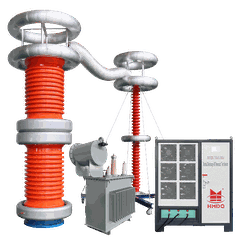



A Comprehensive Guide to Learning About AC Series Resonant Test Systems
Mastering the operation and application of AC series resonant test systems is an invaluable skill for professionals in the high-voltage electrical testing field. Whether you are an engineer, technician, or student, a systematic learning approach is essential. This guide charts a practical path from foundational concepts to advanced proficiency.

Phase 1: Establishing a solid theoretical foundation
Before commissioning equipment, the fundamental principles must be thoroughly understood.
Review of electrical engineering fundamentals: Beginning with the basics of AC circuits, with a particular focus on in-depth exploration of the following topics:
RLC series circuits: Understand the concepts of inductive reactance, capacitive reactance, and impedance.
Resonance principles: Master the mathematical condition for resonance (X_L = X_C) and its effects on the impedance and voltage of the circuit.
Quality factor (Q factor): Understand how the Q factor determines the voltage multiplication effect-a critical factor in system efficiency.
Learn the fundamentals of high-voltage engineering: Familiarize yourself with topics such as dielectric strength and insulating materials, and understand the role of dielectric strength testing in quality assurance and preventive maintenance.
Phase Two: Understanding Technology and Standards
Apply theoretical knowledge, focusing on specific technologies and their usage rules.
Analyze system components: Understand the function of each part:
AC power supply
Excitation transformer
Resonant reactor (inductor)
Capacitive voltage divider for voltage measurement
Control and protection unit
Familiarize with international standards: Recognize that standards are critical for safe and compliant testing. Key standards include IEC 60270 (Partial Discharge Measurement), IEC 60060 (High Voltage Testing Techniques), and IEEE cable and transformer testing standards. These documents specify test procedures, safety requirements, and acceptance criteria.
Stage 3: Focus on safety and practical application
When working with high-voltage equipment, safety is the top priority.
Mastering safety regulations: This is the most important area of learning. Compliance with established safety standards is essential, for example:
- Performing correct grounding and bonding measures.
- Establishing clear boundaries for the test area.
- Wearing appropriate personal protective equipment (PPE).
- Following lockout/tagout (LOTO) procedures.
Mastering the step-by-step testing process: Understand the standard workflow:
- Perform pre-test calculations (estimate the capacity of the test object to determine the resonance frequency).
- Connect all components correctly.
- Perform system calibrations and pre-acceptance tests.
- Apply the test voltage step by step while monitoring critical parameters.
- Perform the correct shutdown and discharge procedures after the test.
Learning and mastering the series resonant test system is a process that integrates theory with rigorous practice. By systematically building knowledge from fundamental principles to practical applications-while consistently prioritizing safety-you will develop the skills and confidence required to effectively utilize this powerful testing technology. Through continuous learning with diverse resources, you can ensure your expertise remains aligned with evolving industry best practices.


