





Introduction
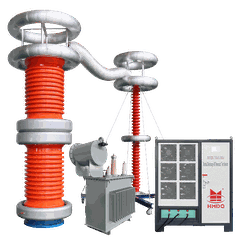
DC hipot (high potential) testing is a non-destructive method to verify the integrity of electrical insulation in cables, transformers, and other high-voltage equipment. By applying a controlled DC voltage, it identifies weaknesses that could lead to failures or safety hazards. Here's how it works and why it matters.
The Core Working Principle
A DC hipot tester applies a voltage higher than the equipment's operating voltage across its insulation. Unlike AC tests, DC voltage does not generate capacitive currents, allowing it to focus purely on insulation resistance. The test measures:
Leakage Current: Tiny currents flowing through insulation defects.
Breakdown Voltage: The point where insulation fails.
Why DC Over AC?
DC testing avoids capacitive charging currents, reducing the risk of false failures.
It's ideal for capacitive loads (e.g., long cables) since DC charges insulation gradually.
Key Steps in a DC Hipot Test
Preparation: Ground the equipment and set the test voltage (e.g., 2× operating voltage + 1 kV).
Ramp-Up: Slowly increase voltage to avoid surges.
Dwell Time: Hold voltage for 1–5 minutes while monitoring leakage current.
Result Analysis:
Pass: Leakage current remains stable and below thresholds.
Fail: Sudden current spikes indicate insulation breakdown.
Critical Applications
Power Cables: Detects moisture ingress or damage in underground cables.
Transformers: Uncovers winding insulation weaknesses.
EV Components: Validates battery systems and charging ports.
Case Example:
A utility company avoided a grid outage by using DC hipot testing to pinpoint degraded insulation in a 10 kV cable splice before it failed.
Why Insulation Defects Matter
Even microscopic cracks or contaminants in insulation can cause:
Partial Discharges: Tiny sparks eroding insulation over time.
Thermal Runaway: Heat buildup from leakage currents.
DC hipot reveals these flaws at lower energy levels than operational failures, preventing fires or electrocution.
Safety Advantages
Reduced Energy Risk: DC tests use less energy than AC, minimizing damage if failure occurs.
No Capacitive Surges: Safer for testing components like capacitors.
Choosing a DC Hipot Tester
Look for:
Adjustable Voltage Ranges: For testing diverse equipment.
Ramp Control: Prevents voltage spikes.
Leakage Current Accuracy: Critical for detecting subtle flaws.
Final Thought
DC hipot testing isn't just a compliance step-it's a frontline defense against electrical hazards. By understanding its working principle, engineers can better diagnose hidden risks and extend equipment lifespan.
Regular testing transforms insulation from a hidden vulnerability into a verified safeguard.


