

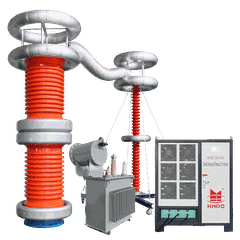


High Voltage (HV) test kits are indispensable for verifying the insulation integrity and operational safety of transformers, switchgear, and transmission equipment. Unlike generic tools, their critical safety features differentiate them in high-risk environments.
Core Safety Technology: Multi-Layer Protection Systems
The most vital aspect of modern HV test kits is embedded multi-safety protocols:
Auto-Discharge Circuits
Post-testing, residual charge in capacitive equipment (e.g., cables or bushings) poses electrocution risks. Advanced kits integrate passive/active discharge circuits that auto-engage when voltage exceeds a threshold.
Interlock Mechanisms
Kits used in switchgear testing require physical/electrical interlocks that halt testing if enclosures are breached. One documented utility case showed a 60% reduction in arc-flash incidents after adopting interlocks.
Real-Time Ground Monitoring
Improper grounding causes 38% of field accidents. Professional-grade kits include continuous ground-path surveillance, triggering instant shutdown if impedance drifts beyond safe limits.
Global Compliance-Driven Design Variations
Test kits vary by regional standards:
IEC-Compliant Kits (Common in EU/India): Prioritize IP67-rated portability for outdoor substations. Focus on transient overvoltage protection.
ANSI/NETA Kits (North America): Emphasize dual-ground verification and automated safety logs for OSHA audits.
Specialized Kits for Renewables
Solar/wind farms require DC hipot kits with >100kV outputs and polarity reversal features to simulate inverter-induced stresses.
Safety vs. Cost: Selection Guidelines
Tier 1 (Utilities/Miners)
Non-negotiable: Dual-ground systems, ≥IP65 rating, and automated discharge.
Tier 2 (Industrial Plants)
Acceptable tradeoff: Semi-auto discharge + basic interlocks.
Never Compromise: Ground-monitoring sensitivity (<5Ω threshold).
Real-World Impact: Downtime Prevention
A Southeast Asian transmission operator reduced transformer testing time by 70% using modular HV kits with integrated TTR (Turns Ratio) and insulation resistance functions, avoiding scattered tools and misconfiguration errors.
Leading Global Brands
Reputable manufacturers specialize in:
Laboratory-Grade Kits: For precision calibration.
Ruggedized Field Kits: With MIL-STD shock/vibration endurance.
Hybrid Units: Combining AC/DC testing in one system.
Conclusion
HV test kits are defined by their safety architecture – not voltage range alone. Ground surveillance, auto-discharge, and interlock systems directly prevent fatalities. Always align safety classifications (IEC/ANSI) with region-specific hazards like humidity or conductive dust. For HV reliability, the kit's protective engineering is as crucial as its diagnostic accuracy.


