

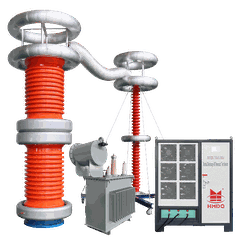




High voltage cables are lifelines of power transmission networks. Testing them isn't just a compliance task-it's predictive maintenance that prevents catastrophic failures. Here's how different diagnostics solve unique challenges:
1. Partial Discharge (PD) Testing: Detecting Microscopic Threats
Partial discharges occur when voids or defects in cable insulation ionize under high stress. PD testing uses ultra-high-frequency sensors to capture these micro-discharges-often in pico-coulombs (pC). Unlike basic voltage tests, PD mapping:
Identifies localized weaknesses before they arc
Pinpoints defects within joints/terminations
Works at voltages as low as 5-10kV
Real-world case: A utility in coastal regions reduced cable replacements by 35% after routine PD scans revealed salt-induced insulation erosion.
2. Tan Delta (Loss Angle) Testing: Assessing Overall Insulation Health
Tan delta measures dielectric losses across cable insulation. The dissipation factor (tan δ) reveals moisture ingress, aging, or contamination:
Values >0.01 indicate accelerated degradation
Frequency-based tests (0.1Hz or 1kHz) detect water-treeing
Ideal for long underground cable sections
Critical advantage: Reveals global insulation condition, unlike PD's defect-specific focus.
3. Very Low Frequency (VLF) Testing: Field-Ready HV Diagnostics
VLF testers apply 0.1Hz AC voltage, simulating power frequency stress while being portable. Key applications:
Withstand tests: Verifying cable integrity at 1.7x operating voltage
Fault location: Pulse reflection (TDR) during VLF tests pinpoints faults within meters
Proving repairs on 35-150kV grid sections
How to Choose the Right Test? Follow This Framework:
| Goal | Best Methods | |
|---|---|---|
| New Installations | Find manufacturing flaws | PD + VLF withstand |
| Aged Cables | Check insulation decay | Tan delta + PD |
| Post-Fault Analysis | Locate damage | VLF + TDR |
The Future: Automation & IoT
Modern test systems integrate online monitoring sensors feeding data to AI platforms. This enables:
Predictive lifetime modeling via tan δ trend analysis
Real-time partial discharge cloud dashboards
Cable load adjustments based on insulation health


