

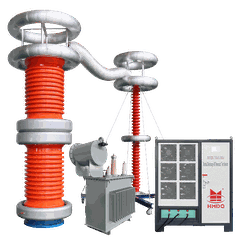




In the critical world of medium and high voltage power cable infrastructure, ensuring the integrity of insulation is paramount. Unexpected failures lead to costly outages, safety hazards, and extensive repair work. This is where the Cable VLF Tester emerges as an indispensable diagnostic tool for utilities, industrial plants, and specialized testing companies. But what exactly is it, and why is its capability beyond simple voltage application so crucial?
What is a Cable VLF Tester?
At its core, a Cable VLF Tester is a specialized instrument designed to evaluate the health and integrity of the insulation on medium voltage (typically 5kV to 69kV) and high voltage power cables. Unlike standard AC power supplies operating at 50/60 Hz, VLF testers generate AC output at a Very Low Frequency – usually 0.1 Hz or 0.01 Hz. This low frequency drastically reduces the reactive power required to charge the cable's capacitance compared to mains frequency AC testing. The result? A significantly smaller, lighter, more portable unit that can effectively test long cable runs using readily available power sources like standard generators or even vehicle inverters.
Beyond Pass/Fail: The Power of Dissipation Factor (Tan Delta) Measurement
While applying a high voltage (Hipot) test at VLF to check for immediate breakdowns is a common application, the most valuable diagnostic feature of modern Cable VLF Testers lies in their ability to measure Dissipation Factor (DF), also known as Tan Delta (Tan δ).
Understanding Dielectric Loss: Cable insulation acts as a dielectric material. Under AC voltage, an ideal insulator would only have capacitive charging current flowing through it, perfectly out of phase with the voltage (phase angle = 90°). In reality, imperfections (like water trees, contaminants, micro-voids, or aging) create a resistive leakage path. This resistive component consumes energy as heat, known as Dielectric Loss.
What Tan Delta Measures: Dissipation Factor quantifies this energy loss within the insulation. It's the ratio of the resistive leakage current to the capacitive charging current (Tan δ = I_R / I_C). Think of it as measuring how "pure" the capacitor (the cable insulation) is.
Perfect Insulation: Close to 0 (e.g., < 0.001).
Aging/Degraded Insulation: Higher values (e.g., > 0.01 to 0.05+) indicate increased resistive leakage paths, representing lost energy and potential failure risk. This increase is progressive with insulation deterioration.
Why Tan Delta is Critical with VLF Testing
Proactive Diagnosis: Tan Delta isn't just a pass/fail metric. It provides a quantitative indicator of the overall health condition and degree of aging of the entire cable insulation system long before a catastrophic failure occurs. Rising Tan Delta values signal problems like water tree growth or thermal degradation.
Sensitive to Early-Stage Defects: It's particularly sensitive to distributed aging phenomena such as the gradual development of water trees in XLPE cables or moisture ingress in PILC cables – defects that might not yet cause a breakdown during a standard Hipot test but significantly reduce remaining cable life.
Trending Over Time: Utilities can measure Tan Delta values periodically (e.g., every 1-3 years) on the same cable circuit. By tracking the trend, they can predict insulation degradation rates and plan targeted cable replacements proactively, optimizing maintenance budgets and minimizing unplanned outages. Imagine identifying a section of cable whose Tan Delta has doubled over five years – it's a clear candidate for scheduled replacement before it fails.
Benchmarking: Tan Delta values provide a benchmark to compare the health of different cable sections or similar circuits across the network.
How Cable VLF Testers Perform Tan Delta Measurement
Advanced VLF testers integrate sophisticated signal processing:
Apply VLF AC Voltage: Typically at a level below the cable's factory withstand level (e.g., 1.5 - 2Uo) to avoid stressing potentially degraded cables unnecessarily.
Measure Voltage & Current Waveforms: High-precision circuits capture the exact phase and magnitude of the voltage applied to the cable and the resulting current flowing through it.
Calculate Phase Angle Shift: The instrument calculates the phase angle difference (δ) between the fundamental components of the voltage and current waveforms.
Compute Tan δ: The tangent of this phase angle shift (Tan δ) is the Dissipation Factor value displayed to the user.
Choosing a Cable VLF Tester: Look for Tan Delta Capability
When selecting a Cable VLF Tester, prioritize models offering accurate and reliable Tan Delta measurement capability. Consider:
Measurement Accuracy: Look for specifications in the milli-range (e.g., ± 0.0001 or similar).
Signal Filtering: Good noise rejection is vital for stable readings, especially in industrial environments or on long, noisy cables.
Diagnostic Software: Integration with software that helps trend data and visualize results over time significantly enhances the tool's value.
Conclusion
A Cable VLF Tester is far more than just a portable AC Hipot set. Its defining value lies in enabling loss tangent measurement (Tan Delta), a fundamental diagnostic technique that transforms cable testing from a simple pass/fail check to a powerful predictive and condition assessment tool. By quantifying the dielectric losses within the insulation, Tan Delta provides deep insights into the cable's aging process, moisture content, and overall insulation integrity – enabling asset managers to make informed, proactive decisions for maintaining power system reliability.


