





foreword
Power testing, as a core technical link in the power industry, refers to the systematic work conducted by power companies using specialized equipment and technical means to inspect and verify the performance, insulation status, and operational reliability of power facilities. This process relies on a state-certified license for installing (repairing, testing) power facilities and is a critical component of the entire lifecycle management of power facility construction and operation .
From the perspective of industry importance, power testing and commissioning is a "technical barrier" that ensures the safe and stable operation of power systems. On one hand, regular inspections of power equipment (such as preventive tests) and pre-operation verifications (such as handover tests) can promptly identify potential defects in equipment (such as insulation aging, partial discharge, etc.), preventing large-scale power outages or safety accidents caused by equipment failures, which directly affects the reliability of grid operations and the safety of electricity use in social production and daily life . On the other hand, testing and commissioning capabilities are one of the core qualifications for power companies to compete in the market. Companies with professional testing qualifications can not only improve service quality and efficiency through standardized testing procedures but also gain customer trust through their technical strength, securing a dominant position in power engineering installation, maintenance, and testing services, thereby promoting the standardized development of the industry .
definition
The statutory definition of power installation and testing can be clarified based on the "Regulations on the Administration of Qualifications for Power Facility Installation, Maintenance, and Testing Enterprises" and related industry standards: as a core component of power installation, maintenance, and testing services, it refers to the systematic work conducted by power enterprises using professional technical means to inspect and verify the performance, insulation status, and operational reliability of power facilities (including transmission, supply, and reception facilities) .
Specifically, the conduct of power facility testing and commissioning must rely on the installation (maintenance, testing) power facility license issued by the National Energy Administration (testing category). Enterprises must be recognized by relevant departments, possess the capability to undertake power facility testing services, and meet the corresponding qualification standards (such as personnel, equipment, management requirements) before they can engage in testing activities for power facilities at the corresponding voltage levels . For example, enterprises with Level Five testing qualifications can conduct testing activities for power facilities up to 10 kV; enterprises with Level Three or higher qualifications need to have more comprehensive testing capabilities (such as test plan preparation, equipment operation, data recording and analysis) to meet the testing needs of higher voltage level equipment .
The classification of power installation (maintenance, testing) facility licenses is the core basis for standardizing the testing capabilities and business scope of power companies. According to the "Management Measures for Installation (Maintenance, Testing) Facility Licenses" and relevant industry regulations, this qualification is divided into five levels from Level One to Level Five. Each level corresponds to different voltage level testing business scopes and application conditions: . The specific divisions are as follows:
Grade One Qualification: Capable of conducting testing services for power facilities at all voltage levels. Applicants must meet the following criteria: net assets exceeding 48 million yuan, and have undertaken projects such as 300 kilometers of transmission lines above 330 kV or two substations above 220 kV within the past five years; the technical director must have over 10 years of management experience and hold a senior engineer qualification in power engineering; no fewer than 160 professional technicians (including at least 60 with intermediate or higher titles in power engineering), 60 high-voltage electricians, and supporting construction machinery and testing equipment .
Secondary Qualification: Engage in testing activities for power facilities up to 330 kV. Application requirements include a net asset value of over 24 million yuan, and having undertaken projects such as 400 kilometers of transmission lines above 220 kV or six substations above 110 kV within the past five years; the technical director must have more than eight years of management experience and hold a senior engineer qualification; at least 120 professional technicians (including no fewer than 30 with intermediate or higher titles) and 50 high-voltage electricians are required.
Grade III Qualification: Capable of conducting testing services for power facilities up to 110 kV. Applicants must have net assets exceeding 12 million yuan and have undertaken projects such as 200 kilometers of transmission lines above 110 kV or 400 kilometers of transmission lines above 10 kV within the past five years; the technical director must have more than five years of management experience and hold a mid-level or higher professional title; at least 50 professional technicians (including no fewer than 10 with mid-level or higher titles) and 30 high-voltage electricians must be employed.
Level 4 qualification: can be engaged in the test activities of power facilities below 35 kv voltage level. The application requires a net asset of no less than 3 million yuan, technical director needs more than 3 years of management experience and primary title or above; it is required to be equipped with no less than 10 electric power professionals and 15 high-voltage electricians .
Level 5 Qualification: Only for testing power facilities up to 10 kV voltage level. The application threshold is the lowest, typically requiring companies to have basic testing equipment (such as insulation resistance testers, ground resistance testers) and basic technical personnel (such as high-voltage electricians). Suitable for small-scale power engineering testing needs .
In general, the higher the qualification level, the stronger the capital strength, technical ability and engineering experience required by the enterprise, and the wider the voltage level and test scope covered. This classification system effectively guarantees the professional development of power enterprises of different sizes and the safety of power system test .
purpose
The core purpose of power test can be carried out from four dimensions: safety, prevention, verification and compliance, as follows:
1. Ensure power safety
Power testing and commissioning serve as the "safety net" for the safe operation of power systems. By inspecting key indicators such as insulation performance and electrical characteristics (like withstand voltage tests and insulation resistance tests), real-time monitoring of equipment status can be achieved, preventing accidents caused by equipment defects, such as short circuits or breakdowns . For example, search results indicate that companies with testing qualifications must meet standards in personnel, technology, and equipment to ensure the safety of power facilities from the design, installation, to the testing process. This reduces the risk of accidents due to improper operations or substandard equipment, directly safeguarding the electricity supply safety for both the grid and users.
2. Prevent equipment failure
Power equipment, during long-term operation, is susceptible to factors such as temperature, humidity, and electrical stress, which can lead to latent defects like insulation aging, partial discharge, and poor contact (for example, multiple grounding points in transformer cores or moisture-induced discharge on busbars). Power testing and commissioning (especially preventive testing) can detect these defects early through regular inspections of the equipment's condition (such as insulating oil analysis and gas analysis). This allows for timely maintenance or replacement measures to prevent defects from escalating into faults, thereby extending the service life of the equipment and reducing power outage losses caused by sudden failures .
3. Verify equipment performance
Power testing is the "technical benchmark" for verifying whether equipment meets operational requirements. Whether it's the handover test before new equipment is put into operation or the routine test after major repairs, electrical characteristic tests (such as DC resistance testing, dielectric loss testing) and insulation performance tests (such as AC withstand voltage testing) must be conducted to confirm that the equipment's performance meets design standards and operational needs . For example, the case mentioned in search result : a busbar in a distribution room experienced discharge due to manufacturing process issues. The handover test promptly identified and addressed the issue, preventing safety hazards caused by substandard performance after the equipment was put into operation.
4. Meet regulatory requirements
The conduct of power facility testing must strictly adhere to national and industry regulations (such as the "Regulations on the Management of Qualifications for Power Facility Testing Enterprises"), and companies must obtain a testing license for power facilities to engage in related business . By standardizing the testing procedures and standards, not only is the authenticity and reliability of test results ensured, but it also promotes the standardized development of the power industry. At the same time, qualified companies can enhance their market competitiveness through compliant testing services, meeting customers' demands for "professional, safe, and reliable" service .
classify
Power test and test can be divided into four categories according to the type of test: type test, routine test, handover test and preventive test. The core purpose, implementation stage and technical focus of each type of test are significantly different, which together constitute the technical support system for the whole life cycle management of power equipment .
1. Type test
Type testing is a comprehensive performance inspection of electrical equipment before it leaves the factory, aimed at verifying whether the equipment meets relevant standards and technical specifications. It is typically carried out by the manufacturer . The content includes visual inspections, structural verification, and electrical performance tests (such as pressure tests and insulation resistance tests). By systematically validating the design and manufacturing processes, it ensures that the equipment has qualified quality and performance before it is put into use. For example, newly produced high-voltage switchgear must pass type testing to confirm that key indicators such as insulation strength and temperature rise characteristics meet national standards before they can be sold on the market .
2. Conventional tests
Routine testing involves periodic or irregular inspections of electrical equipment in operation, primarily to evaluate the performance status of the equipment under normal operating conditions . The focus is on identifying potential abnormalities during operation (such as insulation aging, poor contact, partial discharge, etc.), which includes electrical performance tests (such as DC resistance measurement), mechanical performance tests (such as equipment connection tightness checks), and insulation performance tests (such as dielectric loss angle measurement) . Through routine testing, early defects in the equipment can be promptly identified and maintenance measures taken to prevent the defects from escalating into faults.
3. Handover test
Acceptance testing is a verification inspection conducted after the installation of power equipment and before it is put into operation. Its primary purpose is to confirm that the equipment has not been damaged during transportation and installation, and that all performance parameters meet operational requirements . The test items are similar to type tests (such as pressure tests and characteristic tests), but they focus more on the quality of installation (such as correct wiring and reliable grounding). For example, after the main transformer in a substation is installed, it must pass acceptance testing to verify whether its turns ratio, no-load loss, and other parameters meet design requirements, ensuring safe and stable operation after commissioning .
4. Preventive tests
Preventive testing is a predictive inspection measure aimed at potential faults in electrical equipment. By monitoring and analyzing the real-time operating status of the equipment, it predicts possible fault types and times, allowing for preemptive preventive measures . The content includes insulating oil testing (detecting dissolved gases in oil), partial discharge detection (locating insulation defects), infrared temperature measurement (monitoring hot spots on equipment), etc., suitable for long-term operating old equipment or high-load equipment . For example, preventive testing of power cables that have been in operation for over 10 years can identify potential insulation layer aging through partial discharge detection, preventing cable breakdown and subsequent power outages .
In terms of the proportion of tests, according to the actual business needs, the importance distribution of the four types of tests is as follows: type test accounts for 30%, routine test accounts for 25%, handover test accounts for 20%, and preventive test accounts for 25% (as shown in the figure).

According to the actual business needs, the importance distribution of the four main tests in power test is as follows: type test accounts for 30%, routine test accounts for 25%, handover test accounts for 20%, and preventive test accounts for 25% (as shown in the figure).

Note: The chart above shows the proportion of power testing equipment, which can be used to understand the distribution logic of test categories through its data visualization. Among these, type tests, as comprehensive inspections before equipment leaves the factory, cover the initial stage of the entire lifecycle and have the highest proportion; routine tests and preventive tests, which target regular monitoring of operational equipment and potential fault prediction, respectively, come next in terms of proportion; handover tests, as the final verification step before equipment is put into operation, have a relatively lower proportion.
flow path
The qualification application process for power test and trial is the basis for enterprises to legally carry out power facility test business, which needs to strictly follow the regulations of the National Energy Administration and related industries. Based on search results and picture information, the core process can be divided into the following five key steps:
1. Material preparation
Companies need to prepare application materials systematically based on the proposed qualification level (such as Level 4 or Level 5) and business scope (such as testing below 10 kV). The main documents required include: proof of legal person status, proof of registered capital and net assets, professional titles/qualification certificates for technical directors and specialized personnel (such as a list of personnel with intermediate or higher titles in power engineering, high-voltage electrician work permits), equipment lists (such as insulation resistance testers, pressure testing devices, and other testing equipment), proof of engineering performance over the past five years (such as completed contracts and acceptance reports for power facility testing projects), safety production management systems, and technical archive management documents, etc. .
2. Submit an application
After all materials are prepared, the company needs to log in to the official website of the local National Energy Administration branch and submit electronic documents through the qualification application system. Some regions support offline submission at service windows, but online submission is the primary method . When submitting, ensure that the material format meets the requirements (such as clear PDF scans with complete information), otherwise it may be returned for corrections.
3. Review and verification
Upon receiving the application, the dispatched institution of the National Energy Administration first conducts a formal review (within 5 working days) to confirm whether the materials are complete and in compliance with the required format. If the materials are incomplete, an "Administrative Permit Material Rectification Notice" will be issued, requesting rectification; if the materials are complete and meet the formal requirements, they will be officially accepted, and an "Administrative Permit Acceptance Form" will be issued. After acceptance, the institution will conduct a substantive review of the content of the materials and may carry out on-site inspections (such as verifying the actual presence of technical personnel at the company's office premises, testing equipment, etc.) to verify whether the company has the technical capabilities and management level commensurate with the application qualifications .
4. Qualification evaluation and publicity
After review and verification, the dispatched institutions of the National Energy Administration will organize experts to conduct a comprehensive evaluation of the company's qualifications (such as technical capabilities, equipment conditions, and compliance with performance standards). The evaluation results will be published on the official website (usually within 7-10 working days) for public supervision . If there are no objections or if the objections are found to be invalid during the public notice period, the process will proceed to the certification stage.
5. Certificate issuance
After the public announcement, the National Energy Administration's dispatched institutions issue the "Decision on Granting Administrative Permit" and award the enterprise a license for installing (repairing, testing) power facilities (for installation and testing). The certificate clearly specifies the voltage level range that the enterprise can undertake (for example, a Level Five qualification covers voltages up to 10 kV), with a typical validity period of 5 years. Upon expiration, the enterprise must reapply for renewal .
(As shown in the figure, it is a complete flow chart of power test qualification application and test operation)

The specific operation process of power test should strictly follow safety norms and technical standards. Taking preventive test as an example, the core operation process can be divided into the following five stages to ensure the safety of the test process, accurate data, and effectively guarantee the reliability of power equipment operation status assessment :
1. Preparation stage
Personnel and division of responsibilities: The responsibilities of the site commander (such as Hu XX) and the participants shall be defined. Relevant technical personnel and manufacturer representatives shall be on standby in advance to ensure smooth communication during the test.
Power failure preparation: Before the test, it is necessary to coordinate with the central control room to make a detailed power failure plan, and make clear the scope of equipment to be shut down (such as all the equipment in phase I and II) and the time node (such as 8:40 to gather for power failure preparation).
2. Equipment shutdown and inspection
Classification of equipment to be shut down: Equipment shall be gradually shut down in the order of "first phase and then second phase":
Stop the booster pump and keep the membrane system producing water;
When the level of the first-stage reflux well in the membrane system drops to about 2.9 meters, one first-stage reflux pump is stopped, all second-stage and third-stage reflux pumps are stopped, and water production continues;
When the water level drops to 2.9 meters again, the second reflux pump is stopped, and the membrane system is stopped when the water level rises to 3.2 meters;
Stop using all electrical equipment such as aeration grit chamber system equipment (including fans, mixers, etc.), magnetic levitation, air compressor, odor removal device, etc.;
On-site confirmation: after shutdown, a comprehensive inspection should be carried out to confirm that all electrical equipment has stopped running and the control system is in operation. Observe whether there are any abnormalities (such as fault alarm) and report any problems in time.
3. Implementation of the test
Manufacturer operation: professional manufacturer personnel shall conduct power tests (such as insulation resistance test, pressure test, etc.), and the meal time of personnel shall be adjusted during the test (such as having meals after the morning test) to ensure the continuity of the test.
Data recording and analysis: During the test, the test data (such as voltage, current, insulation resistance value, etc.) should be accurately recorded, and the data should be analyzed in real time to see if it meets the standard (such as insulation resistance should be greater than the specified value in preventive test), and mark and feedback any abnormality in time.
4. Power transmission and system recovery
Power transmission start: After the test, power transmission shall be carried out according to the notification of the site commander (such as Sun Zhonghua). After observing the PLC status and confirming the successful power transmission, the system shall be started step by step in reverse order (such as starting the membrane system first, then restoring the reflux pump, lifting pump, etc.).
Operation monitoring: after the system is restored, the operation status of the equipment (such as current, temperature, pressure and other parameters) should be continuously monitored to confirm that there is no abnormality before the test is completed.
5. Handling of special cases
Test delay or adjustment: if the test time is long and the system needs to be put into use again, the equipment should be shut down again according to the shutdown steps. After the manufacturer completes the line switching, power should be sent again and the operation status should be observed.
Cooperation with sludge removal load test: If the sludge removal load test is involved, all electric equipment such as computer, concentrator and air compressor should be turned off to avoid interference with the test data.
The above process ensures the safety and data accuracy of power testing through strict power-off-test-power supply logic, combined with equipment classification shutdown and operation monitoring, which is the key operation link of preventive maintenance in the whole life cycle management of power equipment .
The complete business process of power test covers two core stages: qualification application and test operation. The process design should take into account compliance and practical operation to ensure that enterprises can legally carry out test business and ensure the safety of test and data accuracy. The following is a description of the core steps of the process diagram (Figure 2):
I. Qualification application stage (preliminary condition for enterprise access)
Material Preparation: Based on the target qualification level (such as Level 5 or Level 4), the company should prepare legal person qualification certificates, net asset proof, professional titles/qualification certificates of technical personnel (such as high-voltage electrician network operation certificates), lists of testing equipment (such as insulation resistance testers, withstand voltage testing devices), proof of engineering performance over the past five years (test project contracts and acceptance reports), and safety production management systems, etc. .
Submit the application: submit the electronic materials through the official website of the dispatched agency of the National Energy Administration (or offline window), and ensure that the format of the materials meets the requirements (such as clear PDF scan and complete information) .
Review and verification:
Formal examination (within 5 working days): confirm the completeness and compliance of the materials, and require correction if incomplete;
Substantive examination and on-site inspection: check the actual presence of technical personnel in the office, test equipment and technical personnel of the enterprise, and verify the technical ability and management level .
Qualification assessment and publicity: After comprehensive evaluation by experts, the results will be publicized on the official website (7-10 working days) and subject to public supervision .
Issuance of certificates: After public notice, the license for installation (repair, test) of power facilities (test type) will be issued, specifying the voltage level range that can be undertaken (for example, level 5 is below 10KV), and the validity period is 5 years .
2. Test operation stage (actual business execution)
Taking preventive tests as an example, the process needs to strictly follow safety specifications to ensure the safety of equipment and personnel:
preparatory phase:
Personnel division of labor: clarify the responsibilities of the general commander on site (such as Hu XX) and the participants, and the manufacturer's representative is on standby;
Power outage plan: coordinate with the central control room to formulate detailed power outage time nodes (such as 8:40 assembly preparation), and specify the scope of equipment to be shut down (such as all equipment in phase I and II) .
Equipment shutdown and inspection:
Graded shutdown: the lifting pump, return pump, membrane system, aeration grit chamber equipment, etc. shall be shut down in the order of "first phase and then second phase" to ensure that all electrical equipment stops running;
On-site confirmation: check the equipment status, and enter the test after confirming no abnormality.
Trial implementation:
Manufacturer operation: professional personnel carry out insulation resistance test, pressure test, etc., adjust the meal time to ensure the continuity of the test;
Data recording and analysis: record voltage, current, insulation resistance value and other data in real time, analyze whether it meets the standard (such as insulation resistance is greater than the specified value) .
Power transmission and system recovery:
Power transmission start: after the test, power transmission is started according to the notice of the general commander. After observing the PLC status and confirming the success, the operation of the equipment (such as membrane system, reflux pump, lifting pump) is restored in reverse order;
Operation monitoring: continuously monitor the equipment parameters (current, temperature, etc.), and complete the test after confirming no abnormality.
Special handling:
Test delay: if the system needs to be put into use again, the equipment should be shut down again and the manufacturer's line switching should be coordinated;
Decontamination load test coordination: close the computer, concentrator and other electric equipment to avoid interference with data .
(As shown in Figure 2, the complete business process diagram of power test is included, covering the whole process of qualification application and test operation, and intuitively showing the key nodes and logical relationships from enterprise access to test execution.)
Standards and specifications
The standardization and normalization of power test is the core basis to ensure the quality of test, equipment safety and industry order. It mainly relies on the following three core standards and specifications, covering the key links such as qualification management, technical requirements and safe operation:
1. Regulations on the Administration of Qualifications for Enterprises Undertaking and Testing Power Facilities
This regulation is the basic law of power testing and trial, which defines the definition, classification and basic requirements of the license for the installation (repair and test) of power facilities . Its core contents include:
Qualification classification: The test qualification is divided into level 1 to level 5, and each level corresponds to the scope of power facility test business of different voltage levels (for example, level 5 can only be engaged in tests below 10 kv).
Basic requirements: The enterprise shall have the status of an independent legal person, registered capital matching the qualification level (such as no less than 40 million yuan for first-class qualification), professional and technical personnel (such as more than 160 professional and technical personnel for first-class qualification) and test equipment (such as pressure test device, insulation resistance tester, etc.) .
2. Measures for the Administration of Licenses for Installation (Repair and Testing) of Electric Power Facilities
As an operational specification for qualification application and approval, this method specifies in detail the specific application conditions, approval process and regulatory requirements for each level of qualification . For example:
Application conditions: The first-class installation qualification should undertake 300 kilometers of transmission lines above 330 kv or two substations above 220 kv and other engineering performance within 5 years; the technical director should have more than 10 years of management experience and senior engineer qualification in power engineering .
Approval process: including material submission, formal review, substantive review (including on-site inspection), qualification evaluation and publicity, certificate issuance and other links to ensure that the enterprise's technical ability and management level meet the requirements .
3. Electric Power Safety Work Regulations
This regulation is the core specification of power test safety management, emphasizing the principle of "safety first, prevention first", requiring the test unit to establish and improve the safety management system, and clarify the safety responsibilities of personnel at all levels . The specific requirements include:
Personnel qualification: The test personnel should be in good health (no disease that hinders the test), have necessary professional knowledge of electric power test, be familiar with the Safety Regulations and pass the examination, and master the first aid skills of electric shock .
Safety measures: A detailed safety plan (such as power outage plan, equipment shutdown steps) should be formulated before the test, safety warning signs should be set during the test, and the normal operation status of the equipment should be confirmed after the test .
In addition, industry technical standards such as the "Three-level Standard for Power Installation and Testing" further refine the technical requirements of different qualification levels (such as the three-level qualification requires equipment installation, fault diagnosis, test scheme preparation and other skills), to ensure the professionalism and standardization of test operation .
To sum up, the three core standards and specifications have constructed a standardized system for power testing through the whole chain of "qualification access-technical requirements-safe operation", which effectively guarantees the safety, accuracy and healthy development of power equipment testing.
Personnel qualification requirements
The qualification of personnel for power test and trial shall strictly meet the technical standards of different qualification levels, mainly covering the number of professional and technical personnel, title requirements and experience of technical leaders and other core indicators:
Professional Technical Personnel Scale: Different qualification levels have clear stipulations on the number of professional technical personnel. For example, a Level One Testing Qualification requires companies to have no fewer than 160 professional technical personnel (including no fewer than 100 engineering technical personnel, and no fewer than 60 with intermediate or higher titles in power engineering); a Level Four Qualification requires at least 10 power engineering technical personnel .
High voltage electrician configuration: High voltage electrician is the core personnel of power test operation. For level 1 qualification, there should be no less than 60 electricians (including no less than 30 high voltage electricians) with network access certificates on duty; for level 4 qualification, there should be 15 high voltage electricians (including 8 high voltage electricians) .
Technical Director Qualifications: A technical director must possess management experience and professional titles commensurate with the qualification level. For a first-class qualification, the technical director needs over 10 years of experience in power facility installation management and must hold a senior engineer or higher title in the power industry; for a fourth-class qualification, the technical director needs more than 3 years of management experience and must have a primary or higher title in a power-related field .
Equipment standard requirements
The power test equipment shall be compatible with the qualification level and test scope to ensure the accuracy of test data and the safety of equipment. The main equipment and standards are as follows:
Basic Test Equipment: A Level 5 testing qualification requires an integrated DC high-voltage generator (DC: 60kV/2mA), an industrial frequency withstand voltage test device (AC: 5kVA/50kV), a loop resistance tester (DC: ≥100A), and a 2500V insulation resistance tester (0.01MΩ~200GΩ), to meet the basic testing requirements for power facilities up to 10 kV .
High-level testing equipment: For third-level and above qualifications, more comprehensive equipment is required, such as series resonance test devices (75kVA/75kV, 1A,30~300HZ), three-phase microcomputer relay protection testers (two sets of three-phase voltage and two sets of three-phase current), and transformer insulation characteristic testers (500V/5A), to support complex tests for equipment at 110 kV and above voltage levels (such as partial discharge testing, withstand voltage testing) .
Equipment compatibility: Enterprises should configure construction machinery and quality testing equipment corresponding to the scope of projects they can undertake according to their qualification level, so as to ensure that the test capacity covers the target voltage level .
Safety management system requirements
Safety management system is the core guarantee to ensure the safety of personnel, equipment and power grid in the process of power testing. It mainly includes the following contents:
Safety Management Institutions and Personnel: Enterprises with Grade I or higher qualifications must establish a dedicated safety management institution and appoint full-time safety supervisors (no less than 3 for Grade I qualifications). Safety engineers must hold qualifications of Power Engineering Engineer or above; all levels of enterprise leaders (such as directors, department heads, and team leaders) must assume corresponding safety management responsibilities .
Personnel safety standards: The test personnel should be in good health (no disease that hinders the test), have the necessary professional knowledge of electric power test, be familiar with the "Electric Power Safety Work Regulations" and pass the examination, and master the first aid skills for electric shock .
Safety Procedure for Testing: Before testing, a detailed safety plan must be formulated (such as power outage plans and equipment shutdown procedures), clearly defining the sequence of equipment shutdown (for example, starting with the lift pump, then gradually shutting down the return pump, membrane system, etc.). During testing, safety warning signs must be set up to prohibit unauthorized personnel from entering the test area. After testing, it is necessary to confirm that the equipment has returned to normal operating conditions, ensuring there are no residual safety hazards .
Core equipment
The core equipment of power test and trial should be configured according to the qualification level and test requirements to ensure that the testing requirements of power facilities at different voltage levels are covered. The following is a description of the functions and parameters of the six core equipment (based on the key information of search results ):
1. Integrated DC high voltage generator (DC: 60kV/2mA)
The equipment is used for DC withstand test and leakage current measurement of power equipment. By outputting stable DC high voltage (up to 60kV, current 2mA), it can detect the insulation performance of high voltage cables, transformer windings and other equipment, and judge whether there are local moisture, aging and other defects .
2. Power frequency withstand test device (AC: 5kVA/50kV)
As the core equipment of AC withstand voltage test, its rated capacity is 5kVA and output voltage is 50kV. It is suitable for AC withstand voltage test of power equipment (such as switchgear and insulators) with 10KV or less, to verify the insulation strength of the equipment under operating voltage and ensure that it can withstand normal working voltage and short-term overvoltage .
3. Series resonance test device (75kVA/75kV, 1A,30~300HZ)
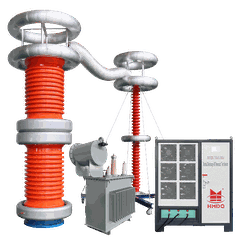
For the AC withstand voltage test design of large-capacity power equipment (such as long-distance cables and large transformers), resonance is achieved by adjusting the frequency (30~300 Hz), reducing the required power supply capacity. It has a rated capacity of 75 kVA, an output voltage of 75 kV, and a current of 1 A, enabling efficient withstand voltage testing for high-voltage, large-capacity equipment .
4. Loop resistance tester (DC: ≥100A)
It is used to measure the contact resistance of power equipment such as switches, switches and busbar connectors. By outputting a large current (≥100A), the measurement results can accurately reflect the conductive performance of the contact parts of the equipment, and avoid heating, burning and other faults caused by poor contact .
5. Three-phase microcomputer relay protection tester (two sets of three-phase voltage and two sets of three-phase current)
It is mainly used to verify the action characteristics of power system relay protection devices (such as overcurrent protection and differential protection), support the output of three-phase voltage (each group) and three-phase current (each group), and can simulate a variety of fault scenarios (such as short circuit and grounding) to verify the reliability and accuracy of the protection device .
6. 2500V insulation resistance tester (0.01MΩ~200GΩ, short circuit current:> = 2mA)
It is used to measure the insulation resistance value of electrical equipment (such as transformers, motors, cables) and detect its insulation state (such as moisture, aging). Its measurement range covers 0.01MΩ to 200GΩ, short circuit current is greater than 2mA, suitable for the insulation performance evaluation of high voltage equipment, is the basic equipment of preventive test .
(As shown in the figure, it is a schematic diagram of the six core equipment for power testing, which intuitively shows the appearance and typical application scenarios of each equipment.)
The importance distribution of the core equipment of power transmission test is based on its functional necessity, usage frequency and the degree of influence on power grid security in the test, combined with the application scenarios and technical requirements of the equipment in the search results, the importance of each equipment is as follows (as shown in Figure 3):
2500V insulation resistance tester (20%): as the basic equipment for insulation performance testing, it is used to measure the insulation resistance value of transformers, cables and other equipment, which directly reflects the insulation state of equipment (such as moisture, aging), and is the core tool of preventive test .
Power frequency withstand test device (20%): The AC withstand test is used to verify the insulation strength of the equipment and ensure that it can withstand the operating voltage and short-time overvoltage. It is a key equipment for the handover test before the new equipment is put into operation .
Integrated DC high voltage generator (15%): used for DC withstand test and leakage current measurement, for insulation defect detection of high voltage cables, transformer windings and other equipment, is an important support for high voltage level test .
Loop resistance tester (15%): Measure the contact resistance of switches, busbar connectors, etc., to avoid heating and burning caused by poor contact, which directly affects the safety of equipment operation .
Series resonance test device (15%): suitable for AC withstand voltage test of large capacity equipment (such as long distance cable), through resonance to reduce the power supply capacity requirements, is the core equipment of high voltage and large capacity test .
Three-phase microcomputer relay protection tester (15%): It is a key equipment to verify the action characteristics of relay protection devices and simulate fault scenarios to verify the reliability of protection.
(As shown in Figure 3, the bar chart of the importance distribution of the core equipment for power testing is shown. The horizontal axis is the type of equipment, and the vertical axis is the proportion of importance, which intuitively shows the weight difference of each equipment in the test.)
conclusion
As the core technical link of the whole life cycle management of power system, power transmission test plays a key role in the security of power grid, which is mainly reflected in the following five dimensions, and is the "technical cornerstone" to ensure the stable operation of power grid, reduce the risk of accidents and improve the reliability of the system :
1. Early defect identification to block the accident chain reaction
Electrical equipment is prone to latent defects (such as insulation aging, partial discharge, and poor contact) during manufacturing, transportation, installation, and long-term operation due to material flaws, process oversights, or environmental erosion (such as humidity and temperature changes). Power testing and commissioning (especially preventive tests and routine tests) can accurately identify issues at the early stage of defects (such as multiple grounding points in transformer cores or moisture-induced discharges on busbars) through technical means like insulation resistance testing, withstand voltage tests, and partial discharge detection . For example, a busbar in a distribution room experienced discharge due to manufacturing process issues. Timely detection and handling through handover tests prevented short-circuit accidents caused by insulation breakdown after the equipment was put into operation . This "early detection, early handling" mechanism effectively prevents defects from evolving into faults and stops the scope of accidents from expanding.
2. Verify the performance of equipment to ensure safe operation
The handover tests before the new equipment is put into operation and the routine tests after major overhauls are the "final checkpoint" to verify whether the equipment meets operational requirements. Through electrical characteristic tests (such as DC resistance testing, dielectric loss testing) and insulation performance tests (such as AC withstand voltage testing), it can be confirmed that the equipment has not been damaged during transportation and installation, and all parameters (such as turns ratio, no-load loss) meet design standards . For example, after the main transformer of a substation is installed, handover tests verify that its turns ratio, no-load loss, and other parameters comply with requirements, ensuring safe and stable operation after commissioning . If the tests fail, the equipment will be returned or repaired, eliminating the risk of "operating with faults" at its source.
3. Predict potential failures and extend equipment life
During long-term operation of power equipment, factors such as electrical, thermal, and mechanical stresses can gradually degrade insulation performance (for example, aging of cable insulation layers, increased leakage current in surge arresters). Power testing and inspection (such as preventive tests) use techniques like insulating oil analysis (detecting dissolved gases in oil) and infrared temperature measurement (monitoring hot spots) to predict potential fault types and times, allowing for early maintenance or replacement plans . For instance, preventive tests on power cables that have been in operation for over 10 years can detect insulation layer aging through partial discharge testing, enabling timely cable replacement to prevent breakdown and power outages . This "prediction-prevention" model not only reduces the probability of sudden faults but also extends equipment life through targeted maintenance.
4. Standardize industry behavior and improve service quality
The conduct of power testing and commissioning must rely on a state-certified license for the installation (maintenance, testing) of power facilities (testing category). Companies must meet stringent standards in personnel, equipment, and management (for example, third-level qualifications require professional technical staff, high-voltage electricians, and testing equipment) to engage in related business . This qualification access system eliminates companies with insufficient technical capabilities, promoting the industry's development towards specialization and standardization. Qualified companies enhance service quality and efficiency through standardized testing processes (such as test plan formulation, data recording, and analysis), providing more reliable technical support for the power grid .
5. Ensure the safety of social electricity consumption and support economic development
The power grid, as the "lifeline" of social production and daily life, its safety and stability directly affect industrial production, residents' lives, and the normal operation of critical infrastructure (such as hospitals and transportation). Power testing and commissioning ensure the safety of grid equipment, preventing large-scale power outages caused by equipment failures, thus indirectly supporting the sustained development of the economy and society . For example, a region regularly conducts preventive tests on 110 kV substation equipment, promptly identifying and addressing issues with busbar insulation aging, avoiding regional power outages, and ensuring continuous production for industrial enterprises and normal electricity use for residents .
To sum up, power testing and trial, through the full-chain technical support of "defect identification-performance verification-fault prediction-industry specification", has become a "protective net" and "stabilizer" for power grid security, and is an important guarantee for the reliable operation of power system and social and economic development .
Standard implementation and technological innovation are the "twin drivers" to promote the high-quality development of power testing, which complement each other and jointly guarantee the safety of power system and enhance the competitiveness of the industry.
First, the implementation of standards is the "safety cornerstone" of power testing
The standardized implementation of power testing and commissioning is the core basis for ensuring test quality, equipment safety, and industry order. A series of national and industry-level regulations (such as the "Regulations on the Management of Qualifications for Power Facility Installation, Commissioning, Testing, and Repair Enterprises," the "Measures for the Administration of Permits for Installation (Maintenance, Testing) of Power Facilities," and the "Electric Power Safety Work Procedures") form a comprehensive chain of constraints from qualification access, technical requirements to safe operation . For example:
Qualification criteria: By specifying the requirements of personnel, equipment and performance at all levels (such as more than 160 professional technicians and 60 high-voltage electricians for first-class qualification), ensure that the enterprise has the technical capability matching the scope of testing, and avoid "unqualified and low-capability" enterprises to participate in high-risk testing .
Technical standards: The "Three-level Standards for Power Installation and Testing" and other specifications refine the operation requirements of different qualification levels (such as the three-level qualification requires skills such as test plan preparation, data recording and analysis), to ensure the professionalism of the test process and the accuracy of data .
Safety standards: The Electric Power Safety Work Regulations stipulate the qualifications of test personnel (such as the need to master first aid skills for electric shock), equipment shutdown and power supply process (such as graded shutdown of equipment and on-site confirmation), etc., which directly reduce the risk of personal injury and equipment damage in the test process .
Strict implementation of these standards can not only avoid the test error caused by non-standard operation (such as the deviation of test results caused by insufficient instrument accuracy), but also prevent "test with disease" and "non-compliance operation" from the source, which is the fundamental guarantee for the safe development of power test .
Second, technological innovation is the "efficiency engine" of power testing
Technological innovation improves the efficiency and accuracy of power test by equipment upgrading and method optimization, and promotes the transformation of the industry to intelligent and efficient. Search results show that the current power test technology innovation is mainly reflected in the following two aspects:
Equipment Intelligence: Traditional testing equipment (such as power frequency withstand voltage testing devices) has issues like large size and complex operation. In contrast, new devices like high-voltage electrical testing vehicles integrate automated testing systems. They can automatically complete tests and generate analysis reports after connecting to substation equipment via cables, significantly reducing human operational errors . Additionally, series resonance testing devices achieve resonance through frequency adjustment (30~300 Hz), solving the problem of insufficient power capacity in large-capacity equipment (such as long-distance cables) testing, thus enhancing the feasibility of high-voltage level testing .
Precision of Methods: Based on IoT and big data condition monitoring technologies (such as partial discharge online monitoring, infrared thermal imaging temperature measurement), real-time data collection from equipment operation can be performed to analyze potential defects (such as insulation aging, poor contact), achieving a shift from "scheduled maintenance" to "condition-based maintenance" . For example, a distribution room used partial discharge detection technology to preemptively identify moisture hazards in the busbar insulation layer, preventing power outages caused by insulation breakdown .
Technological innovation not only improves the efficiency of testing (such as new equipment can shorten 50% of the test time), but also can detect small defects that are difficult to find by traditional methods (such as transformer core multi-point grounding), providing more reliable technical support for power grid security .
Third, the synergistic effect of standard implementation and technological innovation
Standard implementation and technological innovation do not exist in isolation but rather promote each other and develop synergistically. On one hand, standards set boundaries for technological innovation, ensuring that innovative outcomes meet safety and quality requirements (for example, new testing equipment must pass type tests to verify its performance meets national standards). On the other hand, technological innovation drives the iteration and upgrading of standards. For instance, the widespread adoption of partial discharge online monitoring technology has led to the addition of requirements such as "online monitoring data validity assessment" in industry standards, creating a virtuous cycle where "standards lead innovation, and innovation feeds back into standards" .
In the future, with the in-depth application of artificial intelligence (AI), digital twin and other technologies (such as AI algorithm automatic analysis of test data, digital twin simulation of equipment fault scenarios), the standardization and technological innovation of power testing will be further integrated to provide a more intelligent and accurate "protective network" for power grid security .