





foreword
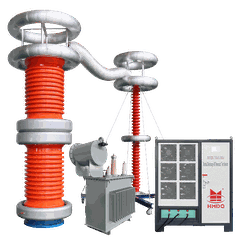
The lightning impulse generator, as a high-voltage generation device for simulating lightning and switching overvoltage pulses, is a core test equipment in high-voltage laboratories. It is widely used in the field of insulation performance testing for power systems, high-tech industries, and cross-industry equipment. Its primary function is to generate standard lightning impulse voltage waves (such as the 1.2/50μs waveform) and switching overvoltage waves, to test the insulation withstand capability of power transformers, instrument transformers, surge arresters, insulators, and other devices under overvoltage conditions. This is a critical tool for ensuring the safe operation and stable running of power equipment.
From the current industry status, lightning impulse generator products come in a wide variety of types. Based on waveform, current, functional combinations, and test type differences, equipment structures are categorized into small desktop, medium cabinet, and large split types. On the technical front, the industry has established a relatively complete standard system (such as GB/T16927, DL/T848.5), and is gradually introducing innovative technologies like microcontroller technology and optical fiber control transmission systems to enhance equipment automation and reliability. For example, some products use constant current charging methods and spring-pressed adjustable resistance mechanisms to achieve high-precision control of charging voltage (with a deviation of ≤±1%) and smooth waveform output; other companies address the issue of ground potential rise during high-voltage testing by using optical fiber communication, significantly extending the equipment's operational life (up to over 20 years). In terms of market competition, companies like Wuhan UHV Power and Qingdao Huanneng Electric have taken the lead in brand rankings due to their technological advantages and product stability.
The importance of the industry is reflected in multiple dimensions: On one hand, high-voltage electrical equipment in power systems must pass impulse voltage tests to verify insulation performance, which directly affects grid operation safety; on the other hand, with the increasing demands for impulse current waveforms and amplitudes in high-tech fields such as nuclear physics, accelerators, and lasers, the application of lightning impulse generators has expanded from traditional power sectors to broader scientific research scenarios. Additionally, equipment in communication, aerospace, and transportation sectors also rely on their simulation capabilities to ensure reliability under extreme conditions.
The core objective of this study is to provide data support for corporate technology research and development, market layout, and industry standard optimization by analyzing the distribution of industry demand (as shown in the figure, the proportion of demand in each field can be intuitively presented), technological development trends, and the strengths and weaknesses of existing solutions. This will promote the development of lightning surge generators towards higher precision, intelligence, and multi-scenario adaptability, further enhancing their application value in power and cross-industry fields.

Industry status and demand
In terms of the current industry status, lightning impulse generators, as core equipment in high-voltage testing laboratories, come in a wide variety of product types. Depending on waveform, current, functional combinations, and test type differences, the equipment structure is divided into small desktops, medium cabinets, and large split units, each suitable for different scale testing scenarios. On the technical front, the industry has established a relatively complete standard system, including GB/T16927 (High Voltage Testing Technology) and DL/T848.5 (General Technical Conditions for Impulse Voltage Generators), ensuring the standardization of equipment design and testing. Meanwhile, innovation in the industry is active, such as introducing microcontroller technology to automate the testing process, using optical fiber control transmission systems to address interference issues caused by ground potential rise during high-voltage testing, significantly enhancing equipment reliability; some products use constant current charging methods (charging voltage deviation ≤ ±1%), spring contact wave adjustment resistor mechanisms, achieving high-precision waveform output and spark-free discharge. In the market competition landscape, companies like Wuhan UHV Power and Qingdao Huanneng Electrical, leveraging their technological advantages and product stability, lead in brand rankings.
In terms of demand distribution, the application requirements of lightning impulse generator are mainly concentrated in the following fields:
Power system: As a core application field, it is mainly used for insulation impulse withstand test of power transformers, current transformers, lightning arresters, insulators and other equipment to verify their tolerance under lightning and overvoltage, accounting for more than 60% of the total demand of the industry.
High-tech fields: including nuclear physics, accelerators, lasers, etc., these fields have higher requirements on the waveform (such as 8/20μs, 4/10μs, etc.) and amplitude of impulse current, which promotes the development and application of multi-waveform impulse current generators, accounting for about 25% of the demand.
Inter-industry equipment testing: Communication equipment, spacecraft, high-speed rail/subway and other transportation vehicles need to pass lightning impact test to evaluate their ability to resist lightning strikes and ensure reliability in extreme environments, accounting for about 15% of the demand.
(The specific proportion of demand distribution in each field can be intuitively presented through the demand distribution pie chart)
Technology development trends
According to the technical development trend line chart (as shown in the figure, which can intuitively present the key nodes and growth rate of technology development at different stages), the development of lightning impulse generator technology mainly presents the following five trends:

1. Deep integration of intelligent and automatic control technology
The industry is accelerating the introduction of microcontrollers and programmable logic controllers (PLCs) to promote the transition from manual operations to automation in testing processes. For example, some devices use Mitsubishi FX series PLCs for full-function software programming control, significantly reducing the number of peripheral circuit boards and enhancing system reliability. At the same time, by designing dedicated program operation interfaces, the operational procedures for test personnel are simplified, effectively preventing human errors. Additionally, the application of microcontroller technology enables high-precision control of charging voltage (with a deviation of no more than ±1%) and supports continuous output without resetting after a power failure, significantly improving testing efficiency.
2. High precision waveform control and multi-scene adaptability are enhanced
For the high-tech fields such as nuclear physics, accelerators, and lasers, which have higher requirements for impulse current waveforms (such as 8/20 μs, 4/10 μs) and amplitude, multi-waveform impulse current generators have become a key focus of research and development. By optimizing discharge circuit parameters (such as reducing loop inductance and using non-inductive wound resistors), combined with spring-pressed wave-form adjustment resistor mechanisms (reliable contact, no burrs on the waveform), the equipment can flexibly generate unidirectional or oscillating impulse currents to meet the testing needs of different samples. Additionally, the application of constant current charging technology (with adjustable charging voltage accuracy of 1%) further enhances the stability and repeatability of the waveforms.
3. Breakthroughs in anti-interference and reliability technologies
In high-voltage testing, issues such as ground potential rise and electromagnetic interference have long affected the stability of measurement and control systems. In recent years, the innovative application of optical fiber control transmission technology has effectively addressed this pain point -- by connecting control and measurement equipment to the high-voltage main body via optical fibers, isolating ground potential interference, and significantly enhancing system reliability. Additionally, the equipment itself adopts a German HIGHVOLT-type column structure, fiberglass insulating supports, and anti-haze measures, ensuring no noticeable corona during charging, further guaranteeing long-term operational stability.
4. Miniaturization and compact development
Traditional large-scale split equipment, due to their size and weight, are gradually becoming inadequate for diverse testing scenarios. Directions for technological improvement include: using semiconductor devices to replace traditional switches, thereby reducing response time and size; optimizing the layout of main capacitors (to minimize the total length of connecting wires) to reduce loop inductance and increase current amplitude; some devices achieve structural compactness through multi-stage parallel design (such as two-stage or multi-stage parallel connections), maintaining functionality while achieving a more compact structure.
5. Long life and low cost of operation capability improvement
By using high-quality raw materials (such as dry pulse capacitors and high-voltage glass enamel resistors) and advanced processes (such as anti-aging treatment and resistor structures with sufficient thermal capacity), the equipment's operational life can be extended to over 20 years, with low daily maintenance costs. The design of the automatic grounding switch (which automatically shorts out and discharges during test stoppages) further reduces operational risks, ensuring safe equipment operation.
Analysis of existing solutions
The advantages and disadvantages of existing lightning impulse generator industry solutions can be compared and analyzed from the following dimensions (the figure shows the comparison chart of the advantages and disadvantages of existing industry solutions):

1. Core advantages of existing solutions
Simulation capability and strong applicability: It can accurately simulate standard lightning impulse voltage waves (such as the 1.2/50μs waveform), overvoltage operation waves, and various pulse waves, covering the insulation testing needs of mainstream power equipment like power transformers, instrument transformers, surge arresters, and insulators. It also supports the testing requirements for special waveforms such as 8/20μs and 4/10μs in high-tech fields like nuclear physics and lasers.
Outstanding technical performance and reliability: Advanced technologies such as constant current charging (voltage deviation ≤±1%), fiber optic control transmission system (isolating high voltage interference), and Mitsubishi PLC full-function programming control (reducing peripheral circuits and enhancing stability) are employed. Some devices also feature spring-pressed wave-form adjustment resistors (reliable contact, no burrs on waveform), significantly improving waveform output accuracy and equipment lifespan (up to over 20 years).
Structural Design and Safety Optimization: The equipment structure is divided into small desktop, medium cabinet, and large split types according to scenario requirements, suitable for experiments of different scales; the main body adopts German HIGHVOLT-type column structure, fiberglass insulating supports, and anti-haze measures, ensuring no noticeable corona during charging; the automatic grounding switch automatically shorts out and discharges when the test stops, reducing operational risks.
Cost and benefit: Through multi-waveform design (reducing repeated investment), high quality materials (dry pulse capacitor, high voltage glass enamel resistor) and anti-aging process, the daily maintenance cost of the equipment is low, and the long-term operation economy is significant.
2. Main shortcomings of existing solutions
Volume and flexibility limitations: Traditional large split equipment is bulky, heavy, and poorly mobile and adaptable to multiple scenarios, making it difficult to meet the needs of some small laboratories or field tests.
Uneven degree of automation: some domestic impulse current tests still rely on manual operation (such as lightning arrester valve plate detection requires continuous discharge more than 500 times, labor intensity is high), while the head enterprises (such as Wuhan UHV) have realized PLC automatic control, but the technology application of small and medium-sized enterprises lags behind, and the overall level of automation is uneven.
The precision of waveform control needs to be improved: the early equipment has the problem of output voltage fluctuation. High-tech fields (such as accelerator and laser) have higher requirements on waveform amplitude and stability, so it is necessary to further optimize the circuit inductance (such as shortening the length of the main capacitor connection line), resistance heat capacity and other parameters to improve the consistency of waveform.
Insufficient coverage of technology: cutting-edge technologies such as optical fiber control and multi-waveform adaptation are mainly concentrated in leading enterprises, and some products are still based on basic functions, which is difficult to meet the testing requirements of complex lightning impact scenarios across industries (such as aerospace and transportation equipment).
Solutions are recommended
Based on the current situation of the industry, pain points of demand and technology development trend, combined with the advantages and disadvantages of existing solutions, the following targeted solution suggestions are proposed:
1. Promote the popularization and standardization of intelligent and automation technologies
In view of the uneven degree of automation in the industry (for example, some enterprises still rely on manual operation to detect lightning arrester valve), it is suggested that:
Promote intelligent control modules: Encourage companies to adopt mature intelligent control technologies such as Mitsubishi FX series PLCs and microcontrollers, developing standardized control modules to lower the technical application threshold for small and medium-sized enterprises. For example, through modular programming, achieve automatic adjustment of charging voltage (deviation ≤±1%), automatic tracking adjustment of ball gap distance, and other functions, reducing manual intervention and improving testing efficiency.
Optimize the operation interface design: refer to the experience of leading enterprises (such as Wuhan UHV), design a special program operation interface in line with the high voltage test habits, integrate test parameter setting, waveform monitoring, data recording and other functions, simplify the operation process, and avoid human error.
2. Develop compact equipment structure suitable for multiple scenarios
For the problems of large size and poor flexibility of large split equipment, it is suggested that:
Modular design: The modular structure (such as the unified plug-in design of two or more parallel levels) can be quickly assembled and disassembled, supporting flexible conversion between small desktop, medium cabinet and large split type, so as to meet the needs of different scenarios such as laboratory and field testing.
Application of lightweight materials: Promote the use of lightweight materials such as FRP insulated pillars and dry pulse capacitors, combine semiconductor switches to replace traditional mechanical switches, shorten the response time and reduce the size of equipment, and improve the mobility.
3. Improve the precision and adaptability of multi-waveform control
In view of the high requirements for special waveforms (such as 8/20μs, 4/10μs) in the field of high and new technology, it is suggested that:
Optimize discharge circuit parameters: By shortening the length of the main capacitor connection line (reducing loop inductance) and using non-inductive winding resistors (reducing residual inductance), improve current amplitude and waveform consistency; simultaneously, develop intelligent wave modulation algorithms to automatically match the leading/trailing edge resistors based on the test specimen's capacitance, achieving rapid switching between multiple waveforms.
Strengthen the heat capacity design: refer to the HIGHVOLT resistance structure, use plate-shaped resistance bracket (supporting multiple parallel resistors), improve the heat capacity of the resistance, and ensure the waveform stability without burr when discharging large current.
4. Deepen the research and development of anti-interference and reliability technology
For the problems such as ground potential rise and electromagnetic interference in high voltage test, it is suggested that:
Promote optical fiber control transmission system: it is mandatory to use optical fiber to connect the high voltage body and the measurement and control equipment to isolate the earth potential interference and improve the reliability of the system; at the same time, develop anti-electromagnetic interference measurement and control software to filter the influence of external noise on waveform acquisition.
Improve safety protection design: standard automatic grounding switch (automatic short circuit discharge and grounding when the test stops), anti-haze measures (such as surface treatment of capacitors at all levels), reduce operation risk, and ensure long-term stable operation of equipment.
5. Expand customized solutions for cross-industry applications
For the special test requirements of cross-industry equipment such as communication, aerospace and transportation, it is suggested that:
Joint industry user development: cooperate with communication equipment manufacturers, aerospace institutes and rail transit enterprises to customize the development of complex lightning scene simulation functions (such as wave cutting, oscillation wave, steep wave, etc.) to meet the requirements of different equipment for lightning resistance test.
Increase multi-parameter testing capability: integrate the synchronous measurement function of impulse voltage/current, support the synchronous acquisition and comparative analysis of output voltage waveform and injury resistance current waveform (such as 50% voltage/current waveform coincidence judgment), improve the accuracy of cross-industry equipment fault diagnosis.
6. Strengthen standard implementation and technical training
In view of the problems of lax implementation of industry standards and insufficient technical understanding of small and medium-sized enterprises, it is suggested that:
Promote standard refinement and implementation: In combination with the needs of high-tech fields, supplement the design and test standards of multi-waveform impulse current generators (such as 8/20μs waveform parameter requirements), and improve the implementation of core standards such as GB/T16927 and DL/T848.5 through standard training organized by industry associations.
Establish a technology exchange platform: hold regular technical seminars on lightning shock generators to promote technology sharing between leading enterprises and small and medium-sized enterprises, and accelerate the popularization and application of cutting-edge technologies such as optical fiber control and intelligent modulation.
conclusion
This study systematically reviews the current status, demand, and technological development trends of the lightning impulse generator industry, highlighting its critical role as a core device in high-voltage testing laboratories for power system safety, high-tech research and development, and cross-industry equipment reliability assurance. The research findings indicate that lightning impulse generators, by simulating lightning and operational overvoltage waveforms, have become an essential tool for verifying the insulation performance of power transformers, surge arresters, and other equipment. As the demand for special waveforms expands in fields such as nuclear physics and lasers, their application scenarios continue to broaden. On the technical front, breakthroughs in intelligent control, high-precision waveform adjustment, and interference resistance have significantly enhanced the reliability and operational lifespan (up to over 20 years) of the equipment. However, issues such as insufficient flexibility in size and uneven levels of automation still constrain further industry development.
The solutions proposed to address the above pain points are both important and feasible:
Popularization of intelligence and automation: By promoting standardized intelligent control modules (such as Mitsubishi PLC) and simplifying the operation interface, labor intensity can be greatly reduced (such as lightning arrester valve plate detection from manual 500 times discharge to automatic control), improve the technical application level of small and medium-sized enterprises, and directly promote the improvement of industry efficiency.
R&d of compact equipment: The application of modular design and lightweight materials (such as fiberglass pillars, dry pulse capacitors) can realize the flexible conversion of equipment between desktop, cabinet and split mode, meet the multi-scene requirements of laboratory and field testing, and solve the problem of inconvenient movement of traditional large equipment.
Multiple waveform accuracy improvement: Optimize the discharge circuit parameters (shorten the main capacitor connection line, no inductive resistance winding) and intelligent wave modulation algorithm, which can accurately adapt to 8/20μs, 4/10μs and other special waveform requirements, support the cutting-edge research in high-tech fields, and enhance the technical added value of equipment.
Cross-industry customized expansion: users in the fields of communication and aerospace are jointly developed to develop complex scene simulation functions (such as wave interception and steep wave), and integrate multi-parameter synchronous measurement capabilities, which can effectively cover the lightning resistance test requirements of cross-industry equipment, and further expand the market application boundary.
In summary, the solution proposed in this study closely aligns with core industry needs, leveraging existing mature technologies (such as fiber optic control and constant current charging) and practical experience from leading companies (like the automated control of Wuhan UHV). It has a clear path for implementation. Through technology popularization, standard refinement, and cross-industry collaboration, lightning surge generators will accelerate towards higher precision, intelligence, and multi-scenario adaptability, providing stronger equipment support for the stable operation of power systems and high-tech innovation.