

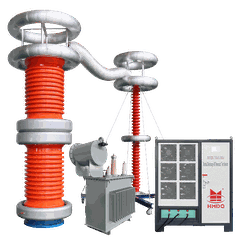




High Potential Testing, universally known as the Hipot Test or Dielectric Withstand Test, is a non-negotiable safety procedure for virtually any electrical equipment or component before it reaches the user. It's the guardian at the gate, ensuring insulation barriers can handle unexpected electrical stress. While the core concept sounds simple – apply high voltage and check for failure – the sophistication lies in how it precisely detects the critical moment: dielectric breakdown. This fundamental process is vital for product safety certification.
The Core Objective: Simulating Overvoltage Stress
Electrical equipment is designed to operate safely at specific voltage levels. However, real-world conditions aren't perfect. Power surges, lightning strikes, switching transients, or internal faults can subject insulation to voltages far exceeding normal operational levels. The hipot test proactively simulates these worst-case scenarios in a controlled environment. Its primary goal isn't to pass or fail under normal conditions; it's to verify that the insulation can reliably contain significantly higher-than-normal voltages without catastrophic failure.
The Fundamental Process: A Controlled Overvoltage Application
Preparation: The equipment under test (EUT) is securely connected to the hipot tester. Grounding connections are verified as absolutely crucial. Safety barriers are engaged.
Voltage Application: The tester generates a precisely controlled high DC or AC voltage (significantly higher than the EUT's normal operating voltage). This voltage is then applied between points that should be electrically isolated:
Primary to Ground: Testing basic insulation protecting users from shock.
Primary to Secondary: Testing isolation between different circuit sections (e.g., input to output in power supplies).
Conductor to Conductor: Testing insulation between adjacent wires or traces.
Dwell Time: The high voltage is maintained for a specified duration (typically 1 minute, though shorter times may be used based on certain standards). This sustained stress is critical to expose potential weaknesses like tiny pinholes, contaminations, or marginal clearances that instantaneous voltage wouldn't reveal.
The Critical Detail: Detecting Dielectric Breakdown
Here's where the hipot test proves its essential nature:
Applying High Voltage: The tester outputs a calibrated high voltage (DC or AC) to the designated test points.
Monitoring Leakage Current: This is the test's heartbeat. A highly sensitive circuit within the tester continuously monitors the minuscule current that inevitably flows through or over the surface of the insulation. This is the leakage current.
Setting the Threshold: The test safety standard defines a maximum permissible leakage current limit for the specific EUT type and voltage class. This limit is programmed into the tester.
The Breakdown Moment: Dielectric breakdown occurs when the insulation fails catastrophically. This can be a physical spark or flashover. Crucially, this failure causes the leakage current to suddenly and dramatically spike. It's no longer just surface leakage or capacitive coupling; it becomes a direct, low-resistance path.
Instantaneous Detection & Failure Trigger: The tester's sophisticated circuitry detects this abrupt surge in leakage current instantly. If the monitored current exceeds the pre-set maximum threshold at any point during the test duration, the tester immediately terminates the voltage application and signals a FAIL result. This rapid detection is vital to prevent equipment destruction beyond the specific breakdown point and for operational safety. Some testers can even record the exact point of failure within the voltage ramp or dwell time.
Pass Condition: If, throughout the entire test duration and voltage level, the leakage current remains safely below the established limit with no sudden current surges, the EUT PASSES, indicating sufficient dielectric strength for its safety class.
Why Breakdown Detection is Non-Negotiable
Failing to detect a dielectric breakdown instantly has serious consequences:
False Pass: Minor initial breakdowns might self-seal or not trip the tester if sensitivity is inadequate, letting unsafe equipment pass.
Equipment Damage: Continued high voltage after breakdown can cause extensive, unnecessary damage beyond the original failure point, complicating root cause analysis.
Safety Hazard: Sustained arcing poses fire and explosion risks during testing.
Hidden Weaknesses: Gradual degradation approaching breakdown might not be flagged if the threshold is too loose.
Key Parameters Influencing "How It Works"
Test Voltage Level: Dictated by safety standards (e.g., based on working voltage, insulation type). Must be sufficient to stress the insulation adequately.
Voltage Type (DC vs AC): Impacts stress characteristics (DC finds pinholes better, AC stresses capacitance/distributed gaps more effectively). Standard dictates the type.
Ramp Rate (DV/DT): How quickly voltage increases. Controlled ramps prevent transient overstress.
Dwell Time: Duration of applied high voltage. Crucial for exposing time-dependent weaknesses.
Leakage Current Limit & Detection Sensitivity: These settings define the failure criteria. Sensitivity must be high enough to catch catastrophic breakdowns instantly.
Real-World Implication: Manufacturing Line Safety
Imagine testing household appliances. Every unit undergoes a final hipot test. The tester applies high voltage to the power input relative to the accessible metal chassis. It continuously monitors the tiny leakage current. If there's even a microsecond where current surges beyond the limit – indicating insulation breakdown within the power supply or a wiring fault bringing live voltage dangerously close to the chassis – the unit instantly fails. This prevents a potentially lethal product from reaching a consumer's home.
Conclusion
Understanding how hipot test works means recognizing it's far more than just "applying high voltage." It's a precisely controlled process of applying a defined overvoltage stress and continuously, sensitively monitoring for the unmistakable signature of catastrophic insulation failure: a sudden surge in leakage current. The ability to detect this breakdown instantaneously, defined by rigorous thresholds, is the cornerstone of the test's reliability in certifying the dielectric safety of electrical equipment, protecting lives, and preventing costly equipment damage. Its operation remains a fundamental pillar of global electrical safety standards.


