

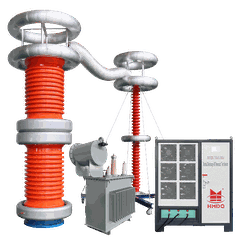



The principle of substation debugging tools mainly includes the following aspects:
Classification and functions of debugging tools
The substation debugging tools mainly include monitoring backend machines, remote motors, gps timing devices, five prevention machines, and other equipment. The functions of these tools are as follows:
Monitoring backend machine: Provides a human-machine interface for on-site operation, realizes the management and control of interval level equipment, and communicates with the dispatch communication center through remote workstations and data networks.
Remote motor: Collecting analog and state variables of the power system's operating status, monitoring and transmitting this information to the dispatch center, while executing control and regulation commands from the dispatch center.
Gps time synchronization device: Provides accurate time synchronization to ensure time consistency among various devices in the substation.

Five prevention measures: Implement anti misoperation functions to ensure the safety of substation operations.
The working principle and debugging method of debugging tools
The working principle of debugging tools is based on the hierarchical and distributed structure of automation systems. This structure divides the collection and control of substation information into three levels: Management level, station control level, and on-site level. On site level units are organized according to a single device, and control and fault handling are decentralized, reducing the use of control cables and improving the reliability and fault resistance of the system.
The role of debugging tools in substation automation systems
Debugging tools play a crucial role in substation automation systems. They achieve monitoring and control of various equipment in the substation through high-speed computing and judgment functions, ensuring the safe and economical operation of the substation. The specific functions include:
Data and information sharing: Avoiding duplicate data collection and achieving data and information sharing.
Monitoring and control: Conveniently monitor and control the operation and operation of various equipment in the substation.


