

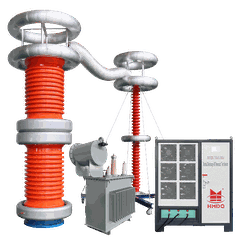




In the realm of power systems, transformers are the unsung heroes, quietly stepping up or stepping down voltages to keep electricity flowing reliably. But even these robust assets require rigorous testing to maintain peak performance. Enter the transformer test bench-a specialized setup designed to validate a transformer's health, efficiency, and compliance with industry standards. While many know it as a "testing tool," few grasp its intricate working principle. Let's break it down.
What Isa Transformer Test Bench?
At its core, a transformer test bench is a modular platform equipped with instruments, controls, and safety features to simulate real-world operating conditions and measure a transformer's electrical characteristics. Unlike ad-hoc testing setups, it integrates precision tools to streamline diagnostics, whether for factory acceptance tests, routine maintenance, or troubleshooting in the field.
The Core Components: How They Work in Harmony
To understand its working principle, let's dissect the bench's key subsystems and how they interact:
1. Power Supply Module: Mimicking Grid Conditions
The test bench starts with a controllable power source. This isn't your average wall outlet-it's a programmable unit capable of generating AC/DC voltages (from low-voltage auxiliary power to high-voltage primary-side simulations) and currents tailored to the transformer's rating. For example, when testing a distribution transformer rated at 11kV/415V, the module might output 11kV to simulate grid input or step down to test secondary-side windings.
This flexibility is critical because transformers operate under diverse scenarios: light loads, overloads, or transient surges. By replicating these conditions, the bench ensures tests reflect real-world stress.
2. Measurement & Sensing Unit: Capturing the "Vitals"
Next, sensors and high-precision meters take center stage. These include:
•
Voltage transducers: To measure primary/secondary winding voltages with micro-volt accuracy.
•
Current clamps: Non-invasive tools to monitor current flow without disrupting operation.
•
Wattmeters and power analyzers: To calculate losses (copper, iron) and power factor.
•
Temperature probes: Placed on windings or oil (for oil-filled units) to track thermal behavior.
These devices feed data to a central controller, creating a real-time "health report" of the transformer. For instance, a sudden spike in no-load losses during a test could indicate insulation degradation-an early warning sign that might prevent a costly failure.
3. Control System: Automating Precision
Modern test benches rely on software-driven controllers (often PLCs or industrial PCs) to coordinate the process. Operators input test parameters (e.g., "perform turns ratio test at 100% rated voltage"), and the system automates:
•
Adjusting the power supply to target levels.
•
Triggering measurements at specific intervals.
•
Comparing results to predefined standards (IEEE, IEC, IS).
Automation reduces human error and accelerates testing-what once took hours can now be done in minutes. Some advanced benches even generate test certificates automatically, saving documentation time.
4. Protection Mechanisms: Safety First
Transformers handle massive energy; a test gone wrong could mean fires, explosions, or equipment damage. The bench includes layers of protection:
•
Overcurrent/overvoltage relays: Trip the power supply if limits are breached.
•
Short-circuit interlocks: Prevent accidental connections during setup.
•
Emergency stop buttons: Immediate shutdown for personnel safety.
These safeguards ensure tests are not just accurate but also safe for operators and assets.
A Real-World Example: Diagnosing a Faulty Distribution Transformer
Imagine a utility company noticing frequent voltage fluctuations in a rural area. Suspecting a faulty distribution transformer, they bring it to the lab for testing. Using a transformer test bench:
1.
The power module applies 11kV to the primary winding, simulating grid input.
2.
Sensors measure secondary voltage (expected 415V) but detect a 10% drop-unusual.
3.
The control system calculates turns ratio (primary:secondary) and finds it deviates from factory specs, indicating loose winding connections.
4.
Protection relays prevent overheating by cutting power before damage escalates.
Armed with this data, technicians repair the connections, restoring reliable power to the community.
Why This Matters for Your Operations
Understanding the working principle of a transformer test bench empowers you to:
•
Select the right bench: Look for modularity (to adapt to different transformer sizes), precision (for accurate diagnostics), and robust safety features.
•
Optimize testing workflows: Automation reduces downtime, especially for utilities with tight maintenance schedules.
•
Maximize asset lifespan: Early detection of issues (via trend analysis from repeated tests) prevents unplanned outages and extends transformer life.
In short, a transformer test bench isn't just a "machine"-it's a window into a transformer's operational health. By integrating power simulation, precision measurement, automation, and safety, it bridges the gap between theory and real-world reliability. For power professionals, mastering its working principle isn't just technical know-how; it's a strategy to keep the lights on.


