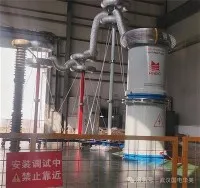
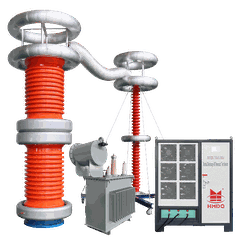




In the high-stakes world of power distribution, ensuring transformers and substations operate reliably isn't just a best practice-it's a critical safety and economic imperative. Enter the multifunction transformer and substation test system: a versatile tool designed to simplify, accelerate, and enhance the accuracy of testing these foundational components. But what exactly makes this system so unique? Let's dive into its core workflow to understand why it's become a game-changer for utility companies and maintenance teams.
Beyond "One-Test-At-a-Time": The Need for Multifunctionality
Traditional testing often involves juggling multiple standalone devices: a hipot tester for dielectric strength, a winding resistance meter for coil integrity, and a frequency response analyzer (FRA) for insulation condition. This fragmented approach is time-consuming, error-prone, and requires technicians to master dozens of tools. A multifunction system flips this script by consolidating these functions into a single platform-think of it as a "swiss army knife" for transformer and substation testing.
How It Works: The Integrated Workflow
At its heart, a multifunction transformer and substation test system relies on three key pillars: modular hardware, unified software, and adaptive testing protocols. Let's break down how these elements interact to deliver seamless results.
1. Modular Hardware: Adapting to Every Test
The system's hardware is built with swappable modules, each engineered for a specific test type. For example:
•
High-Voltage Modules: Generate controlled AC/DC voltages to test insulation strength (e.g., measuring partial discharge or breakdown voltage).
•
Low-Power Analyzers: Measure parameters like winding resistance, impedance, or turns ratio with precision, even for sensitive electronic components.
•
Signal Processing Units: Capture and interpret data from sensors (e.g., FRA for detecting winding deformation or DGA-dissolved gas analysis-for early fault detection in oil-filled transformers).
These modules connect via a central controller, eliminating the need to disconnect and reconnect cables between tests. A technician can switch from testing a transformer's bushings to analyzing its protective relays without leaving the control panel.
2. Unified Software: From Data to Insights
While hardware handles the physical testing, the software is where the magic happens. Modern systems use intuitive, role-based interfaces that guide users through test sequences-whether you're a seasoned engineer or a new technician. Key features include:
•
Automated Test Plans: Pre-configured workflows for common tests (e.g., IEEE or IEC-compliant routines for transformer acceptance or routine maintenance).
•
Real-Time Visualization: Graphs, trend lines, and color-coded alerts highlight anomalies (e.g., a sudden spike in leakage current during a hipot test).
•
Data Aggregation: Results from all modules are stored in a single database, making it easy to compare historical data (e.g., tracking insulation degradation over years).
This integration reduces human error-no more manual transcription of numbers from separate devices-and cuts reporting time from hours to minutes.
3. Adaptive Testing: Tailoring to Equipment and Scenarios
No two transformers or substations are identical. A multifunction system excels here by allowing users to customize test parameters. For instance:
•
Variable Voltage Ranges: Test a small distribution transformer (10kV) or a large power transformer (500kV) without swapping hardware.
•
Environment Compensation: Adjust readings based on ambient conditions (temperature, humidity) to ensure accuracy, a critical factor for outdoor substations.
•
Fault Simulation: Introduce controlled faults (e.g., simulating a shorted turn in a winding) to validate protective relay responses-something that would require separate equipment in a traditional setup.
Real-World Impact: A Case Study in Efficiency
Consider a regional utility company tasked with upgrading a 138kV substation. Previously, testing the substation's transformers, circuit breakers, and switchgear required three separate teams with three different toolkits, taking 10 days to complete. With a multifunction system:
•
A single team used one platform to perform all tests in 4 days.
•
Real-time data sharing eliminated discrepancies between teams.
•
Historical trend data (stored in the system) revealed a subtle insulation degradation in one transformer, allowing proactive replacement before failure.
Why This Matters for Grid Reliability
In an era where even a minor substation outage can cascade into blackouts, the multifunction transformer and substation test system isn't just a convenience-it's a safeguard. By consolidating testing workflows, it ensures consistency, reduces downtime, and empowers teams to catch issues earlier. As utilities strive for smarter grids, tools that simplify complexity will continue to be indispensable.
Whether you're maintaining a local distribution station or a national transmission hub, understanding how these systems work reveals their true value: turning reactive maintenance into proactive reliability.