

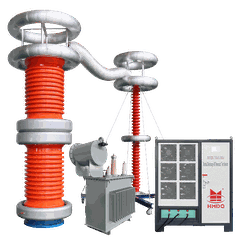


As a supplier of High Voltage AC Resonant Test Systems, I've witnessed firsthand the critical role these systems play in ensuring the safety and reliability of electrical equipment. One factor that often goes overlooked but can have a significant impact on the performance of these test systems is altitude. In this blog post, I'll explore the various ways altitude can affect a High Voltage AC Resonant Test System and what you need to know to ensure accurate and reliable testing at different elevations.
Understanding High Voltage AC Resonant Test Systems
Before delving into the impact of altitude, let's briefly review what a High Voltage AC Resonant Test System is and how it works. These systems are used to test the insulation integrity of high-voltage electrical equipment, such as transformers, cables, and switchgear. By subjecting the equipment to a high voltage at a specific frequency, the test system can detect any potential insulation weaknesses or faults.
The key components of a High Voltage AC Resonant Test System typically include a Variable Frequency Power Supply, an inductor, a capacitor, and a control unit. The variable frequency power supply generates an adjustable frequency AC voltage, which is then applied to the test object through the inductor and capacitor. When the frequency of the power supply matches the resonant frequency of the test circuit, the system reaches resonance, resulting in a high voltage across the test object.
Impact of Altitude on High Voltage AC Resonant Test Systems
1. Air Density and Dielectric Strength
One of the most significant effects of altitude is the decrease in air density. As altitude increases, the air becomes thinner, which reduces the dielectric strength of the air. Dielectric strength is the maximum electric field that a material can withstand without breaking down and allowing current to flow. In a High Voltage AC Resonant Test System, the air surrounding the test object acts as an insulator, and a lower dielectric strength can lead to increased corona discharge and partial discharge.
Corona discharge is a phenomenon that occurs when the electric field around a conductor exceeds the dielectric strength of the air, causing ionization of the air molecules and the formation of a glowing corona. Partial discharge, on the other hand, is a localized breakdown of the insulation within the test object. Both corona discharge and partial discharge can cause damage to the insulation and affect the accuracy of the test results.
To compensate for the reduced dielectric strength at high altitudes, it may be necessary to increase the test voltage or use additional insulation materials. However, this can also increase the risk of overstressing the test object and causing damage. Therefore, it's important to carefully consider the altitude and the specific requirements of the test when selecting a High Voltage AC Resonant Test System.
2. Temperature and Humidity
Altitude can also have an impact on temperature and humidity, which can affect the performance of a High Voltage AC Resonant Test System. At higher altitudes, the temperature is generally lower, and the humidity is often lower as well. These environmental conditions can cause the insulation materials to become more brittle and less flexible, which can increase the risk of cracking and damage.
In addition, low humidity can lead to static electricity buildup, which can interfere with the operation of the test system and cause inaccurate test results. To mitigate these effects, it's important to ensure that the test system is properly calibrated and maintained, and that the test environment is controlled to minimize the impact of temperature and humidity.
3. Equipment Performance
The performance of a High Voltage AC Resonant Test System can also be affected by altitude. At higher altitudes, the reduced air density can cause the cooling efficiency of the system to decrease, which can lead to overheating and damage to the components. In addition, the reduced air density can also affect the performance of the inductor and capacitor, which can change the resonant frequency of the test circuit and affect the accuracy of the test results.


To ensure the reliable operation of a High Voltage AC Resonant Test System at high altitudes, it's important to select a system that is designed to operate in these conditions. Some systems are specifically designed for high-altitude applications and include features such as enhanced cooling and altitude compensation.
Choosing the Right High Voltage AC Resonant Test System for High Altitudes
When selecting a High Voltage AC Resonant Test System for high-altitude applications, there are several factors to consider. Here are some key considerations:
1. Altitude Rating
Make sure the test system is rated for the altitude at which it will be used. Some systems are designed to operate at altitudes up to 3,000 meters or higher, while others may have a lower altitude rating.
2. Cooling System
Look for a test system with an efficient cooling system that can maintain the temperature of the components even at high altitudes. Some systems use forced air cooling or liquid cooling to ensure reliable operation.
3. Altitude Compensation
Consider a test system that includes altitude compensation features. These features can automatically adjust the test parameters to account for the reduced dielectric strength and other effects of altitude.
4. Insulation Materials
Choose a test system that uses high-quality insulation materials that are suitable for high-altitude applications. These materials should be able to withstand the lower temperatures and humidity levels at high altitudes without cracking or deteriorating.
Our High Voltage AC Resonant Test Systems
As a leading supplier of High Voltage AC Resonant Test Systems, we offer a range of products that are designed to meet the needs of customers at different altitudes. Our Inductance Adjustable AC Resonant Test System is a versatile and reliable solution that can be used for a variety of high-voltage testing applications. It features an adjustable inductor that allows for precise control of the resonant frequency, making it suitable for testing a wide range of electrical equipment.
Our AC Resonant Test System is specifically designed for testing capacitor voltage transformers (CVTs). It uses a unique resonant circuit design to provide accurate and reliable test results, even at high altitudes.
We also offer a Variable Frequency AC Resonant Test System that is ideal for testing high-voltage cables and other electrical equipment. This system features a variable frequency power supply that can generate a wide range of frequencies, allowing for flexible testing of different types of equipment.
Contact Us for High Voltage AC Resonant Test Systems
If you're in the market for a High Voltage AC Resonant Test System for high-altitude applications, we'd love to hear from you. Our team of experienced engineers can help you select the right system for your specific needs and provide you with the support and training you need to ensure its reliable operation. Contact us today to learn more about our products and services and to discuss your high-voltage testing requirements.
References
- IEEE Standard for High-Voltage Testing Techniques - General Definitions and Test Requirements (IEEE Std 4-2013)
- IEC 60060-1:2010 High-voltage test techniques - Part 1: General definitions and test requirements
- ANSI/IEEE C37.09-2012 Standard for AC High-Voltage Circuit Breakers Rated on a Symmetrical Current Basis


