

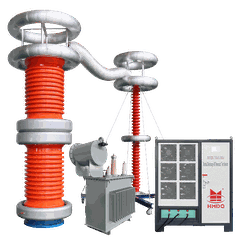



Hey there! As a supplier of the 3000A Integrated Current Tester, I often get asked about the offset current of this nifty piece of equipment. So, let's dive right in and break down what exactly the offset current is and why it matters.


First off, what's an offset current? In simple terms, the offset current is a small, unwanted current that exists in a circuit even when there should theoretically be no current flowing. It's like that little bit of noise in a quiet room that you can't quite get rid of. For the 3000A Integrated Current Tester, this offset current can have an impact on the accuracy of the current measurements it makes.
Now, you might be wondering why this small current is such a big deal. Well, in applications where precise current measurements are crucial, even a tiny offset current can throw off your results. For example, in electrical testing and calibration, where you're trying to ensure that a system is operating within very tight tolerances, an offset current can lead to inaccurate readings. This, in turn, can cause problems down the line, such as equipment malfunction or safety hazards.
So, how does the offset current affect the performance of the 3000A Integrated Current Tester? When the tester is measuring a current, the offset current gets added to the actual current being measured. This means that the reading you get on the tester might be slightly higher or lower than the true value. If the offset current is significant, it can make it difficult to determine the exact current flowing through a circuit.
But don't worry! Our 3000A Integrated Current Tester is designed to minimize the impact of offset current. We've used advanced technology and high - quality components to keep the offset current as low as possible. This ensures that you get accurate and reliable current measurements every time.
Let's talk a bit about how we measure and control the offset current in our tester. During the manufacturing process, we perform rigorous testing to determine the offset current of each unit. This allows us to calibrate the tester and compensate for any offset. We also use feedback mechanisms in the design of the tester to continuously monitor and adjust for changes in the offset current over time.
Now, I want to mention some related products that might be of interest to you. If you're looking for a more versatile testing solution, check out our AC/DC Primary Current Injection Test Set. This set is great for a wide range of electrical testing applications and can handle both AC and DC currents.
For those who need to test high - current systems, our High Current Tester Primary Current Injection Test Set is a top - notch option. It's specifically designed to handle large currents and provides accurate and reliable results.
And if you're dealing with extremely high currents, our 7500A Primary Current Injection Test Set is the way to go. It's built to withstand the demands of high - current testing and offers exceptional performance.
So, why choose our 3000A Integrated Current Tester? Well, besides its low offset current and high accuracy, it's also very easy to use. It comes with a user - friendly interface that allows you to quickly and easily set up your tests and view the results. Plus, it's built to last, with a rugged design that can withstand the rigors of the field.
If you're in the market for a reliable and accurate current tester, I highly recommend giving our 3000A Integrated Current Tester a try. Whether you're an electrical engineer, a technician, or someone involved in electrical testing and maintenance, this tester can meet your needs.
If you have any questions about the offset current or any other aspect of our 3000A Integrated Current Tester, or if you're interested in purchasing one, don't hesitate to reach out. We're here to help you make the right choice for your testing requirements.
In conclusion, understanding the offset current of the 3000A Integrated Current Tester is essential for getting accurate and reliable current measurements. Our tester is designed to minimize the impact of offset current, ensuring that you get the best possible results. So, if you're looking for a high - quality current tester, look no further!
References:
- Electrical Testing Handbook
- Principles of Current Measurement Technology


