

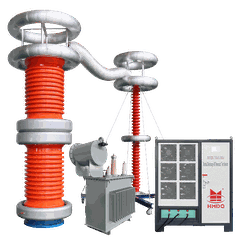




In the field of safe operation of power transmission lines, insulator zero-resistance has become one of the key hazards threatening the reliability of the power grid. When an insulator loses its insulating properties due to long-term operation or manufacturing defects, its resistance approaches zero, making it highly prone to causing flashover and tripping incidents. The insulator zero-resistance tester is a specialized device designed to accurately measure the insulation resistance of disc-type suspension insulators. Leveraging years of expertise in high-voltage testing technology, Wuhan Goldhome Hipot Electric Co., Ltd. has developed an insulator zero-resistance tester featuring precise quantitative measurement, live testing, and intelligent alarms, providing reliable testing solutions for power users worldwide. This article offers a comprehensive analysis of the core features of the Goldhome insulator zero-resistance tester.
Precise Quantitative Testing Technology
The primary feature of the Goldhome Insulator Zero-Value Tester lies in its high-precision quantitative testing capability. Traditional testing methods, which often rely on the spark gap method or pointer-type instruments, can only provide qualitative assessments and fail to accurately reflect the insulator's actual resistance value. The Goldhome tester employs a design that combines an electrostatic structure with precision electronic components, converting the applied voltage into an electric field for measurement. It features extremely high input impedance, minimizing the impact on the system under test.
The device's measurement range spans 1–5,000 MΩ, with measurement error controlled within ±10% and a resolution as high as 1 MΩ. This high-precision measurement enables maintenance personnel not only to identify insulators with zero resistance that have completely broken down but also to effectively detect critical damaged insulators that are leaking current but have not yet completely broken down, thereby providing a scientific basis for preventive maintenance.
Live Testing and Safety Design
Goldhome deeply understands the practical needs of line operation and maintenance. Its insulator zero-value tester features live-line testing capabilities, allowing direct testing on 35–500 kV transmission lines while they are energized. The device utilizes a high-frequency transformer circuit to generate test voltage, with an output voltage exceeding 60 kV, ensuring effective excitation of the insulators.
To ensure operational safety in high-voltage environments, the Goldhome tester incorporates dual safety protections. The device housing is made of high-insulation material capable of withstanding 40 kV inter-electrode withstand voltage. The test probe features a telescopic contact design that can be flexibly adjusted to accommodate insulators of different disc diameters, ensuring reliable contact with the steel cap of the insulator under test.
Intelligent Alarms and Data Lock
The intelligent features of the Goldhome tester are reflected in its comprehensive alarm and data management functions. In accordance with the DL/T626-2005 "Testing Procedures for Deteriorated Disc-Type Suspension Insulators" standard, the device is set to trigger an alarm when the insulation resistance falls below 500 MΩ. When the measured resistance drops below this threshold, the instrument activates both audible and visual alarms simultaneously-the buzzer sounds while the LED indicator flashes-ensuring clear detection even in noisy field environments.
The device features an automatic measurement result hold function. When the test probe is removed from the insulator being tested, the last measurement result remains displayed on the LCD screen, allowing operators to easily read and record the data. This design eliminates the safety risks associated with repeatedly looking at the display during work at heights.
Portable Design and Long Battery Life
The Goldhome Insulator Zero-Value Tester features a lightweight, portable design, with the entire unit weighing less than 300 grams and measuring Φ100×34 mm, making it easy to carry in a tool kit. The device supports two measurement modes: handheld direct measurement and high-altitude measurement using an insulated pole. It comes standard with a 6-meter insulated pole to meet the testing needs of insulator strings at various heights.
In terms of power management, the device is equipped with a high-capacity rechargeable lithium battery that provides over 8 hours of continuous operation on a single charge and up to 30 hours of standby time. The battery-powered design completely eliminates the constraints of power cords, allowing operators to move freely and perform inspections on utility poles.


