



In the field of safe operation of power transmission lines, insulator contamination flashovers have become one of the primary threats to power grid reliability. According to statistics, losses caused by contamination flashovers can be nearly 10 times those caused by lightning flashovers. As a core tool for assessing the degree of contamination on insulator surfaces, the value of insulator contamination testers is becoming increasingly evident. Leveraging years of expertise in high-voltage testing technology, Wuhan Goldhome Hipot Electric Co., Ltd. has developed insulator contamination testers featuring high-precision measurement, automated operation, and standardized procedures. These devices are widely used in multiple critical areas of power systems worldwide. This article provides a comprehensive analysis of the primary application areas of Goldhome insulator contamination testers.
Transmission Line Operation, Maintenance, and Preventive Testing
The primary application area for Goldhome's insulator contamination testers is the routine operation, maintenance, and preventive testing of transmission lines. Insulators are constantly exposed to the air, causing pollutants such as dust and salt to gradually accumulate on their surfaces. Under humid weather conditions-such as fog, dew, or light rain-moisture-laden contamination layers can reduce insulation strength, making flashovers due to contamination highly likely.
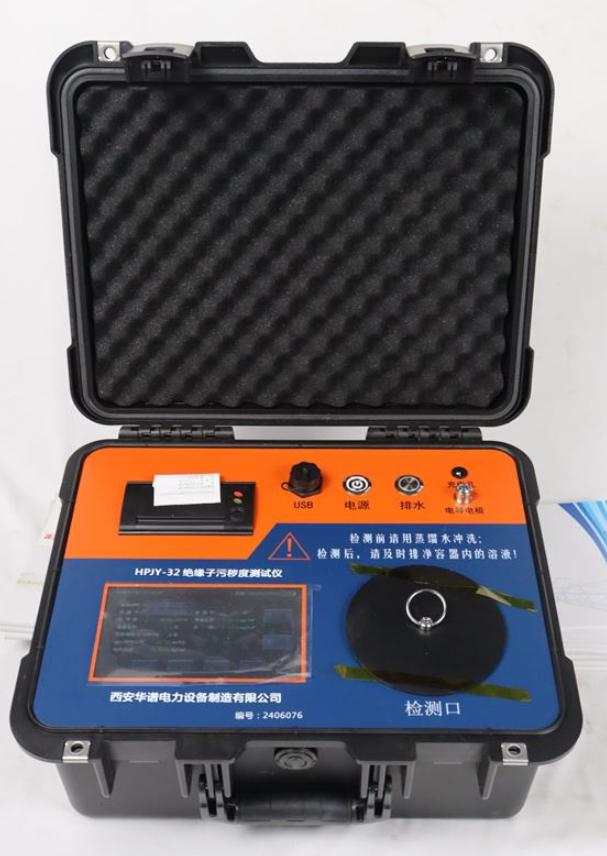
The Goldhome tester accurately measures two core indicators on insulator surfaces: Equivalent Salt Density (ESDD) and Equivalent Dust Density (NSDD). Through regular sampling and testing, maintenance personnel can promptly assess the level of contamination accumulation on line insulators and determine whether there is a risk of flashover. Compared to traditional, fully manual operations, Goldhome equipment reduces the testing cycle from 2–3 days to just 1 day, improving efficiency by 3–5 times.
Optimization of Cleaning Cycles and Resource Allocation
In the development of cleaning and maintenance strategies, the Goldhome soiling tester plays a crucial role in data-driven decision-making. In the past, power companies often adopted fixed-cycle cleaning schedules, which not only wasted manpower and resources but also made it difficult to respond to sudden contamination events.
Equipped with a high-precision electronic balance (resolution: 0.1 mg) and a temperature-controlled drying system (adjustable from 50–100°C), the Goldhome tester ensures the accuracy and comparability of measurement data. By establishing regional contamination databases, operations and maintenance units can develop differentiated cleaning schedules for areas with varying pollution levels-increasing cleaning frequency in heavily contaminated zones and appropriately extending cycles in clean areas-thereby achieving optimal resource allocation.
New Line Acceptance and Equipment Commissioning Testing
During the handover and acceptance phase of newly constructed transmission lines, the Goldhome Insulator Contamination Tester serves as a critical tool for verifying insulator quality. Newly installed insulators may be contaminated on their surfaces due to improper transportation or storage, or may have inherent manufacturing defects. By conducting baseline contamination testing prior to commissioning, an initial condition record for the insulators can be established, providing a reference for subsequent operation and maintenance.
Goldhome testers strictly adhere to the GB/T 16434-200X standard and are equipped with compliant sampling templates to ensure the accuracy of the sampling area. Their automated process includes contamination collection, precision filtration, constant-temperature drying, precision weighing, and data output. The entire process follows standardized procedures, eliminating human error.
Contaminant Composition Analysis and Environmental Assessment
In research institutes and power testing laboratories, the Goldhome contamination tester is widely used for contaminant composition analysis and environmental assessment research. Contaminants on insulator surfaces typically consist of various components, including soluble salts (e.g., NaCl) and slightly soluble salts (e.g., CaSO₄), and different components have significantly different effects on flashover voltage.
By combining advanced analytical methods such as hyperspectral technology, researchers can establish correlations between contamination components and spectral characteristics. The precise salt density and ash density data provided by Goldhome testers offer reliable foundational data support for these studies.


