

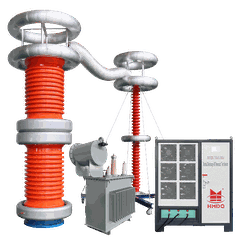


The Role of VLF in Cable Testing and Diagnostics
VLF (Very Low Frequency) testing technology is one of the key methods for on-site withstand voltage testing and insulation condition diagnosis of medium- and high-voltage power cables. Traditional power-frequency withstand voltage testing requires a large test power supply capacity. This is particularly true for long-distance cables, where the cables' high capacitance often results in bulky and heavy on-site testing equipment. In contrast, VLF testers typically operate at frequencies of 0.1 Hz, 0.05 Hz, or lower, significantly reducing the required test power supply capacity and making them particularly well-suited for on-site cable testing.


- Why is VLF suitable for cable testing?
Power cables are inherently highly capacitive loads. At power-frequency 50/60 Hz, the cable's capacitance generates a substantial capacitive current:
I = 2πfCV
2.What Can VLF Test?
VLF can be used not only for cable withstand tests but also, in combination with various diagnostic methods, to assess the condition of cable insulation.
Common tests include:
- VLF AC Withstand Test
By applying a specified ultra-low-frequency AC high voltage, this test observes whether the cable insulation breaks down within a specified time period, thereby verifying whether the cable meets the conditions for commissioning.
- VLF Tan Delta Test
The Tan Delta (dielectric loss factor) test reflects the loss characteristics of the cable insulation dielectric. By analyzing the Tan Delta values and their behavior as the test voltage changes, it can assist in identifying issues such as insulation aging and moisture ingress.
- VLF Partial Discharge Test
VLF can be combined with partial discharge (PD) detection technology to identify localized defects within the cable insulation or in cable accessories. PD diagnostics are particularly valuable for locations prone to localized defects, such as cable joints and terminations.
VLF cable testing can be expanded from simple withstand voltage verification to diagnostic assessment of insulation condition.
3. How does VLF differ from traditional DC withstand testing?
For modern XLPE cables, the long-term use of DC withstand testing is not considered an ideal field diagnostic method.
DC voltage causes space charge accumulation in extruded insulation materials such as XLPE, and residual charge may remain after the test is completed. Therefore, VLF AC testing is more commonly used in current engineering practice as the field withstand test method for medium-voltage cables.
Although the test voltage in VLF is AC, its frequency is very low; thus, it retains some characteristics of AC testing while significantly reducing the capacitive load on the cable.
4. Combining VLF with Cable Condition Diagnostics
A standalone VLF withstand test primarily answers one question:
Can the cable withstand the test voltage under specified test conditions?
Diagnostic techniques such as VLF Tan Delta and VLF Partial Discharge further address:
(What is the current condition of the cable insulation? Are there any potential defects?)
Therefore, in preventive maintenance, the following testing workflow can be established:
Visual Inspection → VLF Withstand Test → Tan Delta Diagnostic → Partial Discharge Diagnostic → Cable Condition Assessment
This testing approach can assist power companies, substation operations and maintenance personnel, and cable maintenance


