

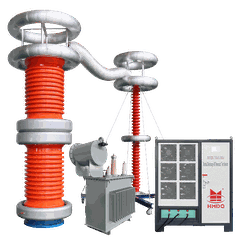



What is an oil immersed non partial discharge transformer?
Oil-immersed transformers are electrical equipment with insulating oil. The primary functions of insulating oil are heat dissipation and insulation. These devices are used to alter voltage levels, serving as voltage converters.
Briefly, it can step down the 1000V high voltage from power plants to the 220V/380V usable by homes and businesses, or step up the 100V low voltage to 2000V for long-distance transmission.
Core components:
1. Iron core: made of stacked silicon steel sheets, voltage conversion is achieved through magnetic field;
2. Winding: A coil (copper or aluminum wire) wound around the iron core, divided into high voltage winding (connected to input high voltage electricity) and low voltage winding (connected to output low voltage electricity). The number of turns in the coil determines the voltage conversion ratio;
3. Insulation oil: installed in the oil tank, heat dissipation: to dissipate heat from the transformer; Insulation: isolate the winding from the iron core and oil tank to prevent leakage;
4. Fuel tank: a sealed metal shell, containing iron core, winding and insulating oil, with external heat dissipation pipes;
5. Auxiliary components:
1. Oil storage tank: Balance the volume changes of thermal expansion and contraction of insulating oil to avoid deformation of the oil tank
2. Temperature gauge: monitors oil temperature to prevent overheating
3. Moisture absorber: Keep the oil dry and avoid insulation deterioration.
The Oil-Immersed Transformer Market:
Currently, the market still shows steady growth potential, but the core trend is "structural upgrading + green and intelligent transformation."
1. Grid Upgrading and Surge in Demand for New Energy Grid Connection:
Global efforts to achieve "dual-carbon" goals have led to a surge in installed capacity for new energy sources such as wind and solar power, requiring a large number of transformers for grid connection. Simultaneously, grid upgrades in various countries are directly driving demand. The average annual growth rate of China's oil-immersed transformer market is projected to be approximately 5.5% from 2025 to 2030.
2. Industrial and Regional Development Driving Growth:
The "Belt and Road Initiative" has boosted exports. In 2023, China's oil-immersed transformer exports increased by 15% year-on-year, with Southeast Asia and Africa being the main growth markets.
3. Product Energy Efficiency Upgrading:
Countries are continuously tightening transformer energy efficiency standards (e.g., China will fully implement the new Level 1 energy efficiency standard in 2025). A large number of high-loss, outdated oil-immersed transformers need to be replaced, and the penetration rate of Level 1 energy efficiency products is expected to exceed 50% by 2025.
Currently, the development prospects for oil-immersed transformers are quite good. Factories need to keep up with national development and global trends to continuously innovate in environmental protection and produce high-quality products.
Beginner's Tips:
Oil-immersed Transformers vs Dry-type Transformers
1. Appearance: Oil-immersed units feature sealed oil tanks and external cooling fins, with larger dimensions;
Dry-type units lack oil tanks and oil, with exposed windings or insulation wrapping, and smaller dimensions;
2. Applications: Oil-immersed units suit outdoor, high-power scenarios;
Dry-type units suit indoor(office buildings, shopping malls) and low-power applications.
Welcome to comment and reference.


