

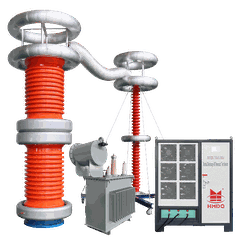



How to Select a Partial Discharge-Free GTU Withstand Voltage Test Device?
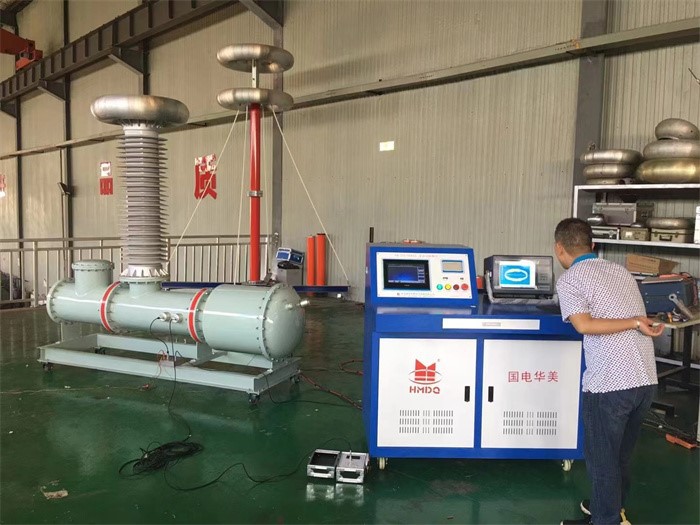
In the power testing field, the insulation performance of high-voltage equipment directly impacts the safety and stability of grid operations. As the "core tool" for assessing equipment insulation strength, the performance of a partial discharge-free GTU withstand voltage test device (hereafter referred to as "GTU device") directly affects the accuracy of test results. Faced with a market offering products of varying quality, how can one select a GTU device that meets their specific needs? Today, we break down the key considerations for this selection based on technical details and practical scenarios.
I. Core Metric: "Control Capability" of Partial Discharge Levels
The core advantage of GTU devices lies in their "zero partial discharge" capability-meaning extremely low partial discharge levels during testing (typically ≤10 pC or even lower).
For example:
A power testing unit once conducted withstand voltage tests on GIS equipment at a substation, initially selecting a device with average partial discharge control. Although the equipment passed the withstand voltage test, subsequent retesting revealed minute discharge points inside the tested equipment, nearly missing a potential hazard. The issue stemmed from the testing device's excessively high partial discharge value (exceeding 50 pC), which interfered with the identification of genuine discharge signals.
Therefore, two key factors must be prioritized during selection:
1. The device's inherent partial discharge level: Require manufacturers to provide partial discharge test reports under no-load conditions (typically ≤5 pC) to ensure a "clean" testing environment.
2. Interference resistance: High-quality GTU devices incorporate partial discharge shielding systems (e.g., metal shielding enclosures, grounding designs) to effectively isolate external electromagnetic interference and prevent misinterpretation.
2. Voltage Stability
The essence of withstand voltage testing is to identify weak points in equipment insulation by applying voltages exceeding rated values. Significant output voltage fluctuations (e.g., deviations exceeding ±3%) may lead to two consequences: insufficient voltage failing to expose insulation defects, or excessive voltage causing equipment overload damage.
Therefore, focus on two key aspects:
1.Power Module Quality: Devices utilizing high-frequency switching power supplies or linear amplifier technology offer more precise voltage regulation, typically maintaining fluctuations within ±1%.
2.Overvoltage Protection Mechanisms: Equipped with multi-level safeguards (e.g., software voltage limiting, hardware rapid shutdown), these prevent equipment damage even during operational errors.
III. Compatibility
Many users blindly pursue "higher voltage ratings" during selection (e.g., using 1000kV equipment for testing 10kV devices). On one hand, higher-voltage devices are bulkier and heavier, making them difficult to transport. On the other hand, controlling partial discharges becomes exponentially more challenging at higher voltages, potentially leading to test failures due to inadequate device compatibility.
The correct approach is to "select based on requirements": clearly define the maximum test voltage of the equipment under test (e.g., 10kV equipment typically requires 1.5 times the rated voltage, i.e., 15kV).
As power grids evolve toward higher voltages and greater capacities, demands for precision and reliability in withstand voltage testing have intensified. Goldhome Hipot Partial Discharge-Free GTU Withstand Voltage Test Device has emerged as a star product in the power equipment testing field, distinguished by its technical features of low partial discharge, high precision, and strong adaptability. Moving forward, the company will continue to leverage its specialized, refined, distinctive, and innovative technological strengths to iteratively upgrade its products, contributing further to the safe and stable operation of power systems.


