

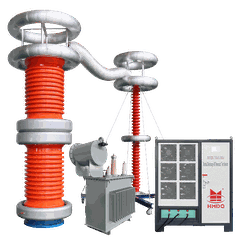



In the field of electrical power systems, the Capacitor Voltage Transformer (CVT) plays a crucial role in voltage measurement and protection. To ensure the reliable operation of CVTs, accurate testing is essential. The AC Resonant Test System for CVT has emerged as a popular choice for conducting such tests. But the question remains: How accurate is the AC Resonant Test System for CVT?
Understanding the AC Resonant Test System for CVT
The AC Resonant Test System for CVT is designed to simulate the actual operating conditions of CVTs during testing. It uses the principle of resonance to generate a high - voltage AC signal at a specific frequency. This system typically consists of a variable frequency power supply, an inductor, a capacitor, and measurement and control devices.
When the system reaches resonance, the impedance of the test circuit is minimized, and a large current can flow through the CVT under test. This allows for a more accurate assessment of the CVT's performance, including its insulation properties, voltage transformation ratio, and dielectric loss.
Factors Affecting the Accuracy of the AC Resonant Test System for CVT
1. Frequency Stability
The accuracy of the AC Resonant Test System is highly dependent on the stability of the test frequency. Any deviation from the resonant frequency can lead to changes in the impedance of the test circuit, affecting the test results. A stable frequency source is required to ensure that the system operates at the correct resonant frequency throughout the test. Modern variable frequency power supplies are equipped with advanced frequency control algorithms to maintain a high level of frequency stability. For example, some power supplies can maintain a frequency accuracy within ±0.01%.
2. Component Tolerance
The components used in the AC Resonant Test System, such as inductors and capacitors, have inherent tolerances. These tolerances can cause variations in the resonant frequency and the overall impedance of the test circuit. High - quality components with low tolerances are essential to minimize these effects. For instance, inductors with a tolerance of ±1% and capacitors with a tolerance of ±0.5% can significantly improve the accuracy of the test system.
3. Measurement Accuracy
Accurate measurement of voltage, current, and other electrical parameters is crucial for obtaining reliable test results. The measurement devices used in the AC Resonant Test System should have a high level of accuracy and precision. For example, voltage transformers and current transformers used for measurement should have a measurement accuracy within ±0.5%. Additionally, the data acquisition and processing system should be able to accurately record and analyze the measured data.
4. Environmental Conditions
Environmental factors such as temperature, humidity, and electromagnetic interference can also affect the accuracy of the AC Resonant Test System for CVT. Temperature variations can cause changes in the electrical properties of the components, while humidity can affect the insulation performance. Electromagnetic interference from nearby electrical equipment can introduce noise into the measurement signals. To mitigate these effects, the test system should be operated in a controlled environment, and appropriate shielding and filtering measures should be taken.
Assessing the Accuracy of the AC Resonant Test System for CVT
1. Comparison with Standard Methods
One way to assess the accuracy of the AC Resonant Test System for CVT is to compare its test results with those obtained using standard test methods. For example, the traditional power - frequency withstand voltage test can be used as a reference. By comparing the test results of the AC Resonant Test System with the power - frequency withstand voltage test, any discrepancies can be identified and analyzed.
2. Calibration
Regular calibration of the AC Resonant Test System is essential to ensure its accuracy. Calibration should be performed using traceable standards to ensure that the measurement results are reliable. The calibration process typically involves checking the accuracy of the power supply, measurement devices, and other components of the test system.
Our AC Resonant Test System for CVT
As a leading supplier of AC Resonant Test Systems for CVT, we are committed to providing high - quality and accurate test solutions. Our Variable Frequency AC Resonant Test System is designed with advanced technology to ensure excellent frequency stability and measurement accuracy.
Our system uses high - quality components with low tolerances to minimize the effects of component variations. The measurement devices are carefully selected to provide accurate and reliable data. Additionally, our test systems are equipped with advanced environmental protection features to reduce the influence of environmental factors on the test results.
We also offer a AC Series Resonant Test Device and Vehicle - Mounted AC Resonant Tester, which provide flexible and convenient testing solutions for different applications.
Conclusion
The AC Resonant Test System for CVT can provide accurate and reliable test results when properly designed, operated, and maintained. However, its accuracy is affected by various factors such as frequency stability, component tolerance, measurement accuracy, and environmental conditions.
As a supplier, we understand the importance of accuracy in CVT testing. Our products are designed and manufactured to meet the highest standards of accuracy and reliability. If you are in need of an AC Resonant Test System for CVT, we invite you to contact us for more information and to discuss your specific requirements. We are ready to provide you with the best testing solutions to ensure the safe and reliable operation of your CVTs.


References
- Electrical Power System Testing Handbook, Second Edition, by A. J. Rogers
- High Voltage Testing Techniques, Third Edition, by E. Kuffel, W. S. Zaengl, and J. Kuffel


