



The frequency response of a DC high voltage generator is a crucial aspect that can significantly impact its performance and application in various industries. As a supplier of DC high voltage generators, I have in - depth knowledge of this topic and would like to share some insights with you.


Understanding the Basics of DC High Voltage Generators
A DC high voltage generator is designed to produce a direct current (DC) at a high voltage level. These generators are used in a wide range of applications, including electrical insulation testing, electrostatic experiments, and particle acceleration. Unlike alternating current (AC) generators, which produce a voltage that periodically changes direction, DC generators provide a constant voltage with a single polarity.
What is Frequency Response?
Frequency response refers to the way a system responds to input signals of different frequencies. In the context of a DC high voltage generator, frequency response is not as straightforward as in AC systems. Since DC is a zero - frequency signal, one might think that frequency response is not relevant. However, in reality, the generator's internal components, such as transformers, rectifiers, and filters, can have frequency - dependent characteristics.
For example, the transformer in a DC high voltage generator may have a certain frequency range over which it operates most efficiently. If the input signal has a frequency outside this range, the transformer may experience losses, such as eddy current losses and hysteresis losses. These losses can lead to a decrease in the generator's output voltage and efficiency.
Factors Affecting the Frequency Response of DC High Voltage Generators
- Transformer Design: The design of the transformer plays a crucial role in determining the frequency response of the DC high voltage generator. Transformers are designed to operate at a specific frequency, usually the power grid frequency (50 Hz or 60 Hz). If the input frequency deviates from this design frequency, the transformer's performance may be affected. For instance, a transformer designed for 50 Hz may not work optimally at 60 Hz, leading to increased losses and reduced output voltage.
- Rectifier Circuits: Rectifier circuits are used to convert AC to DC in a DC high voltage generator. The type of rectifier circuit, such as a half - wave rectifier or a full - wave rectifier, can affect the frequency response. Full - wave rectifiers are generally more efficient and have a better frequency response compared to half - wave rectifiers. Additionally, the diodes used in the rectifier circuit can have frequency - dependent characteristics, such as forward voltage drop and reverse recovery time, which can impact the overall performance of the generator.
- Filtering Components: Filters are used to smooth out the DC output of the generator and remove any residual AC components. The type and design of the filters can significantly affect the frequency response. For example, a low - pass filter can be used to remove high - frequency noise from the DC output. However, if the filter is not properly designed, it may also attenuate the desired DC signal, leading to a decrease in the output voltage.
Importance of Frequency Response in DC High Voltage Generator Applications
- Electrical Insulation Testing: In electrical insulation testing, a DC high voltage generator is used to apply a high voltage to an electrical device to test its insulation integrity. The frequency response of the generator can affect the accuracy of the test results. If the generator has a poor frequency response, it may produce a non - uniform voltage output, which can lead to inaccurate insulation resistance measurements.
- Electrostatic Experiments: Electrostatic experiments often require a stable and constant DC high voltage. The frequency response of the generator can impact the stability of the voltage output. A generator with a good frequency response can provide a more stable voltage, which is essential for accurate electrostatic experiments.
- Particle Acceleration: In particle acceleration applications, a DC high voltage generator is used to accelerate charged particles. The frequency response of the generator can affect the acceleration process. A generator with a poor frequency response may produce voltage fluctuations, which can lead to inconsistent particle acceleration and reduced efficiency.
Our Product Offerings
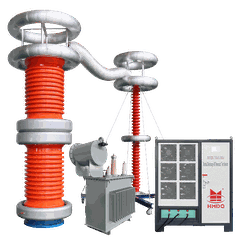
As a DC high voltage generator supplier, we offer a wide range of products to meet the diverse needs of our customers. Our DC Hipot Generator is designed to provide a stable and reliable DC high voltage output. It is equipped with advanced transformers and rectifier circuits to ensure a good frequency response and high efficiency.
Our AC Power Frequency Withstand Voltage Tester is another product that is widely used in electrical insulation testing. It can accurately measure the withstand voltage of electrical devices and is designed to have a good frequency response to ensure accurate test results.
In addition, our Insulation Protection Equipment Tester is used to test the insulation performance of various electrical equipment. It is equipped with high - quality filters and components to provide a stable DC output with a good frequency response.
Contact Us for Procurement
If you are in the market for a DC high voltage generator or related testing equipment, we would be more than happy to assist you. Our team of experts can provide you with detailed information about our products, including their frequency response characteristics, performance specifications, and application scenarios. We can also offer customized solutions to meet your specific requirements.
Whether you are conducting electrical insulation testing, electrostatic experiments, or particle acceleration, our products can provide you with the reliable and accurate high voltage output you need. Contact us today to start a procurement negotiation and find the best solution for your business.
References
- Grover, F. W. (1946). Inductance Calculations: Working Formulas and Tables. Dover Publications.
- Chapman, S. J. (2012). Electric Machinery Fundamentals. McGraw - Hill.
- Dorf, R. C., & Bishop, R. H. (2016). Modern Control Systems. Pearson.


