

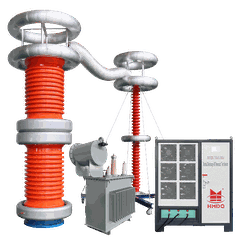



Hey there! As a supplier of High Voltage AC Resonant Test Systems, I often get asked about the grounding requirements for these systems. It's a crucial topic, and today, I'm gonna break it down for you.


First off, let's understand what a High Voltage AC Resonant Test System is. It's a piece of equipment used to test high - voltage electrical components, like cables, transformers, and insulators. The system works by creating a resonant circuit, which allows for efficient testing at high voltages. But for this system to work safely and accurately, proper grounding is a must.
Why is grounding so important?
Grounding serves several key purposes. One of the main reasons is safety. When you're dealing with high voltages, there's always a risk of electrical shock. A proper ground provides a path for electrical current to flow safely into the earth in case of a fault. This can prevent serious injuries or even save lives.
Another reason is to ensure the accuracy of the test results. A good ground helps to reduce electrical interference, which can affect the measurements taken during the test. If the grounding is poor, the test results may be inaccurate, leading to false diagnoses of the equipment being tested.
Grounding requirements
Grounding electrode
The first step in grounding a High Voltage AC Resonant Test System is to install a proper grounding electrode. This is usually a metal rod or plate that's buried in the ground. The electrode should be made of a material that has low resistance, such as copper or galvanized steel.
The depth at which the electrode is buried is also important. It should be deep enough to ensure good contact with the soil. A general rule of thumb is to bury the electrode at least 2.5 meters (8 feet) deep. This helps to ensure that the electrode has a low resistance path to the earth.
Grounding conductor
Once the grounding electrode is in place, you need to connect it to the test system using a grounding conductor. The conductor should be made of a material with low resistance, like copper. The size of the conductor depends on the amount of current that could potentially flow through it.
For a High Voltage AC Resonant Test System, a conductor with a cross - sectional area of at least 6 mm² (0.0093 in²) is usually recommended. This ensures that the conductor can handle the current without overheating.
Bonding
All the metal parts of the test system, including the enclosure, the test leads, and any other conductive components, should be bonded together. Bonding means connecting these parts to the grounding conductor. This helps to ensure that all the metal parts are at the same electrical potential, reducing the risk of electrical shock.
Special considerations for different types of test systems
Compensation Capacitor Of Resonant Test Set
When using a compensation capacitor in a resonant test set, proper grounding is even more critical. The capacitor stores electrical energy, and if it's not grounded correctly, there's a risk of a sudden discharge. This can not only damage the capacitor but also pose a safety hazard.
The capacitor should be connected to the grounding system using a short, low - resistance conductor. This helps to ensure that any excess charge can be safely dissipated to the earth.
Inductance Adjustable AC Resonant Test System
In an inductance adjustable AC Resonant Test System, the grounding requirements are similar to other systems. However, the adjustable inductance component can introduce some additional challenges.
The inductance coil should be properly grounded to prevent the build - up of static electricity. This can be done by connecting the coil to the grounding conductor using a suitable bonding strap.
AC Series Resonant Test System
For an AC Series Resonant Test System, the grounding of the series components is crucial. The series connection means that the current flows through all the components in sequence. If one component is not properly grounded, it can affect the entire system.
All the components in the series, including the transformer, the capacitor, and the test object, should be connected to the grounding system. This helps to ensure that the electrical current has a safe path to the earth in case of a fault.
Maintenance and inspection
Grounding is not a one - time thing. It requires regular maintenance and inspection. You should check the grounding electrode regularly to make sure it's still in good condition. Look for signs of corrosion or damage.
The grounding conductor should also be inspected for any signs of wear or damage. If the conductor is damaged, it should be replaced immediately.
Conclusion
In conclusion, proper grounding is essential for the safe and accurate operation of a High Voltage AC Resonant Test System. It not only protects the operators from electrical shock but also ensures the reliability of the test results.
If you're in the market for a High Voltage AC Resonant Test System or have any questions about grounding requirements, don't hesitate to reach out. We're here to help you make the right choice and ensure that your testing process is as safe and efficient as possible.
References
- Electrical Safety Standards for High - Voltage Testing Equipment
- Manufacturer's Manuals for High Voltage AC Resonant Test Systems


