

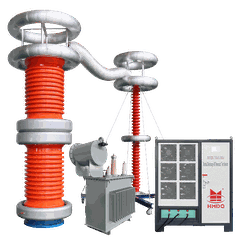


As a supplier of the 7000A Primary Current Injection Test Set, I often get asked about the input impedance of this crucial piece of equipment. In this blog post, I'll delve into what input impedance is, why it matters in the context of the 7000A Primary Current Injection Test Set, and how it impacts the performance of the device.
Understanding Input Impedance
Input impedance is a fundamental concept in electrical engineering. It refers to the opposition that a circuit presents to the flow of alternating current (AC) at its input terminals. In simpler terms, it's like a resistance that the input of a device offers to the incoming electrical signal. The unit of impedance is the ohm (Ω), just like resistance, but impedance takes into account both resistance and reactance (the opposition due to inductance or capacitance).
Mathematically, impedance (Z) is a complex quantity that can be represented as (Z = R + jX), where (R) is the resistance and (X) is the reactance. The (j) is the imaginary unit, which indicates that the reactance is out of phase with the resistance.
Why Input Impedance Matters in the 7000A Primary Current Injection Test Set
The 7000A Primary Current Injection Test Set is used to inject high currents into electrical systems for testing purposes. This could include testing circuit breakers, relays, and other protective devices. The input impedance of the test set plays a crucial role in several aspects:
Signal Transfer
A proper input impedance ensures efficient signal transfer from the power source to the test set. If the input impedance is too low, it can draw excessive current from the source, potentially overloading it. On the other hand, if the input impedance is too high, it may not draw enough current, leading to inaccurate test results.
Compatibility
The input impedance of the test set needs to be compatible with the output impedance of the power source. This is known as impedance matching. When the input and output impedances are matched, maximum power transfer occurs, and the test set can operate at its optimal performance.
Accuracy
The input impedance affects the accuracy of the test set. A stable and well - defined input impedance helps in maintaining consistent current injection, which is essential for reliable testing of electrical components.
Input Impedance of the 7000A Primary Current Injection Test Set
The input impedance of the 7000A Primary Current Injection Test Set is carefully designed to meet the requirements of various testing applications. It is typically a low - impedance design to allow for the injection of high currents.
The exact value of the input impedance can vary depending on the specific model and configuration of the test set. However, in general, it is optimized to work with standard power sources and to provide accurate and reliable current injection.
Factors Affecting the Input Impedance
Several factors can affect the input impedance of the 7000A Primary Current Injection Test Set:
Frequency
The input impedance of the test set can change with the frequency of the input signal. At higher frequencies, the reactance component becomes more significant, which can alter the overall impedance. This is why the test set is designed to have a stable impedance over a wide range of frequencies to ensure accurate testing across different applications.
Load Conditions
The load connected to the test set can also affect the input impedance. If the load has a low impedance, it can cause a change in the overall impedance of the system, potentially leading to inaccurate current injection. Therefore, it is important to consider the load conditions when using the test set.
Temperature
Temperature can have an impact on the input impedance. As the temperature changes, the resistance and reactance of the components in the test set can vary, which can affect the overall impedance. To mitigate this effect, the test set is designed with temperature - compensated components to maintain a stable impedance over a wide temperature range.


Applications of the 7000A Primary Current Injection Test Set
The 7000A Primary Current Injection Test Set is widely used in various industries for testing electrical components. Some of the common applications include:
Circuit Breaker Testing
Circuit breakers are essential for protecting electrical systems from overcurrent conditions. The test set can be used to inject high currents into circuit breakers to test their tripping characteristics and ensure their proper operation.
Relay Testing
Relays are used to control the flow of electricity in electrical systems. The test set can be used to test the performance of relays by injecting different levels of current and measuring their response.
Protective Device Testing
Other protective devices such as fuses and surge protectors can also be tested using the 7000A Primary Current Injection Test Set. This helps in ensuring the safety and reliability of electrical systems.
Related Products
In addition to the 7000A Primary Current Injection Test Set, we also offer a range of related products that can be used for different testing applications. These include:
- AC/DC Primary Current Injection Test Set: This test set can be used for both AC and DC current injection, providing more flexibility in testing.
- Primary Current Temperature Rise Test Set: This test set is specifically designed to measure the temperature rise of electrical components under high - current conditions.
- Primary Current Injection Test Device: This device offers a different current rating and can be used for applications that require a higher or lower current injection.
Contact for Purchase and Consultation
If you are interested in purchasing the 7000A Primary Current Injection Test Set or any of our other products, or if you have any questions regarding the input impedance or other technical aspects, please feel free to reach out to us. We have a team of experts who can provide you with detailed information and assist you in making the right choice for your testing needs.
References
- Electrical Engineering Fundamentals, Third Edition, by Charles K. Alexander and Matthew N. O. Sadiku
- High - Voltage Testing Techniques, Second Edition, by E. Kuffel, W. S. Zaengl, and J. Kuffel


