



Hey there! As a supplier of DC High Voltage Generators, I often get asked about the phase relationship of the output of these nifty devices. So, I thought I'd take a moment to break it down for you.
First off, let's briefly cover what a DC high voltage generator is. It's a piece of equipment that's designed to produce a high - voltage direct current. These generators are used in a wide range of applications, from testing electrical insulation to powering certain types of scientific instruments.
Now, when we talk about phase relationship, it's important to understand that the concept of phase is typically associated with alternating current (AC). In an AC circuit, the phase describes the position of a wave relative to a reference point in time. For example, two AC signals can be in - phase (peaking at the same time) or out - of - phase (peaking at different times).
But here's the thing: DC, by its very nature, doesn't have a phase in the traditional sense. A direct current flows in one direction steadily, without the periodic oscillations that are characteristic of AC. So, the output of a DC high voltage generator doesn't have a sinusoidal waveform, and there's no concept of phase angle like you'd find in an AC system.
However, there are some cases where we might need to consider something similar to a phase relationship even with DC. For instance, if you're comparing the output of two DC high voltage generators or looking at the interaction between a DC high voltage generator and other electrical components in a complex system, you might encounter situations where the timing of the output is important.
Let's say you're using multiple DC high voltage generators in a setup where they need to work in tandem. You might need to ensure that the start - up and shut - down of these generators are coordinated. In a way, this coordination can be thought of as a form of a "pseudo - phase relationship." It's not about the shape of a sinusoidal wave, but rather about the synchronization of when the DC voltage is applied or removed.
Another aspect to consider is when a DC high voltage generator is used in combination with AC components. For example, in some power systems, a DC high voltage might be superimposed on an AC signal. In such cases, the relationship between the DC level and the AC waveform can be crucial. The DC component can affect the overall voltage level and the behavior of the electrical system.
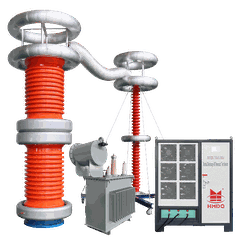
Now, let's talk a bit about the products we offer as a DC High Voltage Generator supplier. We have a wide range of high - quality generators that are designed to meet the diverse needs of our customers. Whether you're in the business of testing electrical equipment or working on a scientific research project, our generators can provide the reliable high - voltage DC output you need.
If you're interested in insulation testing, our Insulation Protection Equipment Tester is a great option. It not only uses a DC high voltage generator but also comes with advanced features to accurately measure insulation resistance and detect any potential insulation flaws.

For those who need a more dedicated high - voltage source, our DC Hipot Generator is a top - notch choice. It's built to provide a stable and precise DC high voltage output, making it suitable for a variety of applications.
And if you're dealing with AC power systems and also need to perform withstand voltage tests, our AC Power Frequency Withstand Voltage Tester can be paired with our DC high voltage generators in some cases to offer comprehensive testing solutions.
When it comes to the performance of our DC high voltage generators, we've invested a lot of time and effort in research and development. We use the latest technologies to ensure that our generators are efficient, reliable, and safe to use. Our team of experts is constantly working on improving the design and functionality of these products to meet the ever - evolving needs of the market.
If you're in the market for a DC high voltage generator or any of the related testing equipment I've mentioned, don't hesitate to reach out. Our sales team is ready to answer all your questions, provide detailed product information, and help you make the right choice for your specific requirements. Whether you're a small - scale laboratory or a large - scale industrial facility, we have the solutions to fit your needs.
In conclusion, while the concept of phase relationship is mainly associated with AC, we've seen how there can be some related considerations when dealing with DC high voltage generators, especially in more complex electrical setups. We're committed to providing high - quality products and excellent customer service, so if you think our DC high voltage generators or other testing equipment could be a good fit for you, let's start a conversation about your procurement needs.
References:
- Electrical Engineering textbooks on power systems and high - voltage technology
- Journal articles on the application of DC high voltage generators in various industries
- Internal product documentation and research reports from our R & D team


