

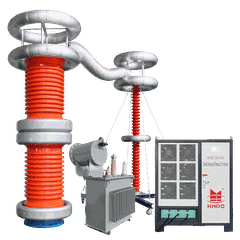


AC Withstand Voltage (Hipot) Tester: An Engineering Guide to Insulation Verification
Electrical insulation must withstand operating voltage, temporary overvoltage and electrical stress associated with its intended application. An insulation defect that is not detected during manufacturing or maintenance may lead to electrical breakdown, equipment damage or safety hazards.
An AC withstand voltage tester, also known as an AC hipot tester or AC dielectric test system, applies a specified high voltage to an electrical device for a defined test duration. The test evaluates whether the insulation can withstand the required electrical stress without breakdown or excessive leakage current, according to the applicable test criteria.
For electrical manufacturers, testing laboratories, transformer factories and maintenance teams, AC hipot testing is an important part of insulation verification and quality control.
1. What an AC Hipot Test Actually Verifies
An AC hipot test is a dielectric withstand test. It evaluates the insulation between specified electrical points by applying a test voltage higher than the normal operating voltage, as required by the relevant product or equipment standard.
Typical test connections include:
Conductor to earth
Primary winding to secondary winding
High-voltage winding to low-voltage winding
Electrical circuit to enclosure
Phase to phase
Insulated component to grounded structure
The test is designed to evaluate insulation withstand capability under the specified conditions.
Depending on the test requirements, the system may monitor leakage current, detect breakdown or flashover, and provide a pass/fail result.
A withstand test is not the same as a complete insulation condition assessment. Passing the test confirms performance under the applied test conditions, but does not guarantee that insulation will remain defect-free throughout its service life.

2. Where AC Withstand Testing Fits in the Production Process
AC hipot testing is used in several stages of electrical equipment manufacturing and maintenance.
Production Quality Control
Manufacturers use AC withstand testing to identify insulation defects introduced during production, assembly, wiring or component installation.
Common applications include:
Electrical transformers
Motors and generators
Switchgear
Power cables
Electrical control panels
Insulators
Electrical appliances
Capacitors
Coils and magnetic components
The test voltage and duration should follow the relevant product standard and production test specification.
Design Verification
During product development, dielectric testing helps engineers evaluate insulation design, electrical clearances and insulation materials.
Design testing may involve different test conditions from routine production testing.
Factory Acceptance Testing
AC withstand testing can form part of a factory acceptance test (FAT) to verify electrical insulation before equipment is delivered.
The test arrangement and acceptance criteria should be agreed between the manufacturer and customer.
Installation and Commissioning
AC dielectric testing may be required during commissioning to verify insulation performance after installation, subject to equipment-specific standards and approved procedures.
Testing on equipment that has already been in service requires particular care because the applied voltage may impose additional stress on aging insulation.
3. AC Hipot vs. Insulation Resistance Testing
These two tests are frequently performed together, but they measure different characteristics.
| Test | Applied Voltage | Measurement | Purpose |
|---|---|---|---|
| Insulation resistance test | Usually DC | Resistance in MΩ or GΩ | Assess insulation resistance |
| AC withstand test | AC high voltage | Leakage current and withstand response | Verify dielectric withstand under specified stress |
| DC withstand test | DC high voltage | Leakage current and withstand response | Verify insulation withstand using specified DC method |
| Partial discharge test | Specified AC voltage with PD measurement | PD magnitude and activity | Detect and evaluate partial discharge |
An insulation resistance tester measures the resistance of an insulation path.
An AC hipot tester applies a prescribed dielectric stress to evaluate whether the insulation withstands the test voltage.
These tests should not be treated as interchangeable, and the test sequence should follow the relevant equipment procedure.
4. Why AC Hipot Testing Is Used
AC withstand testing is widely applied because alternating voltage provides a dielectric stress pattern relevant to many AC electrical applications.
For equipment designed to operate under AC voltage, the test method and waveform may be specified by the product standard.
AC hipot testing is particularly relevant to:
Power-frequency insulation systems
Transformer winding insulation
Motor stator insulation
AC power cables
Switchgear insulation
Electrical components subjected to AC operating stress
The test voltage, frequency and duration are selected according to the equipment insulation system, voltage rating and applicable standard.
A general voltage formula should not be applied universally across all products. Transformer, cable, motor, switchgear and low-voltage product testing may use different procedures and acceptance requirements.
5. Main Components of an AC Withstand Voltage Tester
A conventional AC hipot system consists of several functional components.
AC High-Voltage Test Transformer
The test transformer generates the required high AC voltage.
Its rated output voltage, capacity and current must be suitable for the test object and prescribed test conditions.
Voltage Regulation System
The regulator controls the applied voltage and allows the operator to increase or decrease voltage in a controlled manner.
Depending on the system design, regulation may use a motorized variac, electronic regulation or another voltage control method.
Control Console
The control console provides test operation, voltage adjustment, timer control, monitoring and protection functions.
Typical functions may include:
Voltage adjustment
Test start and stop
Test timer
Overcurrent protection
Overvoltage protection
Emergency shutdown
Test status indication
High-Voltage Measuring System
A voltage divider or other suitable measuring system provides high-voltage measurement.
Measurement accuracy and system calibration should be suitable for the intended test requirements.
Current Measurement and Protection
The system monitors current during the test.
Depending on the design, protection functions may detect excessive current, breakdown or abnormal test conditions.
Grounding and Safety System
A complete test arrangement requires suitable grounding, protective barriers, warning indicators, emergency stop functions and discharge procedures.
Safety arrangements should be designed for the test voltage, test area and equipment configuration.
6. Understanding Leakage Current During AC Hipot Testing
Leakage current is one of the important measurements during dielectric withstand testing.
When AC voltage is applied to an insulation system, current may flow due to capacitive coupling, insulation conductance and other electrical characteristics.
For capacitive test objects, the charging current can be significant even when the insulation is in acceptable condition.
Therefore, the current measured during a test is not automatically an indication of insulation failure.
The evaluation should consider:
Test voltage
Test frequency
Test object capacitance
Insulation characteristics
Leakage current limit
Current measurement method
Test duration
Applicable acceptance criteria
The test system should be configured to detect abnormal current or breakdown while avoiding inappropriate rejection caused by normal capacitive current.
7. AC Hipot Testing for Different Equipment
Transformer Insulation Testing
AC withstand testing is used to evaluate transformer insulation according to the applicable factory test or commissioning procedure.
Typical test arrangements may include winding-to-earth insulation and other specified insulation paths.
The test voltage depends on the transformer insulation design, voltage class and applicable standard.
Cable Testing
AC withstand testing is used in certain cable manufacturing and acceptance applications.
For high-capacitance cables, the required test current can increase significantly with voltage, frequency and cable capacitance.
For larger cable testing applications, AC resonant test systems may provide a more practical power supply arrangement than conventional test transformers.
Motor and Generator Testing
AC hipot testing may be used to verify insulation between winding conductors and ground or between specified electrical circuits.
The test procedure should consider the machine's rated voltage, insulation type, condition and applicable maintenance or production standard.
Switchgear and Electrical Assemblies
AC withstand testing can verify insulation between live parts and earth, and between phases, according to the relevant equipment standard.
Test connections and acceptance criteria depend on the assembly design and test requirements.
Electrical Components
Manufacturers may use AC hipot testers for routine inspection of electrical components, control assemblies, coils, connectors and other products requiring dielectric withstand verification.
8. When a Conventional AC Hipot Tester Is Not Enough
Not every AC insulation test requires the same equipment configuration.
A conventional AC hipot system may be suitable for test objects with manageable capacitance and test power requirements.
For larger or high-capacitance test objects, the required test current and apparent power can become substantial.
For example, capacitive current is related to:

Where:
(I) = capacitive current
(f) = test frequency
(C) = test object capacitance
(V) = applied voltage
As test voltage, frequency or capacitance increases, the current requirement also increases.
For large cables, GIS, power transformers and other high-capacitance equipment, an AC resonant test system may be considered.
The resonant system uses inductive and capacitive reactance to establish resonance, reducing the external power source's reactive power requirement while maintaining the specified test voltage.
This makes resonant testing a useful alternative for certain high-voltage, high-capacitance applications.
9. How to Select an AC Withstand Voltage Tester
Selecting an AC hipot tester requires matching the system to the actual test object and test procedure.
Rated Test Voltage
Determine the maximum test voltage required by the applicable standard and testing program.
The system should provide sufficient voltage capability with appropriate operating margin.
Output Capacity
The required output capacity depends on the test object capacitance, test voltage, frequency and test duration.
For capacitive loads, current requirements should be calculated rather than estimated from voltage rating alone.
Leakage Current Measurement
Determine the required current measurement range, resolution and protection threshold.
The instrument should accommodate the expected capacitive current and the specified leakage current limit.
Test Duration
The test timer should support the required test duration and repeatability.
The test procedure may specify different durations for design tests, routine tests or production line testing.
Voltage Regulation
Controlled voltage ramping can reduce unnecessary electrical stress during test setup.
The system should provide stable voltage regulation appropriate for the test requirements.
Protection Functions
Confirm the availability of suitable overcurrent, overvoltage, emergency stop and other protection functions.
Test Object
Consider whether the tester will be used for:
Electrical components
Transformers
Motors
Cables
Switchgear
Electrical assemblies
Laboratory specimens
Different applications may require different voltage ranges, output capacities, connection arrangements and control functions.
Laboratory or Field Use
Portable equipment may be suitable for selected field testing applications.
Stationary or integrated systems may be more suitable for production laboratories with regular test procedures and larger equipment.
10. Goldhome AC Withstand Voltage Testing Solutions
Goldhome provides AC high-voltage test equipment for electrical insulation testing, manufacturing quality control, laboratory applications and power equipment testing.
AC withstand voltage testing solutions may be configured according to the test voltage, output capacity, test object, measurement requirements and operating environment.
Equipment configurations may include:
AC hipot test transformer
Voltage regulator
High-voltage control console
Voltage divider
Leakage current measurement
Protection system
Safety interlock
Test cables and grounding accessories
For applications involving large-capacitance test objects, Goldhome can also provide AC resonant testing system configurations according to the test requirements.
The final equipment selection should be based on the technical specifications of the test object and the applicable test standards.
Goldhome Hipot Electrical Equipment
Website: https://www.goldhomehipot.com
FAQ
What is an AC withstand voltage tester?
An AC withstand voltage tester applies a specified high AC voltage to an electrical insulation system for a defined duration. It evaluates whether the insulation can withstand the required electrical stress without breakdown or unacceptable leakage current.
Is AC hipot testing the same as insulation resistance testing?
No. Insulation resistance testing measures resistance using a DC test voltage. AC hipot testing evaluates dielectric withstand capability under a specified high AC voltage.
What is the difference between AC hipot and DC hipot?
AC hipot applies alternating voltage, while DC hipot applies direct voltage. They impose different electrical stresses on insulation, and the test method should be selected according to the applicable standard and equipment requirements.
Can an AC hipot tester test transformers?
Yes, AC withstand testing equipment can be used for specified transformer dielectric tests, provided that the test voltage, capacity, connection arrangement and test procedure are appropriate for the transformer.
Can an AC hipot tester be used for power cables?
Yes, AC withstand testing is used in certain cable testing applications. For larger cable capacitance or higher voltage requirements, an AC resonant test system may be more suitable.
What determines the required capacity of an AC hipot tester?
The required capacity depends on the test voltage, test object capacitance, test frequency, current requirement and test duration. It should be calculated according to the actual application.
Does passing a hipot test guarantee insulation life?
No. A successful withstand test verifies insulation performance under the specified test conditions. It does not guarantee long-term insulation life or eliminate the need for other diagnostic tests and maintenance.
Conclusion
AC withstand voltage testers are important tools for verifying electrical insulation in manufacturing, laboratory testing, equipment acceptance and maintenance applications.
By applying a specified high AC voltage and monitoring the test response, engineers can evaluate insulation withstand capability and identify certain insulation defects.
The appropriate AC hipot tester should be selected according to test voltage, output capacity, test object characteristics, leakage current measurement, protection functions and applicable test standards.
For high-capacitance electrical equipment, an AC resonant test system may provide a more suitable testing solution depending on the test requirements.
Goldhome provides AC withstand voltage testing equipment and customized high-voltage test solutions for electrical manufacturers, laboratories and power engineering companies.


