

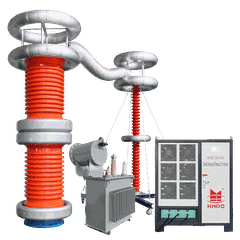


High Voltage Dielectric Strength Withstand Voltage Tester
Electrical insulation is designed to separate conductive parts, prevent current leakage, and maintain safe operating conditions. However, insulation must also withstand electrical stress that may occur during operation, manufacturing, installation, and transient events.
A high voltage dielectric strength withstand voltage tester is used to evaluate the insulation capability of electrical products by applying a specified test voltage between isolated conductive parts or between conductors and ground.
The test helps verify insulation integrity, identify defects, and confirm that an electrical product meets the required dielectric withstand criteria.
Goldhome provides high voltage testing equipment for electrical manufacturers, power equipment laboratories, industrial testing departments, and insulation verification applications.
1. What Is a Dielectric Strength Withstand Voltage Tester?
A dielectric strength tester, also commonly called a withstand voltage tester or hipot tester, applies a controlled high voltage to an electrical test object.
The test voltage is higher than the normal operating voltage and is applied for a specified duration according to the applicable standard or testing procedure.
The purpose is to verify whether the insulation system can withstand the applied electrical stress without unacceptable leakage current, flashover, or breakdown.
Typical test connections include:
Conductor to ground
Primary circuit to secondary circuit
Phase to phase
Winding to earth
Insulated component to conductive enclosure
Electrical terminal to chassis
The test voltage, duration, leakage current limit, and acceptance criteria depend on the product standard, insulation design, rated voltage, and test requirements.
2. Dielectric Withstand Testing vs. Dielectric Breakdown Testing
Although the terms dielectric strength testing, withstand voltage testing, and breakdown voltage testing are sometimes used interchangeably, they can describe different test objectives.
Dielectric Withstand Voltage Test
A withstand voltage test verifies that insulation can tolerate a specified voltage for a defined duration.
The test is generally intended to confirm insulation adequacy without causing breakdown.
Typical applications include:
Electrical product quality control
Transformer insulation testing
Switchgear insulation verification
Electrical component testing
Production line safety testing
Equipment acceptance testing
Dielectric Breakdown Test
A breakdown test evaluates the voltage at which an insulation material or test specimen fails under specified test conditions.
The test may intentionally increase the voltage until breakdown occurs.
Typical applications include:
Insulating material research
Material comparison
Insulation development
Laboratory evaluation
Dielectric strength determination
A withstand test and a breakdown test should not be treated as identical procedures. The appropriate test method depends on whether the objective is insulation verification or material breakdown characterization.
3. How a High Voltage Withstand Tester Works
A high voltage withstand tester generates a controlled test voltage and applies it to the insulation under evaluation.
The system monitors electrical parameters during the test and determines whether the test object remains within the specified limits.
A typical testing sequence includes:
Connect the test object to the high-voltage output and reference ground.
Set the required test voltage and duration.
Configure the leakage current limit and protection parameters.
Start the test from zero voltage.
Increase the voltage according to the specified ramp.
Maintain the required test voltage.
Monitor leakage current and test status.
Reduce voltage to zero.
Discharge and ground the test object.
Record the test result.
Depending on the equipment configuration, the tester may automatically detect overcurrent, insulation breakdown, abnormal leakage, or other test conditions.
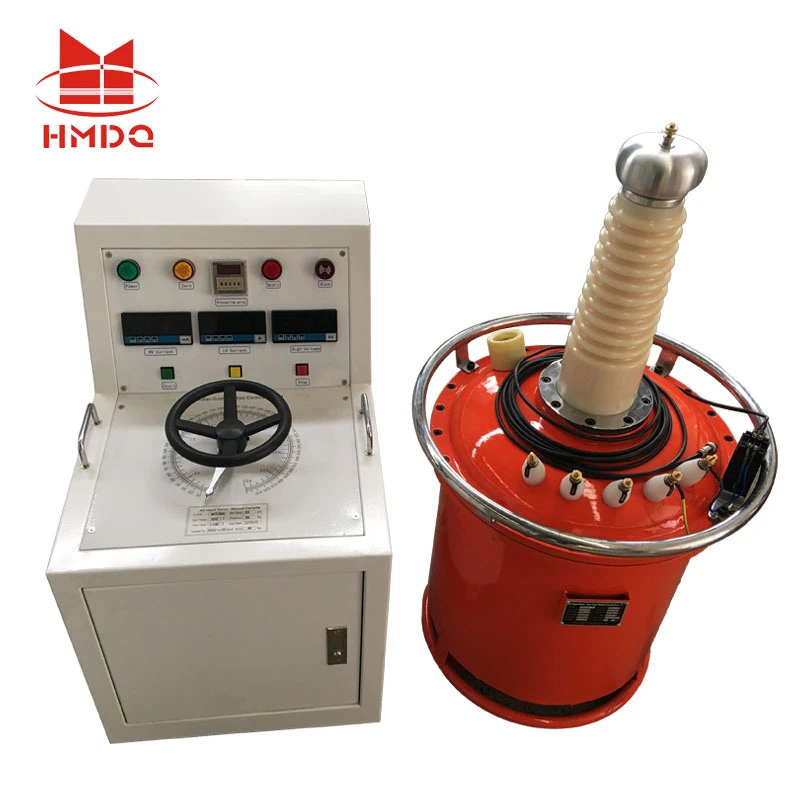
4. Main Components of a Dielectric Strength Tester
The configuration of a high voltage withstand voltage tester depends on the output voltage, test capacity, and application.
High Voltage Test Transformer
The transformer generates the required high-voltage output from the input power supply.
It may be designed for AC withstand testing, depending on the equipment configuration.
Voltage Regulation System
The voltage regulator controls the test voltage during the ramp-up and testing process.
A controlled voltage increase helps prevent unnecessary electrical stress on the test object.
High Voltage Measurement System
A measuring divider or voltage sensing system provides voltage feedback and measurement.
The voltage measurement accuracy should be suitable for the specified test procedure.
Leakage Current Measurement
The tester monitors current flowing through the test object during the applied voltage.
Leakage current may include capacitive current, resistive current, and other current components depending on the test object and test conditions.
The current limit must be established according to the applicable standard or product specification.
Protection System
The protection system may include:
Overcurrent protection
Overvoltage protection
Emergency stop
Zero-start protection
Interlock protection
Test timing
Automatic voltage reduction
Discharge functions
These functions help improve test control and operator safety.
Control Console
The control console manages the test voltage, duration, measurement, protection, and operating status.
Depending on the equipment design, it may include digital display, touchscreen control, programmable test sequences, and automatic test records.
5. AC and DC Dielectric Withstand Testing
High voltage dielectric testing may use AC or DC test voltage, depending on the test object and applicable procedure.
AC Dielectric Withstand Tester
AC withstand testing is commonly used for electrical insulation verification.
Typical applications include:
Power transformers
Switchgear
Electrical cables
Motors
Generators
Electrical components
Insulation assemblies
AC voltage stresses the insulation through alternating electrical fields.
The test voltage and frequency must comply with the applicable test standard.
DC Dielectric Withstand Tester
DC withstand testing applies a controlled direct voltage to the insulation.
Applications may include certain electrical components, cables, insulating materials, and test procedures where DC testing is specified.
The test method should consider the insulation characteristics, charging current, discharge requirements, and the limitations of DC testing.
AC vs. DC Selection
| Item | AC Withstand Test | DC Withstand Test |
|---|---|---|
| Voltage type | Alternating voltage | Direct voltage |
| Typical applications | Electrical equipment insulation | Specified DC insulation tests |
| Current characteristics | Includes capacitive current | Includes charging and leakage current |
| Test equipment | AC hipot system | DC hipot system |
| Selection basis | Product standard and test requirement | Product standard and test requirement |
The choice between AC and DC must be based on the test procedure and insulation system. One test method should not be substituted for another without technical justification.
6. Applications of High Voltage Dielectric Testing Equipment
Electrical Component Manufacturing
Electrical components may require dielectric withstand testing between insulated circuits or between conductive components and grounded enclosures.
Examples include:
Connectors
Switches
Relays
Electrical terminals
Control components
Insulating assemblies
Transformer Manufacturing
Transformer insulation systems require verification of dielectric performance.
Withstand voltage tests may be specified between windings, between windings and ground, or across designated insulation structures.
Cable Manufacturing
Power cable insulation testing is an important part of electrical quality verification.
Depending on cable voltage rating and test requirements, cable testing may involve AC withstand voltage, DC testing where applicable, VLF, partial discharge, and other electrical tests.
Switchgear and Electrical Panels
Switchgear and electrical panels contain multiple conductive parts separated by insulation.
Dielectric withstand testing may verify insulation between phases, between circuits, and between live parts and grounded metal structures.
Motors and Generators
Windings require insulation verification during manufacturing, repair, maintenance, and specified acceptance procedures.
The test method depends on winding type, rated voltage, insulation condition, and the applicable procedure.
Electrical Laboratories
Testing laboratories use dielectric withstand testers for product verification, sample evaluation, design validation, and electrical safety testing.
7. How to Perform a Dielectric Withstand Voltage Test
A safe and repeatable test requires a controlled setup.
Step 1: Identify the Test Object
Confirm the product model, rated voltage, insulation structure, and test terminals.
Determine which insulation barriers are being evaluated.
Step 2: Select the Test Voltage
Use the test voltage specified by the applicable product standard, customer specification, or approved procedure.
Do not select the test voltage solely according to the tester's maximum output.
Step 3: Configure the Tester
Set the test voltage, test duration, voltage ramp, leakage current limit, and other protection parameters.
Confirm that the test equipment is suitable for the test object.
Step 4: Connect the Test Leads
Connect the high-voltage output to the specified test point.
Connect the return or ground lead according to the test arrangement.
Ensure that conductive parts not included in the test are handled according to the approved procedure.
Step 5: Establish the Safety Area
Confirm grounding, interlocks, barriers, warning indicators, and emergency stop functions.
The test operator should remain outside the restricted high-voltage area.
Step 6: Apply the Test Voltage
Increase the voltage gradually and monitor the voltage and leakage current.
Maintain the specified voltage for the required duration.
Step 7: Evaluate the Result
The test object should satisfy the specified acceptance criteria.
Depending on the procedure, unacceptable conditions may include flashover, breakdown, excessive leakage current, or abnormal test behavior.
Step 8: Discharge and Record
Reduce the voltage to zero, discharge the test object, and ground it before handling.
Record the test voltage, duration, leakage current, test connection, and result.
8. Factors Affecting Dielectric Withstand Test Results
The dielectric performance of insulation can be affected by several conditions.
Insulation Material
Different insulating materials have different dielectric properties and voltage withstand characteristics.
Moisture and Contamination
Moisture, dust, conductive contamination, and surface deposits may affect insulation performance.
Temperature
Temperature can influence leakage current, dielectric loss, and insulation behavior.
Electrode Configuration
The geometry, spacing, surface condition, and contact arrangement of electrodes can influence electric field distribution.
Voltage Waveform
The waveform and frequency of the test voltage may affect the insulation stress.
Test Duration
The duration of the applied voltage is an important part of the test specification.
Previous Test History
Repeated high-voltage testing may affect insulation condition. The test frequency and repeated test procedure should follow the applicable requirements.
9. How to Select a High Voltage Dielectric Strength Tester
Selecting a suitable dielectric withstand tester requires more than checking the maximum output voltage.
Output Voltage
Determine the required test voltage range and whether the system needs AC, DC, or both.
Output Capacity
Consider the capacitance of the test object and the required test current.
Large-capacitance test objects may require a higher-capacity AC test system or a resonant test solution.
Leakage Current Measurement
Confirm the measurement range, resolution, accuracy, and protection threshold required for the application.
Voltage Regulation
The tester should provide controlled voltage adjustment and suitable stability during the test.
Test Duration
Confirm whether the equipment supports manual or programmable test timing.
Protection Functions
Evaluate overcurrent, overvoltage, interlock, emergency stop, zero-start, and discharge functions.
Test Object Type
Different configurations may be required for transformers, cables, motors, switchgear, components, and insulating materials.
Testing Environment
Consider factory production lines, laboratory environments, field testing, test barriers, grounding, and operating conditions.
10. Goldhome High Voltage Dielectric Withstand Testing Solutions
Goldhome provides high voltage dielectric withstand voltage testers and insulation testing equipment for electrical manufacturers, power equipment laboratories, industrial users, and testing organizations.
Depending on the test requirements, equipment configurations may include:
AC high voltage withstand testers
DC high voltage withstand testers
AC/DC hipot testing systems
High voltage test transformers
High voltage control consoles
Voltage measurement systems
Leakage current measurement systems
Protection and safety components
Customized high voltage testing configurations
Goldhome solutions can be configured according to test voltage, output capacity, test object, insulation structure, test duration, and applicable testing standards.
For product testing, manufacturing quality control, insulation verification, and high-voltage laboratory applications, equipment selection should be based on the actual test procedure rather than a general voltage rating.
Website: https://www.goldhomehipot.com
Frequently Asked Questions
What is a high voltage dielectric strength tester?
It is a testing instrument that applies a specified high voltage to insulation to evaluate whether the insulation can withstand electrical stress without unacceptable leakage, flashover, or breakdown.
Is a dielectric strength tester the same as a hipot tester?
In many electrical testing applications, dielectric withstand voltage tester, dielectric strength tester, and hipot tester are used to describe similar equipment. However, material breakdown testing may have a different objective from a nondestructive withstand test.
What is the difference between AC and DC dielectric testing?
AC dielectric testing applies alternating voltage, while DC dielectric testing applies direct voltage. The suitable method depends on the insulation system, product standard, and test requirements.
What does leakage current indicate during a withstand test?
Leakage current is the current flowing through or associated with the insulation during the applied test voltage. Its acceptable value depends on the test object and specified procedure. A high or unstable current may indicate an insulation problem or an unsuitable test configuration.
What products can be tested using dielectric withstand equipment?
Potential applications include transformers, cables, motors, switchgear, electrical components, connectors, insulation assemblies, and other products requiring dielectric verification.
Does a dielectric withstand test intentionally damage the insulation?
A withstand test is generally intended to verify insulation capability without causing breakdown. A dielectric breakdown test, by contrast, may intentionally increase voltage until the specimen fails to determine its breakdown characteristics.
Conclusion
High voltage dielectric strength withstand voltage testers are important tools for electrical insulation verification, product quality control, manufacturing inspection, and laboratory testing.
By applying a controlled test voltage and monitoring the electrical response of the test object, engineers can evaluate insulation integrity and identify potential dielectric weaknesses.
The correct test equipment should be selected according to the required voltage, test method, test object, leakage current limits, test duration, and applicable standards.
Goldhome provides high voltage dielectric testing equipment and electrical insulation test solutions for a wide range of industrial and laboratory applications.


