

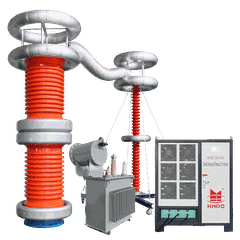


AC/DC Testing Transformer Hipot Tester for High Voltage Insulation Testing
Electrical insulation testing requires a controlled high-voltage source capable of applying the specified electrical stress to a test object. Depending on the insulation structure and test standard, the test may require alternating voltage or direct voltage.
An AC/DC testing transformer hipot tester combines high-voltage generation, voltage regulation, measurement, and protection functions to support insulation withstand voltage testing.
AC and DC testing modes serve different test requirements. Engineers must select the appropriate mode according to the test object, insulation characteristics, test procedure, and applicable standard.
Goldhome provides AC and DC high voltage testing equipment for electrical manufacturing, power equipment laboratories, industrial maintenance, and insulation verification applications.
1. Understanding AC/DC Hipot Testing Transformer Equipment
A high voltage hipot tester is designed to apply a specified voltage across an insulation barrier and evaluate its dielectric withstand capability.
A transformer-based testing system typically includes a high-voltage test transformer, voltage control system, measurement circuit, protection components, and operating console.
Depending on the equipment configuration, the system may provide:
AC withstand voltage testing
DC withstand voltage testing
AC and DC test capability using configured test circuits
High-voltage output regulation
Leakage current monitoring
Test timing
Overcurrent protection
Voltage measurement
Safety interlocks
The term AC/DC hipot tester may describe an integrated test system with both AC and DC functions or a test transformer system configured with separate AC and DC components.
The actual capability depends on the equipment design.
2. AC Hipot Testing: When Alternating Voltage Is Required
AC withstand voltage testing applies an alternating electrical field to the insulation system.
The voltage polarity changes continuously during the test, creating alternating dielectric stress.
AC hipot testing is commonly specified for:
Power transformers
Switchgear
Electrical cables
Motors and generators
Electrical panels
Insulating components
High-voltage equipment
Electrical manufacturing quality control
AC Testing Characteristics
AC testing measures the total current associated with the test object, which may include capacitive and resistive components.
For capacitive loads, the current depends on applied voltage, frequency, and capacitance.
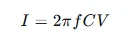
Where:
(I) = capacitive current
(f) = test frequency
(C) = test-object capacitance
(V) = applied RMS voltage
For large-capacitance test objects, the required test current may become substantial. In such applications, an AC resonant test system may be more suitable than a conventional high-voltage test transformer.
3. DC Hipot Testing: Applications and Characteristics
DC withstand voltage testing applies a direct voltage to the insulation under test.
The voltage remains at a fixed polarity during the test unless the test procedure specifies otherwise.
DC testing may be used for:
Specified cable insulation tests
Electrical components
Certain insulation material tests
Industrial equipment
Laboratory dielectric testing
Applications where DC testing is specifically permitted
DC Testing Characteristics
DC testing generally has a different current profile from AC testing.
During voltage ramp-up, the test object may draw charging current. After the charging period, the measured current may include conduction and absorption-related components, depending on the insulation material and measurement timing.
DC testing also requires controlled discharge after the test because the test object may retain electrical charge.
DC testing should not be assumed to replace AC testing for every product. The applicable standard and insulation system determine whether DC testing is suitable.
4. AC vs. DC Hipot Testing: Engineering Comparison
| Test Parameter | AC Hipot | DC Hipot |
|---|---|---|
| Applied voltage | Alternating voltage | Direct voltage |
| Polarity | Alternates | Fixed polarity |
| Capacitive current | Present during test | Charging current during voltage ramp |
| Measurement | Total AC current, including capacitive component | Current changes with charging and insulation response |
| Typical equipment | AC test transformer | DC high voltage source |
| Discharge requirements | Follow grounding and safety procedure | Controlled discharge is particularly important |
| Application | Specified AC dielectric tests | Specified DC insulation tests |
| Test selection | Applicable standard and test object | Applicable standard and test object |
The two methods are not universally interchangeable. A DC voltage selected to approximate the peak of an AC voltage does not automatically make the test procedures equivalent for all insulation systems.
5. Main Components of an AC/DC Testing Transformer Hipot System
A complete high-voltage test system is assembled according to the required test voltage, capacity, and testing mode.
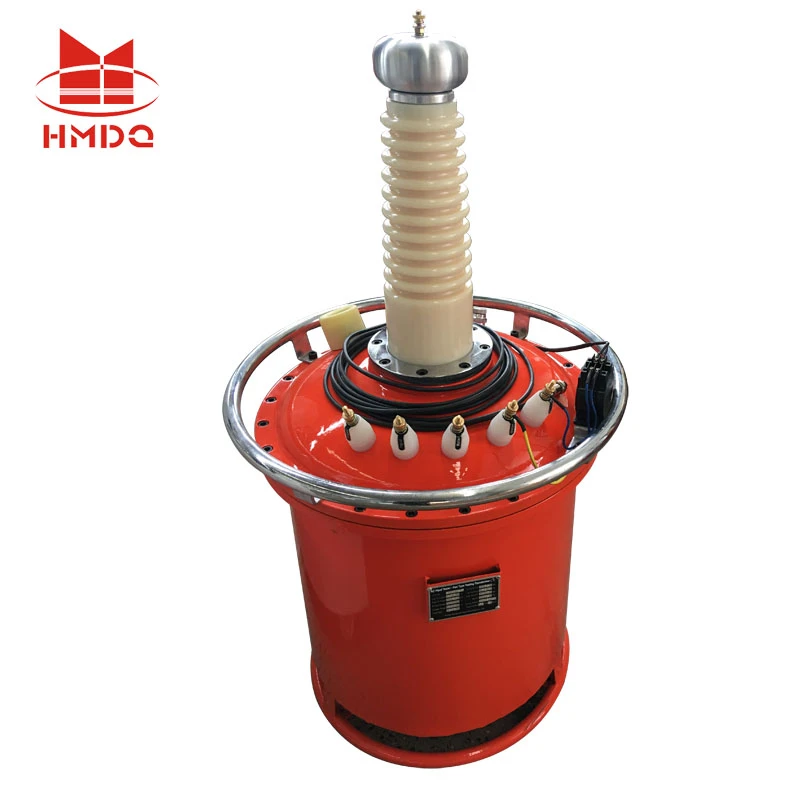
High Voltage Testing Transformer
The testing transformer provides the required high-voltage output for AC withstand testing.
Depending on the design, it may be oil-immersed, dry-type, or another insulation configuration.
Voltage Regulation System
The voltage regulator controls the output during voltage ramp-up and test operation.
The system should provide suitable control for the specified test procedure.
DC High Voltage Generation Unit
For DC testing, the system requires an appropriate DC generation circuit, which may use rectification and filtering or another dedicated high-voltage DC architecture.
The DC section may be integrated or supplied as a separate component depending on the equipment configuration.
Voltage Measurement System
The measurement system monitors the applied voltage and provides feedback to the control unit.
Measurement accuracy and voltage range should match the test requirements.
Leakage Current Monitoring
The system monitors current during testing.
The allowable leakage current should be determined according to the test object and test specification.
Protection and Control System
Typical safety and control functions may include:
Overcurrent protection
Overvoltage protection
Zero-start protection
Emergency stop
Interlock control
Test timer
Voltage monitoring
Discharge and grounding provisions
6. Transformer Insulation Testing Applications
Transformer insulation testing is one of the important applications of high voltage hipot equipment.
Depending on the transformer design and testing procedure, insulation may be evaluated between:
High-voltage winding and low-voltage winding
Winding and ground
Winding and core
Winding and tank
Different insulation barriers
The test connection should follow the transformer test procedure and relevant standard.
AC Transformer Withstand Testing
AC withstand tests may be specified to verify insulation between windings or between windings and grounded components.
The test voltage, frequency, and duration are determined by the transformer voltage class, insulation structure, and applicable test requirements.
DC Transformer Insulation Testing
DC testing may be used for specified insulation evaluation or other procedures, but the appropriate method must be confirmed for the transformer insulation system.
Transformer test results should be interpreted together with the relevant insulation resistance, winding resistance, dielectric loss, and other diagnostic data where applicable.
7. Applications Across Electrical Equipment
Power Cable Testing
AC or DC high voltage testing may be required for specific cable types and test procedures.
For medium- and high-voltage cable systems, testing may also involve VLF, AC resonant withstand testing, tan delta, partial discharge, and sheath integrity testing.
Switchgear and Circuit Breakers
Insulation between conductive parts, phases, and grounded structures may be evaluated through specified dielectric withstand tests.
Motors and Generators
Winding insulation verification may be required during manufacturing, repair, commissioning, or maintenance.
Test voltage and method depend on winding design and insulation condition.
Electrical Components
Components such as connectors, relays, switches, terminals, and insulating assemblies may require withstand testing during production.
Industrial Electrical Equipment
Electrical panels, control equipment, power distribution devices, and other industrial products may require AC or DC dielectric verification according to their relevant product standards.
8. AC/DC Hipot Testing Workflow
A controlled testing procedure is important for repeatable results and operator safety.
Step 1: Define the Test Requirements
Confirm the test object, rated voltage, insulation structure, test mode, test voltage, duration, and acceptance criteria.
Step 2: Select AC or DC Mode
Determine the appropriate voltage type based on the relevant standard and test procedure.
Step 3: Configure the Test Equipment
Set the output voltage, ramp rate, test duration, current limit, and protection parameters.
Step 4: Connect the Test Object
Connect the high-voltage terminal and return or ground according to the approved test connection.
Step 5: Safety Inspection
Verify grounding, barriers, interlocks, emergency stop, and test-area access control.
Step 6: Apply the Test Voltage
Increase the voltage according to the specified procedure.
Monitor the voltage, current, and test status throughout the test.
Step 7: Maintain the Test Condition
Maintain the specified voltage for the required duration and monitor for abnormal behavior.
Step 8: Reduce Voltage and Discharge
After the test, reduce the output voltage to zero.
For DC testing, discharge the test object through a suitable discharge device and establish grounding before handling connections.
Step 9: Record Results
Record the test mode, voltage, duration, current, connection, and test result.
9. Selecting an AC/DC High Voltage Testing Transformer
The correct equipment configuration depends on the intended application.
Required Voltage
Identify the AC and/or DC voltage ranges required by the test specification.
Output Capacity
For AC testing, consider the test-object capacitance and required current.
For large-capacitance loads, evaluate whether an AC resonant test system is more suitable.
Test Mode
Determine whether the application requires AC only, DC only, or both test modes.
Confirm that the equipment supports the specified waveform and testing procedure.
Leakage Current Measurement
Evaluate the measurement range, accuracy, resolution, and current trip settings.
Control Functions
Consider voltage regulation, ramp control, timer, programmable testing, and voltage indication.
Protection
Confirm the required overcurrent, overvoltage, interlock, emergency stop, zero-start, and discharge features.
Test Object
Equipment requirements differ for transformers, cables, motors, switchgear, electrical components, and insulating materials.
10. Goldhome AC/DC High Voltage Testing Solutions
Goldhome provides AC and DC high voltage testing equipment for electrical manufacturers, power utilities, industrial facilities, electrical testing laboratories, and engineering contractors.
Equipment solutions may include:
AC high voltage testing transformers
DC high voltage testing systems
AC/DC withstand voltage testers
High voltage control consoles
Voltage measurement systems
Leakage current monitoring
Protection and control systems
Customized high-voltage test configurations
The equipment configuration can be selected according to the test voltage, test capacity, test object, insulation structure, testing mode, and applicable standards.
For AC/DC insulation testing, the system design should ensure that the required voltage generation, measurement, control, and protection functions are properly matched to the test application.
Website: https://www.goldhomehipot.com
Frequently Asked Questions
What is an AC/DC hipot tester?
An AC/DC hipot tester is high-voltage testing equipment configured to perform AC withstand voltage tests, DC withstand voltage tests, or both, depending on the equipment design.
What is the difference between AC and DC withstand voltage testing?
AC testing applies alternating voltage and produces capacitive current throughout the test. DC testing applies a fixed polarity and includes charging current during voltage ramp-up. Their insulation stress and measurement characteristics differ.
Can one testing transformer perform both AC and DC tests?
Some systems are designed for both modes, while others require a separate DC high-voltage unit or dedicated rectification assembly. The capability depends on the equipment configuration.
Can an AC/DC hipot tester test power transformers?
Yes, suitable high-voltage test equipment can be used for specified transformer insulation tests. The test voltage, connection, and procedure must be selected according to the transformer specifications and relevant standards.
Is DC hipot testing always a replacement for AC testing?
No. AC and DC tests have different electrical characteristics and are not universally interchangeable. The applicable standard and test object determine which method is appropriate.
Why is DC discharge necessary after testing?
DC testing can leave electrical charge stored in the capacitance of the test object. Controlled discharge and grounding are necessary before handling the equipment or test connections.
Conclusion
AC/DC testing transformer hipot testers support electrical insulation verification across manufacturing, power equipment testing, industrial maintenance, and laboratory applications.
AC and DC test modes provide different testing characteristics. The correct choice depends on the insulation system, test object, voltage requirements, test duration, and applicable standard.
Goldhome provides AC/DC high voltage testing equipment and configurable insulation withstand testing solutions for different electrical testing applications.


