

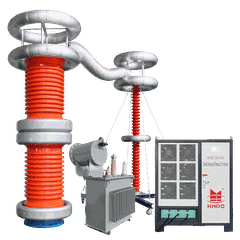


Three-Phase 10kV AC High Voltage Tester for 1kV Low Voltage Cable Testing
Low-voltage power cables rated up to 1kV require insulation verification during manufacturing, quality inspection, and electrical installation. AC withstand voltage testing is commonly used to evaluate whether cable insulation can withstand a specified electrical stress without breakdown.
A three-phase 10kV AC high voltage tester can provide the high-voltage output required for cable dielectric testing when configured with suitable test connections, voltage regulation, protection, and measurement components.
Although the equipment may have a maximum output rating of 10kV, the actual test voltage applied to a 1kV cable must be determined according to the applicable cable standard and test procedure.
1. Why Test 1kV Low Voltage Cables with High Voltage Equipment?
Low-voltage cables are used extensively in industrial facilities, commercial buildings, power distribution systems, motor installations, and infrastructure projects.
Cable insulation may be affected by:
Manufacturing defects
Mechanical damage during installation
Incorrect cable termination
Moisture ingress
Insulation aging
Improper storage or handling
Installation-related damage
An AC withstand voltage test applies a specified voltage to the insulation system for a defined period. The test helps verify dielectric integrity and identify insulation defects that may lead to electrical failure.
Typical test objects include:
0.6/1kV single-core cables
0.6/1kV three-core power cables
Multicore LV distribution cables
Industrial power cables
Control and auxiliary power cables, where applicable
Cable samples and manufactured cable lengths

2. What Does a Three-Phase 10kV AC Tester Do?
A three-phase AC high voltage test system is designed to generate and control high-voltage AC output for dielectric testing.
Depending on its configuration, the system may include:
Three-phase input power supply
Voltage regulation system
High-voltage transformer
High-voltage output terminals
Voltage measurement system
Current monitoring
Overcurrent protection
Zero-start interlock
Emergency stop
Grounding connections
Test control console
The system allows the operator to gradually increase the test voltage, monitor electrical parameters, maintain the required voltage for the specified duration, and safely reduce the voltage after testing.
The three-phase configuration may be used for suitable three-core cable test arrangements. The exact connection method depends on the cable construction and the test requirements.
3. AC Withstand Voltage Testing for 0.6/1kV Cables
For cables rated 0.6/1kV, the test voltage should not be selected simply according to the maximum output voltage of the tester.
Under IEC 60502-1:2021, the routine power-frequency voltage test for cables rated 0.6/1kV specifies a test voltage of 3.5kV. The standard includes a five-minute test duration for the relevant routine test.
For three-core cables, the conductors may be connected in suitable arrangements for successive testing. The standard also permits a three-phase transformer arrangement for testing three-core cables.
The actual procedure must be confirmed against the applicable standard, cable type, customer specification, and testing authority requirements.
Typical testing parameters to verify
| Parameter | Consideration |
|---|---|
| Cable rated voltage | 0.6/1kV |
| Test equipment rating | Up to 10kV AC, depending on equipment configuration |
| Test voltage | Determined by the applicable cable standard |
| Test duration | Defined by the test specification |
| Test frequency | Normally power frequency for AC withstand testing |
| Test connection | Conductor-to-conductor and/or conductor-to-earth according to the procedure |
| Acceptance criteria | No insulation breakdown during the specified test |
The 10kV output rating provides equipment capacity and flexibility. It does not mean that 10kV should automatically be applied to a 1kV cable.
4. Three-Phase Cable Test Connection
For a three-core low-voltage cable, the test connection depends on the cable structure and required insulation verification.
Possible arrangements include:
Conductor-to-Earth Test
The selected conductor is connected to the high-voltage output. The remaining conductors and metallic layers, if present, are connected to ground according to the approved procedure.
This arrangement evaluates insulation between the selected conductor and the grounded components.
Conductor-to-Conductor Test
Voltage is applied between conductors to verify insulation between individual cable cores.
The connection sequence should ensure that the required insulation combinations are tested.
Three-Phase Test Arrangement
A suitable three-phase high-voltage transformer may be used for certain three-core cable testing procedures. The connection must be designed so that the voltage stress across the cable insulation matches the specified test requirement.
The test setup should be confirmed before energizing the cable.
5. How to Perform an AC Withstand Voltage Test
A typical testing workflow includes the following steps.
Step 1: Cable Preparation
Confirm the cable rated voltage and construction.
Inspect the cable surface and terminations.
Disconnect the cable from connected equipment.
Verify that the test area is isolated.
Confirm that the cable is properly discharged and grounded before connections are made.
Step 2: Connect the Test Equipment
Connect the high-voltage output to the selected conductor or test terminal.
Connect the remaining conductors, metallic screen, armor, and earth reference according to the specified test method.
Ensure that the test connections are secure and that sufficient clearance is maintained.
Step 3: Check the Safety System
Before starting the test, verify:
Grounding connections
Emergency stop function
Interlocks
Test-area barriers
Voltage indication
Current protection
Operator communication
Step 4: Increase the Test Voltage
Start from the zero-voltage position and gradually increase the output voltage.
Monitor the voltage and leakage current during the voltage ramp.
Avoid sudden voltage changes that may introduce unnecessary electrical stress.
Step 5: Maintain the Specified Voltage
When the target voltage is reached, maintain it for the specified test duration.
Monitor for abnormal current, unstable voltage, discharge sounds, or insulation breakdown.
Step 6: Reduce Voltage and Discharge
After completing the test, reduce the voltage to zero.
Switch off the power supply and discharge the cable through an appropriate discharge device.
Ground the cable before disconnecting the test leads.
Step 7: Record Test Results
The test report should include:
Cable identification
Cable rated voltage
Test voltage
Test duration
Test frequency
Leakage current, where applicable
Test connection
Ambient conditions, where required
Pass/fail result
Operator and test date
6. Applications of a 10kV AC High Voltage Tester
A three-phase AC high-voltage tester with an output capability up to 10kV can support various electrical insulation testing tasks, depending on its rated capacity and configuration.
Low-Voltage Cable Manufacturing
Cable manufacturers may use AC withstand voltage testing as part of production quality control and electrical inspection.
Electrical Installation Acceptance
Electrical contractors and commissioning teams may perform insulation verification on selected cable circuits before energization.
Industrial Power Distribution
The system may be used for testing LV power cables in factories, substations, distribution panels, and industrial facilities.
Cable Maintenance
Maintenance teams can perform specified dielectric tests on isolated cable sections to assess insulation condition.
Electrical Testing Laboratories
The equipment may support routine testing, sample testing, engineering verification, and other dielectric test requirements.
7. Why Choose a 10kV Rated Tester for a 1kV Cable?
A test system with a 10kV maximum output can provide a wider operating range than a dedicated lower-voltage tester.
Potential advantages include:
Flexible test voltage adjustment
Testing of different cable types within equipment capability
Support for additional insulation test applications
Voltage margin for future testing requirements
Integration with other electrical test equipment
However, the equipment must also be selected according to output current, capacity, voltage regulation, measurement accuracy, duty cycle, protection functions, and test-object capacitance.
Maximum voltage alone is not sufficient for equipment selection.

8. Equipment Selection Considerations
When selecting a three-phase 10kV AC high voltage tester for 1kV low-voltage cable testing, engineers should evaluate the following.
Rated Output Voltage
Confirm the maximum output voltage and whether it is adjustable across the required test range.
Output Capacity
The required output capacity depends on the cable capacitance, applied voltage, test frequency, and cable length.
For capacitive loads, the approximate AC charging current is:

Where:
(I) = capacitive current
(f) = test frequency
(C) = cable capacitance
(V) = applied RMS voltage
Long cables may require greater output capacity even when the test voltage is relatively low.
Voltage Measurement
The system should provide suitable voltage indication and measurement for the required test accuracy.
Protection Functions
Consider overcurrent protection, zero-start protection, emergency stop, grounding, and interlock functions.
Test Connection
Confirm whether the system supports the required single-phase or three-phase test arrangement.
Mobility and Installation
For cable testing at different locations, consider transport, cable connections, control-console arrangement, and test-area safety requirements.
9. Goldhome Three-Phase AC High Voltage Testing Solutions
Goldhome provides high-voltage testing equipment for power cable manufacturers, electrical laboratories, industrial power systems, and testing contractors.
Depending on the testing requirements, equipment configurations can include:
AC high-voltage test transformers
Voltage regulators
Three-phase test systems
High-voltage measuring dividers
Control consoles
Protection and monitoring systems
Test accessories and grounding equipment
For 1kV low-voltage cable testing, the system configuration should be selected according to the cable specification, required withstand voltage, test duration, test method, and cable length.
Goldhome supports equipment selection and high-voltage testing system configuration for different cable insulation test requirements.
Website: https://www.goldhomehipot.com
Frequently Asked Questions
Can a 10kV AC tester be used to test 1kV cables?
Yes, if the tester has suitable voltage control, output capacity, protection, and test connections. The test voltage must follow the cable test specification rather than the maximum equipment rating.
Does a 1kV cable need to be tested at 10kV?
Not automatically. The test voltage is determined by the applicable standard and testing procedure. For IEC 60502-1 routine testing of 0.6/1kV cables, the specified AC test voltage is 3.5kV.
Can three-core cables be tested using a three-phase high-voltage transformer?
Certain three-core cable test procedures permit a three-phase transformer arrangement. The connection and voltage values must comply with the applicable testing standard.
What is the difference between an AC hipot test and an insulation resistance test?
An AC hipot test applies a specified high voltage to verify dielectric withstand capability. An insulation resistance test measures resistance using a DC test voltage. They evaluate different electrical properties and are not interchangeable.
What should be monitored during an AC withstand test?
Operators should monitor applied voltage, leakage current, test duration, abnormal discharge, and signs of insulation breakdown.
Conclusion
A three-phase 10kV AC high voltage tester can be suitable for dielectric withstand testing of 1kV low-voltage cables when its output capacity, test connections, control functions, and protection system meet the test requirements.
The key to reliable cable testing is selecting the correct test voltage and method-not simply using the maximum voltage available from the equipment.
Goldhome provides AC high-voltage test equipment and configurable dielectric testing solutions for cable manufacturers, electrical laboratories, and industrial power testing applications.


