

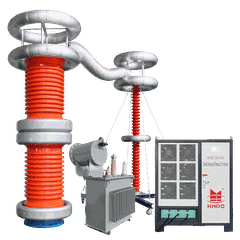


0–100 kV Transformer Oil BDV Tester for Insulating Oil Breakdown Voltage Testing
Transformer insulating oil performs two important functions in oil-filled electrical equipment: electrical insulation and heat transfer. During operation, moisture, particles, and other contaminants can affect the dielectric performance of the oil.
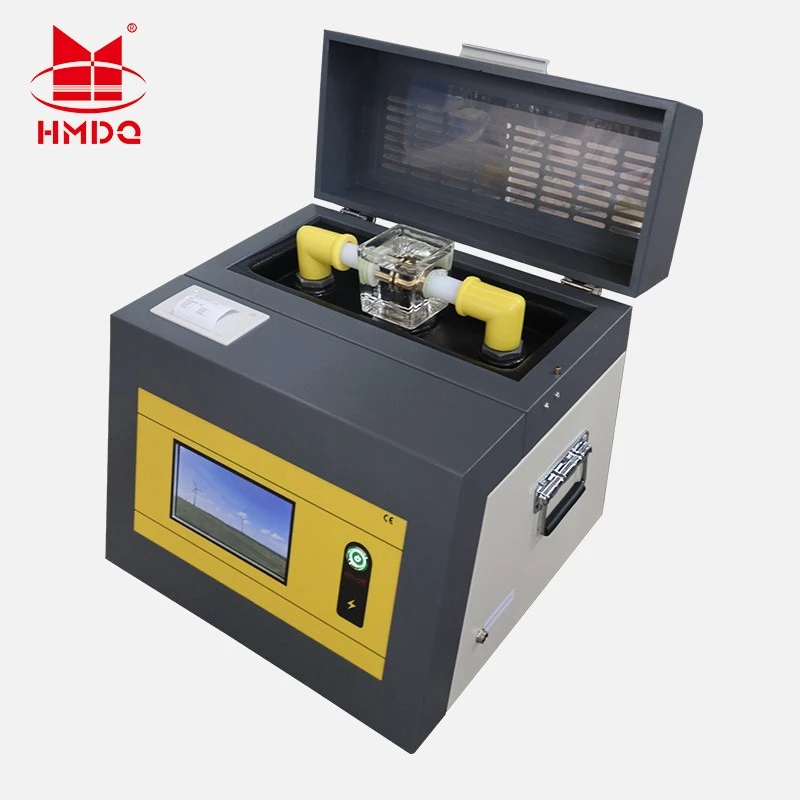
A transformer oil breakdown voltage (BDV) tester is used to evaluate the dielectric breakdown voltage of an insulating liquid under specified test conditions. It provides useful information for transformer oil quality control, laboratory testing, and electrical equipment maintenance.
The 0–100 kV Transformer Oil BDV Tester is designed with a voltage output range of 0 to 100 kV, providing a wider measurement range for insulating oil breakdown voltage tests.
For transformer manufacturers, power utilities, electrical laboratories, and maintenance service providers, a 100 kV oil BDV tester can support routine oil quality assessment and testing requirements.
1. Why Choose a 0–100 kV Transformer Oil BDV Tester?
The voltage range is an important consideration when selecting transformer oil testing equipment.
A 0–100 kV tester provides an output range extending to 100 kV. Compared with an 80 kV maximum-output model, it offers additional voltage headroom for applications requiring a higher equipment output capability.
The main application areas include:
Transformer insulating oil quality testing.
New insulating oil acceptance testing.
Oil testing before transformer filling.
Transformer maintenance and periodic inspection.
Insulating liquid testing in electrical laboratories.
Quality control in transformer manufacturing facilities.
The 100 kV maximum output is an instrument capability. It does not mean every oil sample should be tested up to 100 kV, nor does it define the acceptance limit for transformer oil.
The actual test procedure and voltage ramp must follow the selected standard and test method.
2. How Transformer Oil BDV Testing Evaluates Insulating Performance
Breakdown voltage testing measures the voltage at which an insulating liquid experiences electrical breakdown between two electrodes under specified conditions.
During testing, an oil sample is placed inside a test vessel containing a pair of electrodes. An AC voltage is gradually increased until electrical breakdown occurs.
The instrument records the breakdown voltage.
The measured value can help indicate the presence of contaminants, especially moisture and suspended particles, that may affect the insulating performance of the liquid.
Basic testing sequence
Collect a representative insulating oil sample.
Prepare and clean the test vessel and electrodes.
Fill the test cup with the oil sample.
Set the appropriate test parameters.
Increase the AC test voltage according to the selected standard.
Detect the breakdown event automatically.
Record the breakdown voltage.
Repeat the test as required by the test method.
Calculate and review the test results.
The average breakdown voltage and individual test values provide useful information for evaluating the oil sample.
3. What Does the 100 kV Output Range Mean?
The 0–100 kV range describes the available output voltage range of the tester.
It should be distinguished from the actual breakdown voltage of the oil sample.
For example:
The instrument can provide an output voltage up to its rated maximum of 100 kV.
The oil sample may break down at a much lower voltage.
The recorded BDV result depends on the oil condition and test method.
The test should stop automatically or according to the configured protection procedure when breakdown occurs.
A higher maximum output range does not automatically mean better oil quality measurement accuracy. Measurement accuracy, voltage regulation, electrode geometry, calibration, test repeatability, and compliance with the selected test method are also important.
For users comparing an 80 kV tester with a 100 kV tester, the key specification difference is the maximum available output voltage. Other technical parameters should be evaluated separately.
4. Transformer Oil BDV Tester: Main Testing Components
A typical automatic transformer oil BDV tester includes several functional modules.
| Component | Function |
|---|---|
| High-voltage generation unit | Generates the AC test voltage |
| Oil test vessel | Holds the insulating oil sample |
| Test electrodes | Create the specified electric field in the oil |
| Voltage measurement circuit | Measures the applied voltage |
| Breakdown detection circuit | Detects the electrical breakdown event |
| Control system | Manages the test sequence |
| Display and operating interface | Displays test settings and results |
| Data recording function | Stores individual test values and calculated results |
| Safety protection | Supports controlled testing and equipment protection |
The actual configuration and functions depend on the selected model.

5. IEC 60156 Testing: Why Test Conditions Matter
IEC 60156 specifies a power-frequency test method for determining the breakdown voltage of insulating liquids.
The test result is influenced by several factors, including:
Electrode shape and condition.
Electrode gap distance.
Voltage increase rate.
Oil sample preparation.
Temperature.
Air bubbles in the test gap.
Moisture and particle contamination.
Time between successive breakdown tests.
For example, the IEC 60156:2025 method specifies a defined test procedure, including a 2.5 mm electrode gap with a stated tolerance and a controlled voltage increase rate. Its standard procedure also requires repeated breakdown measurements and calculation of the test result.
This means that a 100 kV output capability alone does not establish compliance with IEC 60156. The test vessel, electrodes, voltage ramp, measurement performance, and operating procedure must also meet the applicable requirements.
6. Oil Sample Preparation: An Important Factor in BDV Results
The quality of sample preparation directly affects the reliability of breakdown voltage measurements.
Even small amounts of water or solid contamination can influence the result.
Sample collection
Use a clean, dry, suitable sample container. Follow the applicable insulating liquid sampling procedure and avoid introducing moisture or foreign particles.
Test vessel cleaning
The test vessel and electrodes should be clean before testing. Residues from previous samples can affect the next measurement.
Filling the test cup
Fill the vessel carefully to avoid introducing air bubbles into the electrode gap.
Temperature control
Record and maintain the required test temperature according to the selected procedure.
Electrode inspection
Check the electrode surface and gap before testing. Damaged or contaminated electrodes may affect the electric field and measurement repeatability.
Good sample preparation is essential when comparing results between different oil samples or different testing sessions.
7. What Can Influence Transformer Oil Breakdown Voltage?
A low BDV result may indicate that the oil requires further investigation.
Several factors can contribute to reduced breakdown voltage.
Moisture contamination
Water in insulating oil can reduce dielectric strength. Moisture may enter through improper storage, handling, or transformer sealing problems.
Suspended particles
Dust, fibers, metal particles, and other solid contaminants may affect the electric field distribution between the electrodes.
Oil aging
Long-term thermal and electrical stress can change insulating oil properties. BDV testing should be considered alongside other oil condition tests when evaluating aged oil.
Poor sampling practices
Contamination introduced during sampling or transportation can produce misleading test results.
Inconsistent test conditions
Differences in electrode condition, sample temperature, test settings, and test vessel preparation can influence the measured value.
For a complete transformer oil condition assessment, BDV testing may be combined with moisture content, acidity, dissipation factor, and dissolved gas analysis (DGA).
8. Applications of a 100 kV Transformer Oil BDV Tester
Transformer manufacturing
Transformer manufacturers use insulating oil BDV testing as part of incoming material inspection and production quality control.
The test can help evaluate oil before filling and support quality documentation.
Power utilities
Utility maintenance teams can use BDV testing to monitor insulating oil condition during scheduled transformer maintenance.
Electrical testing laboratories
Independent testing laboratories can use oil BDV testers for routine analysis of insulating liquids from different electrical installations.
Transformer maintenance contractors
Service companies can use breakdown voltage testing to assess oil samples before and after filtration, dehydration, or other oil treatment processes.
Oil treatment and filtration facilities
BDV measurements can be used to compare oil condition before and after treatment, provided the sampling and testing conditions are consistent.
9. BDV Tester vs. Other Transformer Oil Testing Equipment
BDV testing is only one part of transformer oil condition assessment.
Different oil testing instruments evaluate different properties.
| Testing equipment | Main measurement | Application |
|---|---|---|
| Transformer Oil BDV Tester | Dielectric breakdown voltage | Evaluates breakdown performance |
| Transformer Oil Moisture Tester | Water content | Measures moisture in insulating oil |
| Transformer Oil Tan Delta Tester | Dielectric dissipation factor | Evaluates dielectric loss characteristics |
| Transformer Oil Acidity Tester | Acid number | Assesses oil oxidation and acidity |
| Transformer Oil DGA Analyzer | Dissolved gases | Investigates internal transformer faults |
| Transformer Oil Resistivity Tester | Electrical resistivity | Evaluates insulating liquid electrical properties |
These instruments provide complementary information. A BDV result alone cannot identify every type of transformer fault or fully determine the remaining service life of insulating oil.
10. How to Select a 0–100 kV Oil BDV Tester
When selecting a transformer oil breakdown voltage tester, buyers should review more than the maximum output voltage.
Output voltage range
Confirm that the required equipment model has a 0–100 kV output range, rather than an 80 kV maximum range.
Test standard
Check whether the equipment configuration supports the required method, such as IEC 60156 or the applicable ASTM method.
Voltage measurement performance
Review voltage measurement accuracy, stability, and calibration requirements.
Breakdown detection
Confirm that the instrument can detect the breakdown event and record the corresponding voltage.
Test vessel and electrodes
Check the electrode type, gap adjustment, test cup design, and compatibility with the required test method.
Automatic test functions
For laboratory and routine quality-control applications, automatic voltage control, breakdown detection, test sequencing, and result calculation can improve operating efficiency.
Data management
Consider whether the instrument supports individual test value recording, average calculation, report generation, and data storage.
11. Goldhome 0–100 kV Transformer Oil BDV Testing Solution
Wuhan Goldhome Hipot Electrical Co., Ltd. provides electrical testing equipment and solutions for transformer manufacturers, power utilities, electrical laboratories, and maintenance service providers.
Goldhome's transformer oil testing equipment supports insulating oil quality assessment and electrical testing applications.
The 0–100 kV Transformer Oil BDV Tester is intended for applications requiring a maximum test voltage range of 100 kV.
Typical application areas include:
Transformer insulating oil breakdown voltage testing.
Incoming oil quality inspection.
Transformer manufacturing quality control.
Oil condition checks during maintenance.
Laboratory testing of insulating liquids.
Oil treatment process evaluation.
For equipment selection, users should confirm the required test standard, electrode configuration, measurement accuracy, automatic test functions, and data management requirements.
Learn more about Goldhome transformer oil testing equipment:
Website: https://www.goldhomehipot.com
Frequently Asked Questions
1. What is the maximum output voltage of this transformer oil BDV tester?
This model is specified with a 0–100 kV output range and a maximum output voltage of 100 kV. It is different from an 80 kV transformer oil BDV tester.
2. Does a 100 kV BDV tester mean transformer oil must reach 100 kV?
No. The 100 kV value refers to the instrument's maximum output capability. The actual breakdown voltage is determined by the oil sample and the selected test procedure.
3. What is the purpose of transformer oil BDV testing?
It measures the breakdown voltage of insulating oil under specified conditions. The result helps evaluate the oil's dielectric breakdown performance and may indicate contamination by moisture or suspended particles.
4. Which standard is used for transformer oil breakdown voltage testing?
IEC 60156 is a widely used standard for determining the breakdown voltage of insulating liquids at power frequency. ASTM D1816 and ASTM D877 are also used for specific petroleum insulating oil applications. The correct method depends on the oil type and testing requirement.
5. Can the tester be used for transformer maintenance?
Yes. BDV testing is commonly used as part of transformer oil condition monitoring and maintenance programs. It should be combined with other relevant oil tests when a broader condition assessment is required.
6. What is the difference between an 80 kV and a 100 kV oil BDV tester?
The main stated difference is the maximum output voltage. A 100 kV model provides a higher maximum output capability than an 80 kV model. Other specifications, including accuracy, voltage regulation, test cup design, and automatic functions, must be checked separately.
7. Does a high BDV result guarantee that transformer oil is in good condition?
No. BDV testing evaluates breakdown performance under specific test conditions. It does not independently determine all oil properties or identify every possible transformer insulation problem.
Conclusion
A 0–100 kV Transformer Oil BDV Tester provides a high-voltage output range for measuring the dielectric breakdown voltage of transformer insulating oil.
It supports transformer manufacturing inspection, insulating oil quality control, laboratory analysis, and maintenance testing.
When choosing a 100 kV oil BDV tester, users should consider not only the output voltage range but also the applicable test standard, electrode configuration, measurement performance, breakdown detection, and data management functions.
For reliable transformer oil testing, accurate equipment operation and proper sample preparation are equally important.


