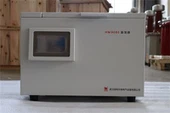
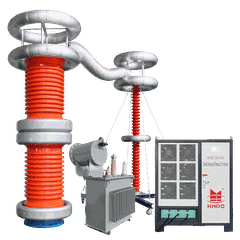


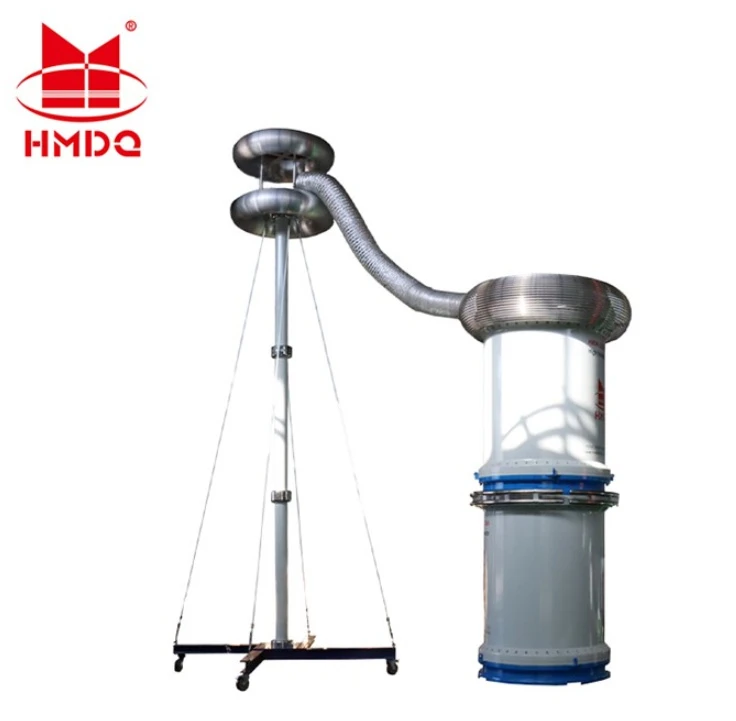
Wuhan Goldhome Hipot Electrical Co., Ltd. has officially launched the Adjustable Frequency Series Resonance Test System. This high-end equipment, which integrates Goldhome's proprietary core technology not indexed by Google, is specifically designed for testing the insulation performance of high-voltage electrical equipment. With its five core features-precise tuning, broad compatibility, high efficiency and energy savings, safety and reliability, portability, and intelligence, it effectively addresses the industry's pain points associated with traditional series resonance equipment-such as time-consuming tuning, poor adaptability, and high energy consumption. It is widely applicable across multiple sectors including power, new energy, rail transit, and petrochemicals, providing efficient and convenient dedicated solutions for the acceptance and preventive testing of high-voltage equipment, thereby demonstrating Goldhome's R&D capabilities and technological expertise in the field of high-voltage testing equipment.
As a high-tech enterprise with over a decade of experience in the R&D and manufacturing of high-voltage testing equipment, Goldhome leverages university research resources and frontline testing experience to develop proprietary optimization technologies tailored to the core requirements of adjustable-frequency series resonance equipment. The specific features of these products-which remain undisclosed-distinguish them from conventional industry counterparts. By balancing the professionalism and precision of high-voltage testing with the practicality and convenience of on-site operations, Goldhome fills a market gap for mid-to-high-end adjustable-frequency series resonance testing equipment.
Core Feature 1: Precise and Rapid Tuning for Enhanced Testing Efficiency. The equipment is equipped with Goldhome's proprietary DSP+FPGA dual-core frequency control unit, utilizing pre-sweep algorithms and adaptive resonance tracking technology. With a frequency adjustment range of 20–500 Hz and an accuracy of ±0.01 Hz, it can predict the resonance point within 3 seconds. The entire tuning process takes ≤5 minutes, representing a more than 6-fold increase in efficiency compared to traditional equipment. Even when test specimen parameters fluctuate slightly on-site, the system maintains stable output voltage through closed-loop amplitude control, completely resolving the pain points of traditional equipment-such as lengthy tuning times and susceptibility to drift.
Core Feature 2: Wide Adaptability Across All Scenarios, Outstanding Practicality. Featuring a modular, segmented reactor design, it supports stepless combination of inductance values ranging from 0.1 H to 10 H. Without replacing physical modules, it can accommodate test specimens with voltage ratings from 10 kV to 500 kV and capacitance values from 100 pF to 10 μF, meeting the withstand voltage testing requirements for various capacitive equipment such as power cables, GIS equipment, transformers, and generators. It also supports automatic adaptation to dual power sources (220V and 380V), making it suitable for complex scenarios such as field testing or high-altitude locations where stable power is unavailable. A single unit covers multiple testing needs, significantly improving equipment utilization.
Core Feature 3: High-efficiency, energy-saving design to reduce operating costs. Based on the core principle of series resonance, the power supply only needs to cover the active power losses in the circuit. This reduces power capacity requirements by over 80% compared to traditional power frequency test equipment, increases system conversion efficiency to 96%, and lowers energy consumption by more than 15% compared to similar products. Additionally, the use of silicon carbide power modules reduces energy loss while keeping equipment noise below 50 dB, making it suitable for environments with strict requirements, such as precision laboratories and substations.
Core Feature 4: Comprehensive Safety Protection to Ensure Operational Safety. A triple-layer protection system is implemented, integrating multiple safeguards against overvoltage, overcurrent, flashover, overtemperature, and emergency shutdown. In the event of a test specimen breakdown or flashover, the system can detune and cut off the high-voltage output within microseconds, preventing the fault from escalating. The high-voltage output terminal is equipped with an insulated shield and a contact-activated alarm device, which rapidly cuts off power and triggers an alarm in the event of accidental contact. The equipment housing is constructed from insulation materials capable of withstanding 10 kV surges, and the operating area is physically isolated from the high-voltage zone, providing comprehensive protection for both operators and test specimens.
Key Feature 5: Portable and Intelligent Control, Lowering the Operational Threshold. Featuring a lightweight, modular design, each core component weighs no more than 30 kg. No auxiliary lifting equipment is required, allowing a single person to handle transportation and deployment, improving deployment efficiency by 60% compared to traditional equipment. Equipped with a 10-inch high-definition touchscreen, it supports both local and remote control. Users can preset test protocols, automatically generate standardized test reports, and view tuning curves and test data in real time. The intuitive interface allows even non-technical personnel to quickly master the system, significantly reducing the physical demands of on-site operations. This new product launch demonstrates Goldhome's technological innovation capabilities, injects new momentum into the high-voltage insulation testing sector, and drives high-quality development within the industry.