

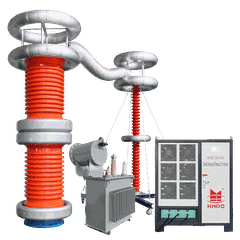


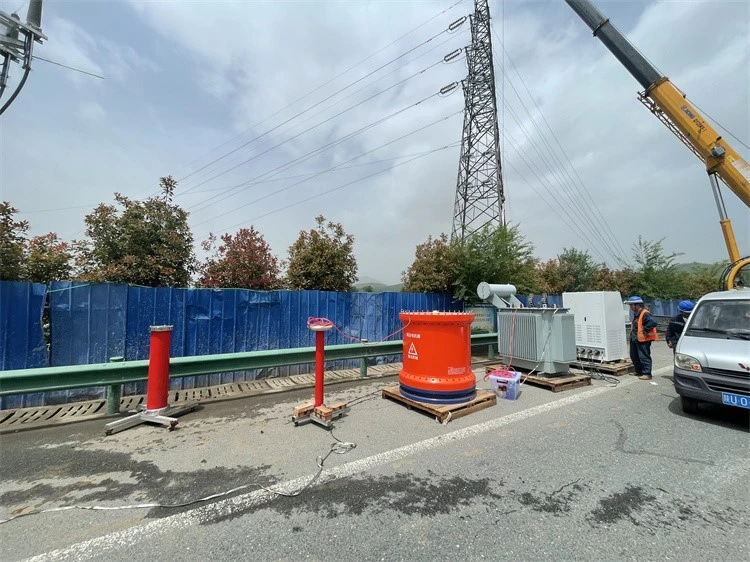
Why Variable Frequency Resonant Testing is Your Grid's Silent Guardian
High-voltage equipment testing walks a razor's edge: apply too much stress, and insulation fails catastrophically; apply too little, and hidden defects go undetected. This is where Variable Frequency Resonant (VFR) Test Sets emerge as game-changers – and their secret lies in one overlooked feature: adaptive frequency tuning.
The Frequency Tuning Advantage: More Than Just Precision
Traditional fixed-frequency test sets risk overstressing capacitive loads like cables or transformers at 50/60Hz. VFR systems solve this by dynamically matching the resonant frequency of the test object. Here's why this matters:
Preventing Insulation Breakdown
Capacitive loads store energy dangerously at fixed frequencies.
VFR sets lower test current by tuning to the system's natural resonance (e.g., 30-300Hz), slashing reactive power by up to 80%.
Real-world impact: A substation avoided cable rupture during commissioning when shifting to 45Hz resonance dropped peak current from 150A to 20A.
Finding Defects Other Tests Miss
At resonance, partial discharges and weak insulation points resonate visibly. VFR tests:
Excite harmonic responses in degraded polymer cables
Reveal delamination in transformer bushings
Identify dampness in GIS compartments
Portability Meets Power
With lower current demands:
Testing crews use lighter generators
Compact setups fit constrained substations
Offshore wind farms perform tests without 2-ton power supplies
Case Snapshot: Avoiding a $200K Disaster
A utility company tested a 230kV XLPE cable using a fixed-frequency set. Partial discharge spiked alarmingly at 50Hz. Switching to a VFR system, they tuned to 112Hz – discharge vanished. The cable passed. Later analysis showed fixed-frequency stress would've accelerated ageing by 3 years.
Future-Proofing Your Test Strategy
With grid upgrades targeting renewables and HVDC:
Wind farm transformers demand sub-60Hz tests
Aged urban cables require sub-25Hz partial discharge scans
Modular VFR systems now test hybrid AC/DC systems
Bottom Line: If you diagnose cables, transformers, or switchgear, variable frequency resonance isn't a luxury – it's insurance against insulation failures and cryptic field failures. By tuning stress to your asset's fingerprint, VFR test sets don't just test equipment; they preserve it.
Tip: Look for auto-tuning models with real-time impedance mapping to cut setup time by 70%. Always verify frequency sweep range covers your assets' critical resonance zones.


