
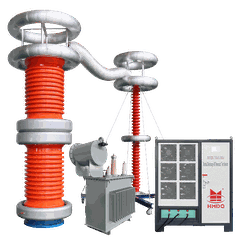


The role of reactors in electrical testing solutions mainly includes the following aspects:
Current limiting and filtering: Reactors can limit the magnitude of current by increasing the impedance of the circuit, thereby protecting equipment and circuits from overload damage. In terms of filtering, reactors can be connected in series or parallel with capacitors to limit high-order harmonics in the power grid and ensure stable operation of the circuit.
Voltage regulation and stability: Reactors can balance voltage, ensuring minimal voltage differences between phases and preventing line overload faults. In the power system, the combination of reactors and capacitors can maintain voltage balance and improve the stability of the power system.
Reactive power compensation and power factor improvement: Parallel reactors can improve the reactive power operation of power systems, absorb charging capacitive reactive power in cable lines, prevent self-excited magnetic resonance phenomena when generators have long lines, and thus improve the power factor of power systems.
Harmonic suppression: Reactors can effectively reduce harmonic currents in power systems, optimize system operation, and reduce the risk of equipment overheating and failure.
Protection equipment: In the event of a short circuit fault, the reactor limits the short-circuit current by increasing the impedance of the circuit, protecting the equipment from damage.
Load balancing: In a three-phase power supply system, using reactors can help balance the currents of each phase, avoid phase to phase imbalance, and ensure the stable operation of the power system.