

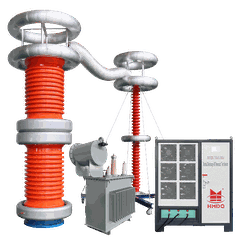


Can breakdown voltage test equipment be connected to a computer? This is a question that many professionals in the electrical testing field often ask. As a breakdown voltage test equipment supplier, I am here to provide you with a comprehensive answer to this question.
The Basics of Breakdown Voltage Test Equipment
Before delving into whether breakdown voltage test equipment can be connected to a computer, let's first understand what breakdown voltage test equipment is. Breakdown voltage test equipment is used to determine the maximum voltage that an electrical insulation material or component can withstand before it breaks down and conducts electricity. This is a crucial test in ensuring the safety and reliability of electrical systems.
There are various types of breakdown voltage test equipment available in the market, each with its own features and capabilities. For example, the Power Frequency withstand Voltage Control Box is designed to control and monitor the power frequency withstand voltage test. It provides a stable and accurate voltage source for the test. The Portable Hipot Tester is a compact and easy-to-use device that can be carried around for on-site testing. And the 60kV/2mA DC Hipot Tester is specifically designed for high-voltage DC testing.
Connecting Breakdown Voltage Test Equipment to a Computer
Now, let's address the main question: Can breakdown voltage test equipment be connected to a computer? The answer is yes, in many cases. Modern breakdown voltage test equipment is often equipped with communication interfaces that allow it to be connected to a computer. These interfaces can include USB, RS-232, Ethernet, or wireless connections such as Bluetooth or Wi-Fi.
Connecting the test equipment to a computer offers several advantages. Firstly, it enables remote control of the test equipment. You can start, stop, and adjust the test parameters from the computer, which is especially useful when the test environment is hazardous or difficult to access. Secondly, it allows for real-time data monitoring and analysis. The test data can be transferred to the computer, where it can be displayed, stored, and analyzed using specialized software. This can help you identify potential problems more quickly and accurately. Thirdly, it facilitates the generation of test reports. The software can automatically generate detailed test reports based on the collected data, which can be used for documentation and quality control purposes.
However, not all breakdown voltage test equipment can be connected to a computer. Some older models may not have the necessary communication interfaces, or they may require additional hardware or software upgrades to enable the connection. Therefore, when purchasing breakdown voltage test equipment, it is important to consider whether you need the computer connectivity feature and choose a model that meets your requirements.
Software for Computer Connectivity
To make the most of the computer connectivity feature, you will need appropriate software. Most breakdown voltage test equipment manufacturers provide their own software that is specifically designed to work with their products. This software typically offers a user-friendly interface that allows you to easily control the test equipment and analyze the test data.
The software usually includes features such as test parameter setting, data logging, graph plotting, and report generation. It may also support advanced functions such as data filtering, statistical analysis, and comparison with historical data. Some software can even be customized to meet your specific needs, such as adding your company logo and customizing the report format.


In addition to the manufacturer's software, there are also third-party software solutions available in the market. These software packages may offer more advanced features and compatibility with a wider range of test equipment. However, they may also require additional licensing fees and technical support.
Considerations for Connecting Breakdown Voltage Test Equipment to a Computer
When connecting breakdown voltage test equipment to a computer, there are several considerations that you need to keep in mind. Firstly, ensure that the communication interfaces of the test equipment and the computer are compatible. For example, if the test equipment has a USB interface, make sure your computer has a USB port and that the necessary drivers are installed.
Secondly, pay attention to the power supply. Some breakdown voltage test equipment may require a stable and dedicated power supply to ensure accurate test results. Connecting the equipment to a computer may introduce additional power requirements or electrical interference, so it is important to use a proper power adapter and grounding method.
Thirdly, consider the security of the connection. Since the test data may contain sensitive information, it is important to protect it from unauthorized access. You can use encryption technology and access control measures to ensure the security of the data transmission.
Conclusion
In conclusion, breakdown voltage test equipment can be connected to a computer in many cases, offering significant advantages in terms of remote control, data monitoring, analysis, and report generation. However, not all equipment has this feature, and you need to choose a model that meets your requirements. When connecting the equipment to a computer, you will need appropriate software and need to consider factors such as compatibility, power supply, and security.
If you are in the market for breakdown voltage test equipment and are interested in the computer connectivity feature, we invite you to contact us for more information. Our team of experts can help you choose the right equipment and provide you with the necessary support and training. We look forward to discussing your needs and helping you find the best solution for your breakdown voltage testing requirements.
References
- Electrical Testing Handbook, Second Edition, by John D. McDonald
- High Voltage Engineering: Fundamentals, by E. Kuffel, W. S. Zaengl, and J. Kuffel
- Power System Testing and Commissioning, by M. A. S. Masoum and E. F. Fuchs


