

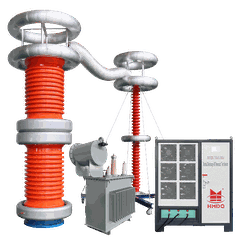


What are the differences between laboratory - grade and industrial - grade lightning impulse voltage generators?
As a supplier of lightning impulse voltage generators, I've had the privilege of working closely with these remarkable pieces of equipment. Over the years, I've witnessed firsthand the unique requirements and applications of both laboratory - grade and industrial - grade lightning impulse voltage generators. In this blog, I'll delve into the key differences between these two types of generators, helping you understand which one is best suited for your specific needs.
Design and Construction
Laboratory - grade lightning impulse voltage generators are typically designed with precision and flexibility in mind. They are often used for research, development, and quality control purposes in a laboratory environment. These generators are usually more compact and modular, allowing for easy customization and modification. They can be configured to generate a wide range of impulse voltages and waveforms, making them ideal for testing a variety of electrical components and materials.
On the other hand, industrial - grade lightning impulse voltage generators are built for ruggedness and reliability. They are designed to withstand the harsh conditions of industrial environments, such as high temperatures, humidity, and vibrations. These generators are often larger and more powerful than their laboratory counterparts, capable of generating high - energy impulse voltages for testing large - scale electrical equipment, such as transformers, switchgear, and power cables.
Performance and Specifications
One of the main differences between laboratory - grade and industrial - grade lightning impulse voltage generators lies in their performance and specifications. Laboratory - grade generators are known for their high accuracy and repeatability. They can generate impulse voltages with very low tolerance, ensuring precise testing results. These generators also offer a high degree of control over the impulse waveform, allowing researchers to simulate different lightning conditions.
Industrial - grade generators, however, prioritize high energy output and durability. They are designed to deliver large amounts of energy in a short period, which is necessary for testing the insulation of high - voltage equipment. While they may not have the same level of accuracy as laboratory - grade generators, they are more than capable of providing reliable and consistent test results for industrial applications.
Application and Usage
The application and usage of laboratory - grade and industrial - grade lightning impulse voltage generators also differ significantly. Laboratory - grade generators are commonly used in academic institutions, research laboratories, and testing centers. They are used for fundamental research on electrical insulation materials, development of new electrical components, and verification of electrical equipment performance under lightning conditions. For example, researchers may use a laboratory - grade generator to study the breakdown characteristics of new insulating materials or to test the reliability of semiconductor devices.
Industrial - grade generators, on the other hand, are mainly used in the power industry, electrical equipment manufacturing, and maintenance. They are used for routine testing of high - voltage equipment during production, commissioning, and maintenance. For instance, an industrial - grade generator can be used to test the insulation of a newly manufactured transformer before it is installed in a power grid or to perform periodic maintenance tests on a switchgear to ensure its safe operation.
Cost and Maintenance
Cost is another important factor to consider when comparing laboratory - grade and industrial - grade lightning impulse voltage generators. Laboratory - grade generators are generally more expensive due to their high - precision components and advanced control systems. However, they may offer a better return on investment for research and development projects where accurate and repeatable test results are crucial.
Industrial - grade generators, while more affordable in terms of upfront cost, may require higher maintenance costs over their lifespan. This is because they are exposed to more severe operating conditions, which can lead to wear and tear on the components. Regular maintenance and calibration are essential to ensure the reliable operation of industrial - grade generators.
Our Product Offerings
At our company, we offer a wide range of Lightning Impulse Voltage Generator to meet the diverse needs of our customers. Our laboratory - grade generators are designed to provide the highest level of accuracy and flexibility, making them suitable for a variety of research and development applications. Our industrial - grade generators, on the other hand, are built to withstand the rigors of industrial environments and deliver high - energy impulse voltages for testing large - scale electrical equipment.


In addition to our lightning impulse voltage generators, we also offer Impulse Current Generator, which are used for testing the ability of electrical equipment to withstand high - current impulses. Our Lightning Impulse Voltage Test services are available for customers who need professional testing and certification of their electrical equipment. We also provide Hipot Tester Impulse Voltage Generator and Lightning Impulse Generator for specific testing requirements.
Conclusion
In conclusion, laboratory - grade and industrial - grade lightning impulse voltage generators have distinct differences in design, performance, application, cost, and maintenance. Understanding these differences is crucial for choosing the right generator for your specific needs. Whether you are a researcher looking for precise testing equipment or an industrial user in need of a reliable high - energy generator, we are here to help.
If you are interested in learning more about our lightning impulse voltage generators or have any questions regarding your testing requirements, please feel free to contact us. We look forward to discussing your needs and providing you with the best solutions for your electrical testing applications.
References
- IEEE Standard for Tests with Lightning and Switching Impulse Voltages, IEEE Std 4 - 2013.
- IEC 60060 - 1:2010, High - voltage test techniques - Part 1: General definitions and test requirements.
- IEC 60060 - 2:1994, High - voltage test techniques - Part 2: Measuring systems.


