

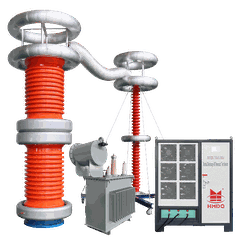


Yo, fellow tech enthusiasts! As a supplier of HV Cable AC Resonant Testers, I've seen firsthand how temperature can mess with the performance of these nifty devices. In this blog, I'm gonna break down the relationship between temperature and the functionality of HV Cable AC Resonant Testers.


First off, let's get a basic understanding of what an HV Cable AC Resonant Tester does. It's a key piece of equipment used to test high - voltage cables. By creating a resonant circuit, it can generate high - voltage AC signals to check the integrity and insulation properties of cables. But temperature can throw a wrench in this smooth operation.
Temperature and Component Characteristics
The components inside an HV Cable AC Resonant Tester are pretty sensitive to temperature changes. Take the Compensation Capacitor Of Resonant Test Set for example. Capacitors are designed to store and release electrical energy. But when the temperature goes up, the dielectric material inside the capacitor can change its properties.
In general, as the temperature rises, the capacitance of a capacitor may increase. This can mess up the resonant frequency of the test system. The resonant frequency is crucial because it determines how efficiently the tester can generate the high - voltage AC signal. If the capacitance changes, the resonant frequency shifts, and the tester may not be able to operate at its optimal point.
On the other hand, when the temperature drops, the capacitance might decrease. This also leads to a change in the resonant frequency. A significant change in frequency can cause the tester to under - perform, resulting in inaccurate test results.
The Capacitor Divider Of Resonant Test Set is another component affected by temperature. Capacitor dividers are used to measure the high voltage accurately. Temperature variations can change the ratio of the capacitances in the divider, which in turn affects the voltage measurement. If the measurement is off, we can't trust the test results, and that's a big problem when it comes to ensuring the safety and reliability of high - voltage cables.
Impact on Insulation Materials
Insulation materials play a vital role in an HV Cable AC Resonant Tester. They prevent electrical leakage and ensure the safety of the equipment and the operators. However, temperature can have a major impact on these insulation materials.
At high temperatures, the insulation materials can start to degrade. The polymers used in insulation can break down, losing their insulating properties. This can lead to partial discharges within the tester, which not only affect the performance but also pose a safety risk. Partial discharges can cause further damage to the insulation over time, leading to more serious malfunctions.
Conversely, at low temperatures, the insulation materials can become brittle. This makes them more prone to cracking. Once there are cracks in the insulation, electrical leakage can occur, and the tester's performance will be severely compromised.
Effects on the Power Supply and Electronics
The power supply and electronics in an HV Cable AC Resonant Tester are also sensitive to temperature. The power supply needs to provide a stable voltage and current to the system. Temperature changes can affect the efficiency of the power supply.
When it's hot, the components in the power supply can overheat. This can lead to increased power consumption and reduced efficiency. Overheating can also cause the electronic components to fail prematurely. For example, transistors and diodes can become less reliable at high temperatures, which can disrupt the normal operation of the tester.
In cold temperatures, the battery performance (if the tester has a battery - powered option) can decline significantly. Batteries have a harder time delivering power at low temperatures, which can lead to reduced operating time and weaker output from the tester.
Performance at Extreme Temperatures
Let's talk about extreme temperatures. In very hot environments, say above 50°C, the performance of an HV Cable AC Resonant Tester can be severely limited. The components may overheat so quickly that the tester has to shut down to prevent damage. Even if it doesn't shut down, the test results are likely to be inaccurate due to the changes in component characteristics and insulation degradation.
In extremely cold environments, like below - 20°C, the tester may not work at all. The battery may be unable to supply power, and the mechanical parts can freeze up. The electronic components may also become too sluggish to function properly, and the insulation materials may crack, making the tester useless.
Mitigating the Effects of Temperature
So, what can we do to mitigate the effects of temperature on an HV Cable AC Resonant Tester? One solution is to use temperature - controlled enclosures. These enclosures can maintain a stable temperature inside the tester, protecting the components from extreme temperature variations.
We can also use temperature - compensated components. For example, capacitors with temperature - stable dielectrics can be used to reduce the impact of temperature on the resonant frequency. Similarly, using insulation materials that are more resistant to temperature changes can improve the reliability of the tester.
Regular maintenance and inspection are also crucial. We need to check the insulation for signs of degradation, clean the components to prevent overheating, and ensure that the power supply and electronics are in good condition.
Real - World Applications and Considerations
In real - world applications, HV Cable AC Resonant Testers are used in a variety of environments. They are used in power plants, substations, and industrial facilities. These places can have different temperature conditions, and it's important to choose a tester that can perform well under those conditions.
For example, if a tester is going to be used in a desert area where the temperature can soar during the day, we need to make sure it has proper cooling mechanisms and can withstand high - temperature operation. On the other hand, for applications in cold regions like the Arctic, the tester should be designed to work in low - temperature environments.
Conclusion
As you can see, temperature has a significant impact on the performance of an HV Cable AC Resonant Tester. From affecting the component characteristics to degrading the insulation materials and disrupting the power supply and electronics, temperature changes can cause a whole host of problems.
But don't worry! As a supplier, we've got solutions. We're constantly working on improving our testers to make them more resistant to temperature variations. We use advanced materials and design techniques to ensure that our testers can perform reliably in a wide range of temperatures.
If you're in the market for an HV Cable AC Resonant Tester, or if you have any questions about how temperature might affect your testing needs, don't hesitate to reach out. We're here to help you choose the right tester for your specific requirements and ensure that you get accurate and reliable test results every time. Let's start a conversation about your procurement needs and see how we can work together to keep your high - voltage cables in top shape.
References
- Electrical Engineering Handbook, CRC Press
- High - Voltage Testing Techniques, IEEE Press
- Handbook of Capacitor Technology, Springer


