

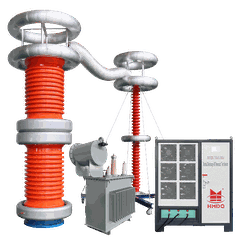


Hey there! If you're in the market for an Inductive Resonant Test System, you're in the right place. I'm a supplier of these systems, and I've seen firsthand how crucial it is to choose the right one for your needs. In this blog post, I'll share some tips on how to make that decision.
Understanding Inductive Resonant Test Systems
First things first, let's talk a bit about what an Inductive Resonant Test System is. These systems are used for high - voltage testing of electrical equipment. They work based on the principle of resonance, where the inductive reactance and capacitive reactance in the circuit cancel each other out, allowing for efficient testing at high voltages.
There are different types of Inductive Resonant Test Systems out there. For example, the AC Resonant Test Set is a popular choice. It's used for testing cables, transformers, and other electrical components. Another option is the Container AC Resonant Test System, which is great for on - site testing as it comes in a container, making it easy to transport. And don't forget about the Capacitor Divider Of Resonant Test Set, which is an important part of the testing setup for accurate voltage measurement.
Consider Your Testing Requirements
The first step in choosing the right Inductive Resonant Test System is to figure out your testing requirements. What kind of electrical equipment do you need to test? Is it cables, transformers, or something else? Different equipment has different testing needs. For example, testing a long - distance power cable requires a system that can generate a high voltage and handle a large capacitance.
You also need to consider the voltage and frequency requirements. The voltage level you need to test at will depend on the rated voltage of the equipment. And the frequency can vary depending on the type of test. Some tests are done at power frequency (50 or 60 Hz), while others may require a different frequency.
Look at the System's Capacity
Capacity is another important factor. The capacity of an Inductive Resonant Test System is usually measured in terms of its maximum voltage and current output. You need to make sure that the system you choose can handle the load of your testing. If you try to test equipment that requires a higher voltage or current than the system can provide, you won't get accurate results, and you may even damage the system.
For example, if you're testing a large - scale transformer, you'll need a system with a high - voltage and high - current capacity. On the other hand, if you're testing smaller components, a lower - capacity system may be sufficient.
Ease of Use
No one wants a complicated system that's hard to operate. When choosing an Inductive Resonant Test System, look for one that is user - friendly. It should have an intuitive interface that allows you to easily set up the test parameters, start and stop the test, and view the results.
Some systems come with advanced features like automated testing sequences. These can be really handy as they save you time and reduce the risk of human error. For example, you can set up a sequence to test multiple cables one after another without having to manually adjust the settings each time.
Portability
If you need to do on - site testing, portability is a key consideration. As I mentioned earlier, the Container AC Resonant Test System is a great option for this. It's designed to be easily transported to different locations.
Even if you're not doing on - site testing, a more portable system can be beneficial. It can be easier to move around within your testing facility, which can save you time and effort.
Reliability and Durability
You want a system that will last. Look for a supplier that uses high - quality components in their Inductive Resonant Test Systems. A reliable system will have fewer breakdowns, which means less downtime for your testing operations.
Check the warranty offered by the supplier. A longer warranty is usually a sign that the supplier is confident in the quality of their product. And make sure to ask about the availability of spare parts. If a part breaks down, you'll want to be able to get a replacement quickly.
Cost
Cost is always a factor when making a purchase. But don't just go for the cheapest option. A low - cost system may not meet your requirements or may not be as reliable as a more expensive one.
Instead, compare the features and performance of different systems and their prices. Look for a system that offers the best value for money. Sometimes, spending a bit more upfront can save you money in the long run by reducing maintenance costs and downtime.
Technical Support
Even the best systems can have issues from time to time. That's why it's important to choose a supplier that offers good technical support. You should be able to get in touch with the supplier easily if you have any questions or problems with the system.


A good supplier will have a team of experts who can provide you with troubleshooting advice and help you resolve any issues quickly. They may also offer training on how to use the system properly.
Compatibility
Make sure the Inductive Resonant Test System you choose is compatible with your existing testing equipment and software. For example, if you already have a data - logging system, you'll want the new test system to be able to interface with it.
Compatibility also extends to the electrical infrastructure in your testing facility. The system should be able to work with the power supply and grounding arrangements in your facility.
Conclusion
Choosing the right Inductive Resonant Test System is not an easy task, but by considering the factors I've mentioned above, you can make an informed decision. Whether you need a AC Resonant Test Set, a Container AC Resonant Test System, or just a Capacitor Divider Of Resonant Test Set, I'm here to help.
If you're interested in learning more about our Inductive Resonant Test Systems or have any questions, feel free to reach out. We can discuss your specific needs and find the perfect system for you. Let's start a conversation and get you the right testing solution.
References
- High - Voltage Testing Technology Handbook
- Electrical Equipment Testing Standards and Guidelines


