

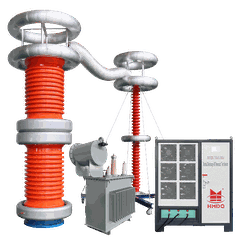



As a supplier of the Container AC Resonant Test System, I'm super excited to share with you what kinds of data this awesome system can collect. This state - of - the - art testing equipment is designed to provide a comprehensive and accurate analysis of electrical components and systems, ensuring their safety and reliability.
1. Voltage and Current Data
One of the most fundamental types of data that the Container AC Resonant Test System can collect is voltage and current information. During the testing process, the system precisely measures the voltage across the test object and the current flowing through it. This data is crucial as it helps in determining the electrical characteristics of the device under test. For example, by analyzing the relationship between voltage and current, we can calculate the impedance of the component. If the impedance is outside the expected range, it could indicate a fault or a defect in the device.
The system can record both the RMS (Root Mean Square) values and the peak values of voltage and current. RMS values are used to represent the effective value of an alternating current or voltage, which is important for power calculations. Peak values, on the other hand, can help in detecting transient events or over - voltage situations. This data is continuously monitored and logged, allowing for a detailed analysis of the electrical behavior of the test object over time.
2. Frequency Data
The Container AC Resonant Test System is capable of collecting frequency data. Resonance occurs when the inductive reactance and the capacitive reactance in a circuit are equal, and the frequency at which this happens is called the resonant frequency. By measuring the frequency during the test, we can ensure that the system is operating at the correct resonant frequency.
The system can also detect any frequency variations during the test. These variations could be caused by factors such as changes in the electrical load or environmental conditions. Monitoring the frequency data helps in maintaining the stability of the test and ensuring accurate results. For instance, if the frequency drifts away from the resonant frequency, it might affect the accuracy of the test and could potentially lead to false readings.
3. Power Data
Power data is another important aspect that the Container AC Resonant Test System can collect. It measures both the active power and the reactive power in the circuit. Active power is the power that is actually consumed by the load, while reactive power is the power that is stored and released in the inductive and capacitive elements of the circuit.
By analyzing the power data, we can evaluate the efficiency of the test object. A high reactive power compared to the active power might indicate poor power factor, which could lead to increased energy consumption and reduced system performance. The system can also calculate the power factor, which is the ratio of active power to apparent power. A power factor close to 1 indicates efficient operation, while a lower power factor suggests inefficiencies in the system.
4. Temperature Data
The Container AC Resonant Test System can also collect temperature data. During the testing process, electrical components can generate heat, and excessive heat can affect their performance and lifespan. By monitoring the temperature of the test object, we can ensure that it operates within a safe temperature range.
The system uses temperature sensors to measure the temperature at different points on the test object. This data is important for detecting any abnormal heating, which could be a sign of a fault or over - loading. For example, if the temperature of a transformer rises significantly during the test, it could indicate a short - circuit or a problem with the insulation.
5. Dielectric Loss Data
Dielectric loss is a measure of the energy dissipated in a dielectric material when it is subjected to an alternating electric field. The Container AC Resonant Test System can collect dielectric loss data, which is crucial for evaluating the insulation quality of electrical components.
High dielectric loss can indicate poor insulation, which could lead to electrical breakdown and safety hazards. By measuring the dielectric loss, we can detect any degradation in the insulation over time. The system can also calculate the dielectric loss factor, which is a dimensionless quantity that represents the ratio of the energy dissipated in the dielectric to the energy stored in it. A high dielectric loss factor indicates poor insulation performance.
6. Partial Discharge Data
Partial discharge is a localized electrical discharge that occurs within an insulation system. It can cause damage to the insulation over time and lead to electrical failures. The Container AC Resonant Test System can detect and collect partial discharge data.
The system uses sensitive sensors to detect the partial discharge signals. It can measure the magnitude, frequency, and location of the partial discharges. By analyzing this data, we can assess the severity of the partial discharge and determine whether the insulation system needs to be repaired or replaced. For example, if the partial discharge magnitude exceeds a certain threshold, it could indicate a serious problem with the insulation.
Why Our Container AC Resonant Test System?
Our system is not only capable of collecting all these important data but also has some unique features. It is highly accurate and reliable, ensuring that you get precise results every time. The data collection process is automated, which saves a lot of time and effort. And the user - friendly interface makes it easy for operators to access and analyze the data.
If you're in the market for a high - quality Container AC Resonant Test System, or if you want to learn more about the data it can collect, feel free to reach out to us. We're always ready to have a chat and discuss how our system can meet your specific needs.
When it comes to related products, you might also be interested in our AC Series Resonant Test Device, Inductive Resonant Test System, and Variable Frequency AC Resonant Test System. These products offer similar data collection capabilities and can be a great addition to your testing setup.
So, don't hesitate to contact us if you're looking to purchase a Container AC Resonant Test System or any of our other products. We're here to help you make the right choice and ensure the safety and reliability of your electrical systems.


References
- Electrical Testing Handbook
- High - Voltage Testing Standards


