

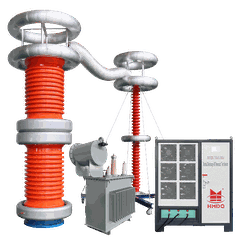



As a supplier of Automatic Power Frequency Testers, I've had my fair share of insights into these nifty gadgets. These testers are super handy in the electrical industry, helping to assess the performance and safety of various electrical equipment. But like any piece of technology, they've got their limitations.
Let's start with the accuracy aspect. Automatic Power Frequency Testers rely on sensors and algorithms to measure electrical parameters. However, these sensors can be affected by environmental factors. For instance, temperature variations can cause the sensors to give inaccurate readings. If it's too hot or too cold, the electrical properties of the components inside the tester can change, leading to errors in measurement. This is a real bummer, especially when you're dealing with high - precision electrical systems where even a small error can have big consequences.
Another limitation is the range of measurement. Most Automatic Power Frequency Testers are designed to work within a specific range of frequencies and voltages. If you're working with equipment that operates outside of this range, the tester might not be able to provide accurate results. For example, if you're testing a piece of equipment that operates at a very high frequency or voltage, the tester might not be able to handle it. This means you'll have to look for other testing methods or more specialized equipment, which can be a hassle and add to the cost.
The complexity of the electrical systems is also a challenge. Modern electrical systems are getting more and more complex, with multiple components and circuits interacting with each other. Automatic Power Frequency Testers might not be able to fully understand and analyze these complex systems. They might miss some of the subtle interactions between different components, which could lead to undetected faults. This is a major drawback, as it can put the safety and reliability of the electrical system at risk.
Maintenance and calibration are also important factors. These testers need to be regularly maintained and calibrated to ensure accurate results. But this can be time - consuming and expensive. If the maintenance is not done properly, the tester's performance can degrade over time, leading to inaccurate readings. And let's face it, not everyone has the time or resources to keep up with the maintenance schedule.
Now, let's talk about some of the related products that can complement the Automatic Power Frequency Tester. We have the Dry Type AC Test Transformer. This transformer is great for high - voltage testing. It can provide a stable and reliable source of high - voltage power, which is essential for testing electrical equipment. It's also dry - type, which means it's more environmentally friendly and easier to maintain compared to oil - filled transformers.
The 5kVA 100kV AC DC Hipot Tester is another useful tool. It can be used to test the insulation resistance of electrical equipment. With a high voltage output of 100kV, it can detect even the smallest insulation faults. This is crucial for ensuring the safety and reliability of electrical systems.
The PD Gas Type AC Test Transformer is also worth mentioning. It uses SF6 gas for insulation, which provides excellent electrical insulation properties. This transformer is great for partial discharge testing, which is important for detecting early signs of insulation degradation in electrical equipment.
Despite the limitations of Automatic Power Frequency Testers, they're still an important part of the electrical testing process. They offer a quick and convenient way to test electrical equipment, and with the right complementary products, they can be even more effective.
If you're in the market for an Automatic Power Frequency Tester or any of the related products I've mentioned, I'd love to have a chat with you. We can discuss your specific needs and find the best solution for your electrical testing requirements. Don't hesitate to reach out and start a conversation about your potential purchase.


References:
- Electrical Testing Handbook
- High - Voltage Engineering Textbooks


