

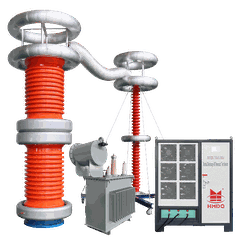



Altitude can have a significant impact on the performance of an AC resonance test system. As a supplier of AC resonance test systems, I've seen firsthand how altitude affects these systems in real - world scenarios. Let's dive into what exactly these impacts are and why they matter.
How Altitude Affects Air Density
One of the primary ways altitude influences an AC resonance test system is through its effect on air density. As you go higher in altitude, the air density decreases. This reduction in air density has a direct impact on the insulation performance of the test system.
In a normal - altitude environment, the air acts as an insulator. When the air density drops at higher altitudes, the dielectric strength of the air also decreases. This means that the air is less able to withstand high - voltage gradients. For an AC resonance test system, which is designed to generate high voltages for testing electrical equipment, this can lead to an increased risk of electrical breakdown.
For example, if you're using an AC Resonant Test Set at a high - altitude location, the reduced air density might cause arcing or flashovers to occur more easily. This can not only damage the test system itself but also compromise the accuracy of the test results.
Impact on Cooling
Another important aspect is the cooling of the AC resonance test system. Most of these systems rely on air for cooling. At higher altitudes, the thinner air has a lower heat - transfer capacity. This means that the system has a harder time dissipating heat.
In a 270kVA Variable Frequency Resonant Test Device, for instance, the power components generate a significant amount of heat during operation. If the cooling is not efficient due to the reduced air density at high altitudes, the temperature of the components can rise rapidly. This can lead to overheating, which in turn can cause component failures, reduced lifespan of the equipment, and inaccurate test results.
Effect on Component Performance
The performance of individual components within the AC resonance test system can also be affected by altitude. For example, capacitors, which are crucial for the resonance process in the system, can experience changes in their capacitance value at high altitudes.


The dielectric constant of the materials used in capacitors can be influenced by the environmental conditions, including altitude. A change in capacitance can disrupt the resonance frequency of the system. If the resonance frequency is off, the test system may not be able to generate the required high - voltage levels accurately.
Adaptations for High - Altitude Use
As a supplier, we've developed strategies to help our customers use our AC resonance test systems at high altitudes. One approach is to modify the insulation design of the system. By using better - quality insulation materials and increasing the insulation distance, we can compensate for the reduced dielectric strength of the air at high altitudes.
We also offer cooling solutions that are more effective in low - air - density environments. For example, we can install additional fans or use liquid - cooling systems in some of our Vehicle - Mounted AC Resonant Tester models. These solutions help to ensure that the system can maintain a proper operating temperature even at high altitudes.
Real - World Case Studies
I'd like to share a couple of real - world examples to illustrate the impact of altitude on AC resonance test systems. A customer in a mountainous region was using our AC resonance test system for testing power cables. They initially faced issues with frequent arcing and unreliable test results.
Upon investigation, we found that the high altitude was the culprit. The reduced air density was causing the breakdown voltage to be lower than expected. We then recommended some modifications to the system, including upgrading the insulation and improving the cooling. After these changes, the system was able to operate smoothly, and the test results became more accurate.
Another case involved a utility company conducting tests on high - voltage transformers at a high - altitude substation. They were using an off - the - shelf test system that was not designed for high - altitude use. The system overheated quickly, and the test results were inconsistent. After switching to our altitude - adapted AC resonance test system, they saw a significant improvement in performance and reliability.
Importance of Considering Altitude
When it comes to purchasing an AC resonance test system, it's crucial for customers to consider the altitude at which the system will be used. Ignoring this factor can lead to costly mistakes, such as equipment damage, inaccurate test results, and downtime.
As a supplier, we always ask our customers about the altitude of the test location during the sales process. This allows us to recommend the most suitable system and make any necessary adjustments to ensure optimal performance.
Conclusion
Altitude has a multifaceted impact on the performance of an AC resonance test system. From affecting air density and insulation to influencing cooling and component performance, it's a factor that cannot be overlooked. As a supplier, we're committed to providing solutions that can overcome these challenges and deliver reliable test results at any altitude.
If you're in the market for an AC resonance test system and need to use it at a high - altitude location, don't hesitate to get in touch with us. We can help you select the right system and provide any necessary modifications to ensure its performance. Let's work together to meet your high - voltage testing needs!
References
- IEEE standards on high - voltage testing in different environmental conditions
- Research papers on the impact of altitude on electrical insulation and equipment performance


