

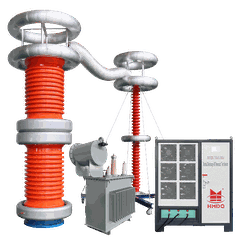



An AC resonant test set is an essential piece of equipment in high - voltage testing, which is widely used to test the insulation performance of various electrical equipment such as cables, transformers, and GIS (Gas - Insulated Switchgear). This test set typically offers different control modes, mainly manual and automatic, each with its own features and application scenarios. As a leading supplier of AC resonant test sets, we understand the importance of these control modes and are here to explain them in detail.
Manual Control Mode
The manual control mode is the most basic and traditional way to operate an AC resonant test set. In this mode, the operator has direct control over all the critical parameters of the test process.
Parameter Adjustment
One of the key aspects of manual control is the ability to adjust parameters such as frequency, voltage, and current. The operator can fine - tune the frequency of the test set to achieve resonance. Resonance is a crucial state in the AC resonant test, where the inductive reactance and capacitive reactance of the test circuit cancel each other out, resulting in a high - voltage output with relatively low input power. By adjusting the frequency manually, the operator can ensure that the test set operates at the optimal resonant frequency for the specific test object.
For example, when testing a long - length cable, the capacitance of the cable is relatively large. The operator may need to gradually adjust the frequency to find the resonance point. This requires a certain level of expertise and experience, as incorrect frequency adjustment may lead to inaccurate test results or even damage to the test equipment.
In addition to frequency, the operator can also control the output voltage and current. The voltage can be increased or decreased in small increments to reach the required test voltage. This is particularly important when testing equipment with different voltage ratings. The operator needs to be careful not to exceed the rated voltage of the test object to avoid insulation breakdown.
Real - Time Monitoring and Intervention
Another advantage of the manual control mode is the ability to monitor the test process in real - time and make immediate interventions. The operator can observe the readings of various instruments, such as voltmeters, ammeters, and power meters, and judge the status of the test circuit. If any abnormal phenomena occur, such as sudden changes in voltage or current, the operator can quickly stop the test and take appropriate measures.
For instance, if the current suddenly increases during the test, it may indicate a short - circuit or insulation defect in the test object. The operator can immediately cut off the power supply to prevent further damage. This real - time monitoring and intervention ability is especially valuable in complex test environments or when testing high - value electrical equipment.
However, the manual control mode also has some limitations. It is time - consuming and labor - intensive, as the operator needs to constantly adjust parameters and monitor the test process. Moreover, the test results may be affected by human factors, such as operator fatigue or misjudgment.
Automatic Control Mode
The automatic control mode is a more advanced and efficient way to operate an AC resonant test set. With the development of technology, modern AC resonant test sets are often equipped with intelligent control systems that can perform various test tasks automatically.


Automatic Frequency Search
One of the main features of the automatic control mode is the automatic frequency search function. When the test is started, the test set will automatically scan a certain frequency range to find the resonance point. This process is much faster and more accurate than manual frequency adjustment.
For example, our AC Variable Frequency Resonant Test System can quickly and accurately find the resonance point within a few seconds. This not only saves time but also reduces the requirements for operator expertise. Even operators with limited experience can easily perform high - quality tests.
Programmable Test Procedures
In the automatic control mode, the test set can be programmed with specific test procedures. The operator only needs to input the test parameters, such as the test voltage, test time, and number of test cycles, and the test set will automatically execute the test according to the pre - set program.
This is very convenient for mass - production testing or regular maintenance testing. For example, when testing a batch of cables with the same specifications, the operator can set up a single test program and let the test set run the tests automatically one by one. This improves the testing efficiency and ensures the consistency of test results.
Safety Protection and Fault Diagnosis
The automatic control mode also has advanced safety protection and fault diagnosis functions. The test set is equipped with various sensors and protection circuits to monitor the test process continuously. If any abnormal conditions are detected, such as over - voltage, over - current, or over - temperature, the test set will automatically stop the test and display an error message.
In addition, the test set can also perform fault diagnosis. It can analyze the test data and determine the possible causes of the fault. For example, if the test fails due to a resonance problem, the test set can display relevant information, such as the frequency range where the resonance was not found, to help the operator troubleshoot the problem.
However, the automatic control mode also has some drawbacks. It may lack the flexibility of the manual control mode in some special situations. For example, in some complex test circuits, the automatic frequency search function may not be able to find the resonance point accurately, and manual intervention may be required.
Comparison between Manual and Automatic Control Modes
Efficiency
In terms of efficiency, the automatic control mode is significantly better than the manual control mode. The automatic frequency search and programmable test procedures save a lot of time and labor. For large - scale testing projects, the use of the automatic control mode can greatly improve the testing efficiency and reduce the overall testing cost.
Accuracy
The accuracy of test results is also affected by the control mode. The automatic control mode generally provides more accurate results, as it eliminates the influence of human factors. The automatic frequency search function can find the resonance point more precisely, and the automatic voltage and current control ensure that the test parameters are stable.
Flexibility
On the other hand, the manual control mode offers more flexibility. In some special test scenarios, such as when testing non - standard electrical equipment or in complex test environments, the operator can use the manual control mode to adjust the test parameters according to the actual situation.
Application Scenarios
The choice of control mode depends on the specific application scenarios.
Manual Control Mode Applications
The manual control mode is suitable for situations where high - level expertise and real - time intervention are required. For example, when testing new or special - designed electrical equipment, the operator may need to use the manual control mode to explore the characteristics of the test object and adjust the test parameters accordingly. It is also useful in research and development laboratories, where in - depth analysis of the test process is needed.
Automatic Control Mode Applications
The automatic control mode is more suitable for mass - production testing and routine maintenance testing. For example, in cable manufacturing plants, where a large number of cables need to be tested every day, the automatic control mode can significantly improve the testing efficiency. It is also widely used in power grid maintenance, where quick and accurate testing of electrical equipment is required.
As a professional supplier of AC resonant test sets, we offer a wide range of products, including AC Variable Frequency Resonant Test System, Series Resonance Test Set, and High Voltage AC Resonant Test System. Our products are equipped with both manual and automatic control modes, allowing you to choose the most suitable mode according to your specific needs.
If you are interested in our AC resonant test sets or have any questions about the control modes, please feel free to contact us for procurement and negotiation. We are committed to providing you with high - quality products and excellent after - sales service.
References
- Electrical Insulation Testing Handbook, Second Edition, by A. J. Meliopoulos
- High - Voltage Testing Technology, Third Edition, by J. Kuffel, W. S. Zaengl, and J. Kuffel


